Connecting Students with Practice: Expanding Opportunities at USF’s Career & Internship Expo
1. What inspired you to get involved in the career fair?
Alejandra: Over the past few years, the Career & Internship Expo at the University of South Florida has been organized through a collaboration between the College of Design, Art & Performance (CDAP), the School of Architecture & Community Design (SACD), and other schools in the college. As the SACD Events and Lectures Graduate Assistant, my role has typically been to help ensure the event runs smoothly by ensuring table assignments are set correctly, assisting firms and organizations as they arrive, guiding students and guests to the event location, and promoting the expo through our school’s newsletter.
This year, however, I took on a larger role to support the college’s student success efforts. When I learned that fewer firms and organizations had registered than in the previous year, I felt a strong responsibility to help expand the opportunities available to our students. Serving both as the SACD Events and Lectures Graduate Assistant and as President of the AIAS USF Chapter, I knew how meaningful these connections can be for students beginning to explore the profession. That motivated me to personally reach out to architecture firms and organizations across our local community to invite them to participate.
One of my goals since becoming AIAS USF Chapter President in 2024 has been to strengthen our school’s relationship with local architecture firms and organizations. With the help of an incredible group of AIAS USF officers, we have worked over the past couple of years to build meaningful connections between students and the professional community. This has included organizing firm tours, collaborating with our local Young Architects Forum and AIA Tampa Bay on firm crawls, hosting design workshops with firms, inviting licensed professionals to speak about the importance of licensure, and coordinating lecture features where firms and professionals visit our school to present their work to students.
We have also organized site visits to projects under construction, created opportunities for professionals to mentor students, partnered with our local Women In Architecture (WIA) component, and participated in statewide events that connect architecture students with practitioners across Florida. These efforts have helped create a stronger sense of continuity between our students and the professional community, making the Career & Internship Expo a natural extension of the relationships we have been building over time.
Because of all these efforts, we were able to welcome even more architecture firms and organizations than the year before, creating a richer networking experience for our architecture students.
2. What did planning look like?
Alejandra: Planning the career fair was a collaborative effort between the college and the School of Architecture & Community Design. Much of the logistical coordination was led by Karen Frank, Assistant Director of the USF College of Design, Art & Performance, who managed reserving the ballroom and organizing the overall event setup. James Spear, SACD’s Administrative Specialist, also provided important coordination support throughout the planning process.
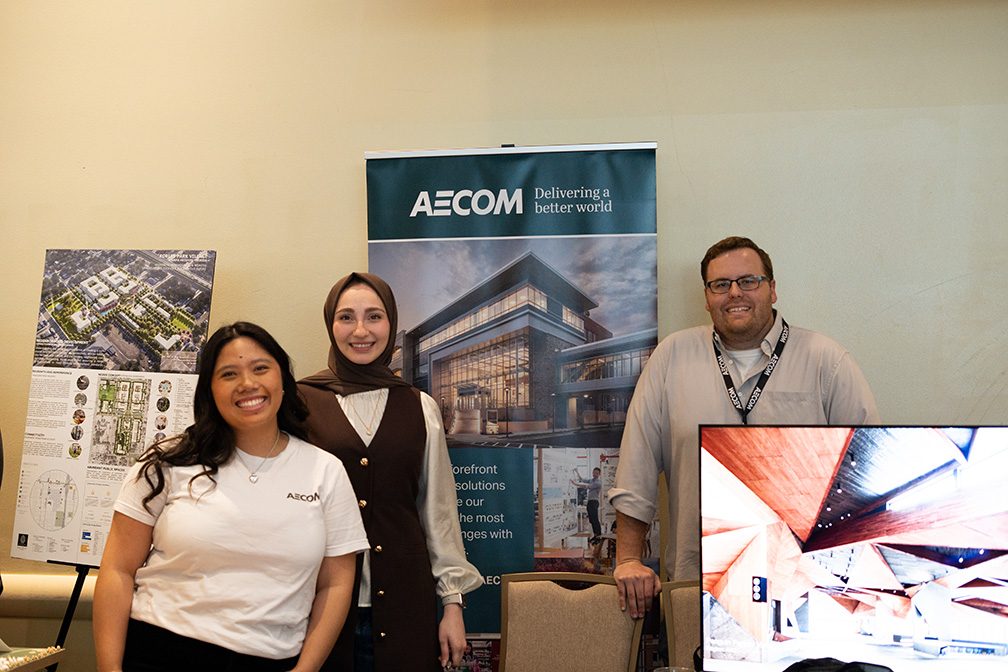
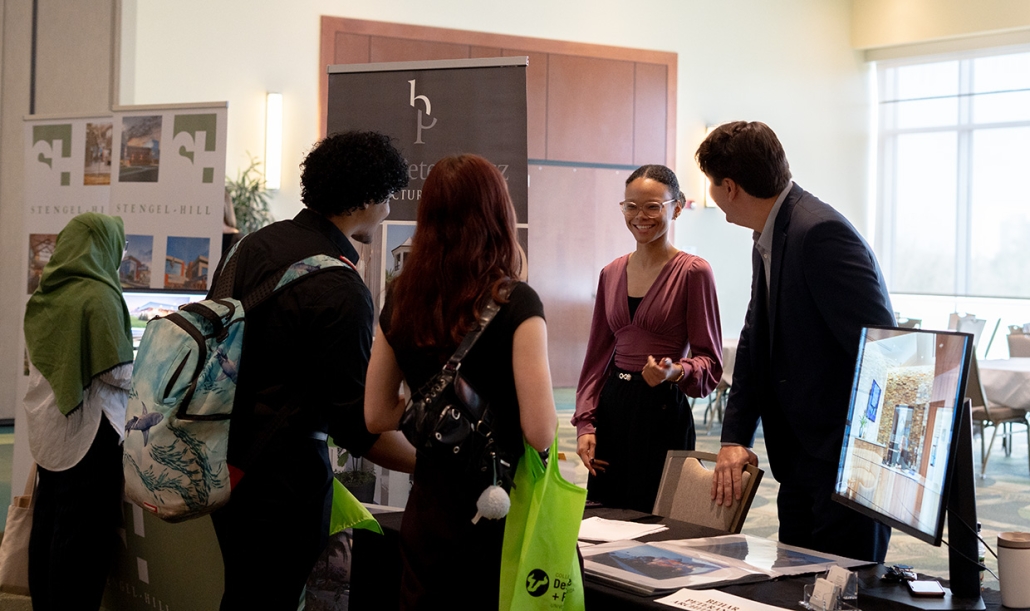
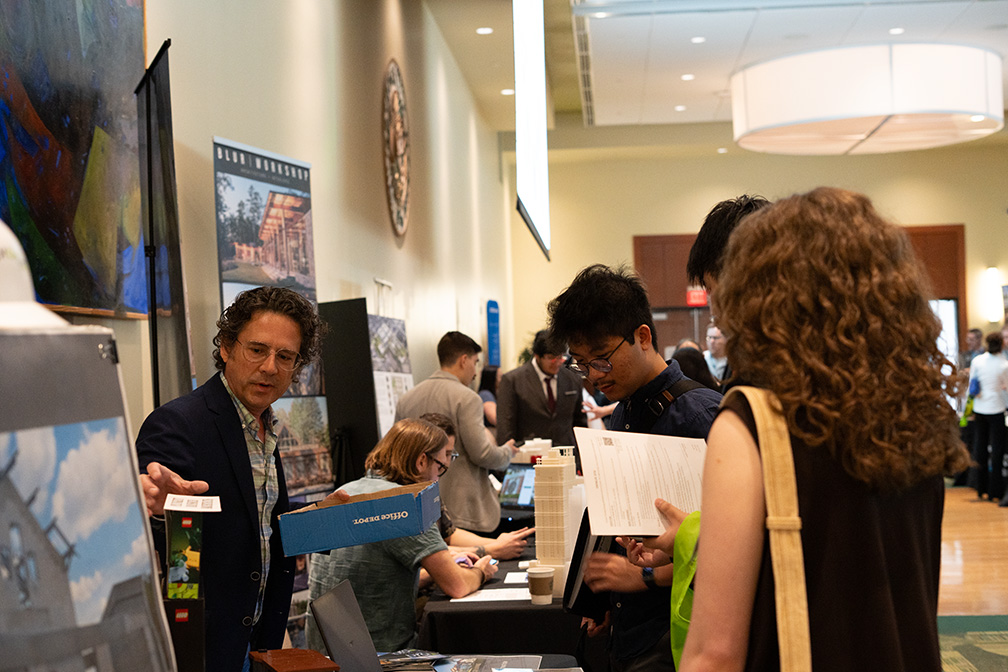
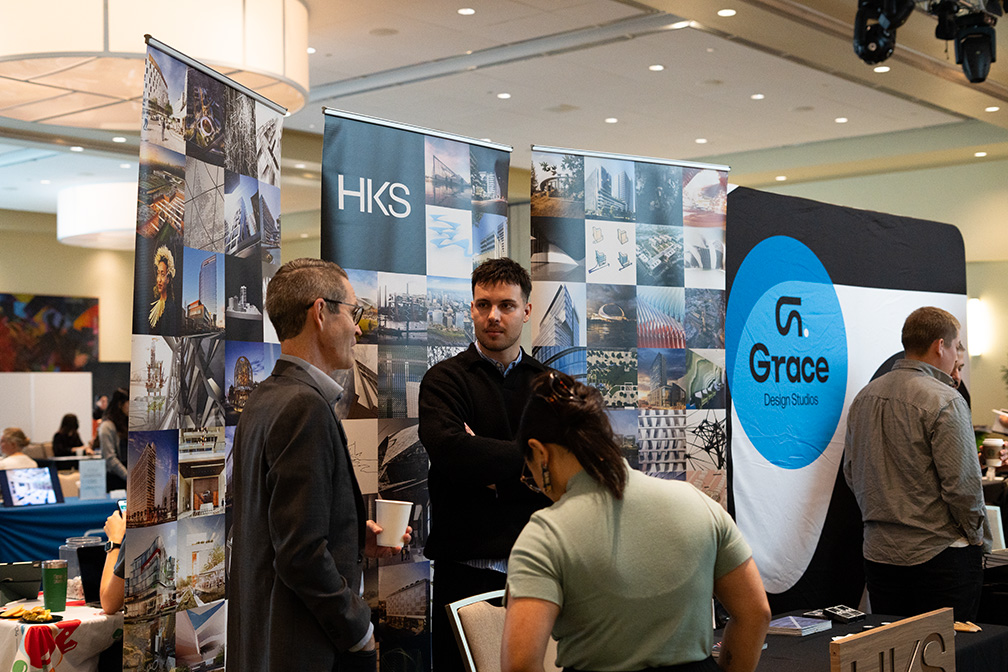
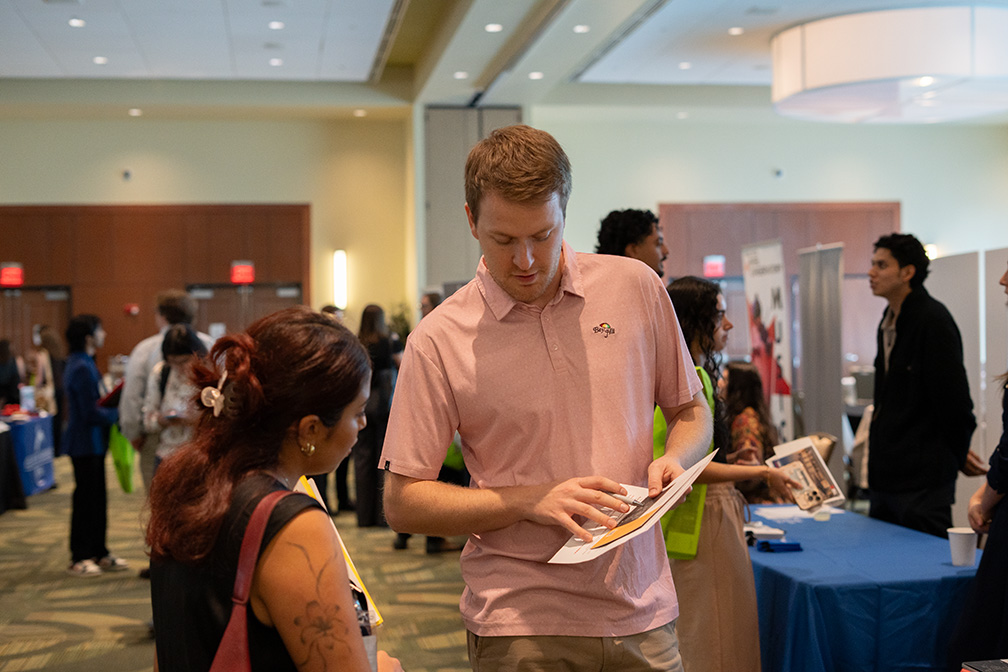
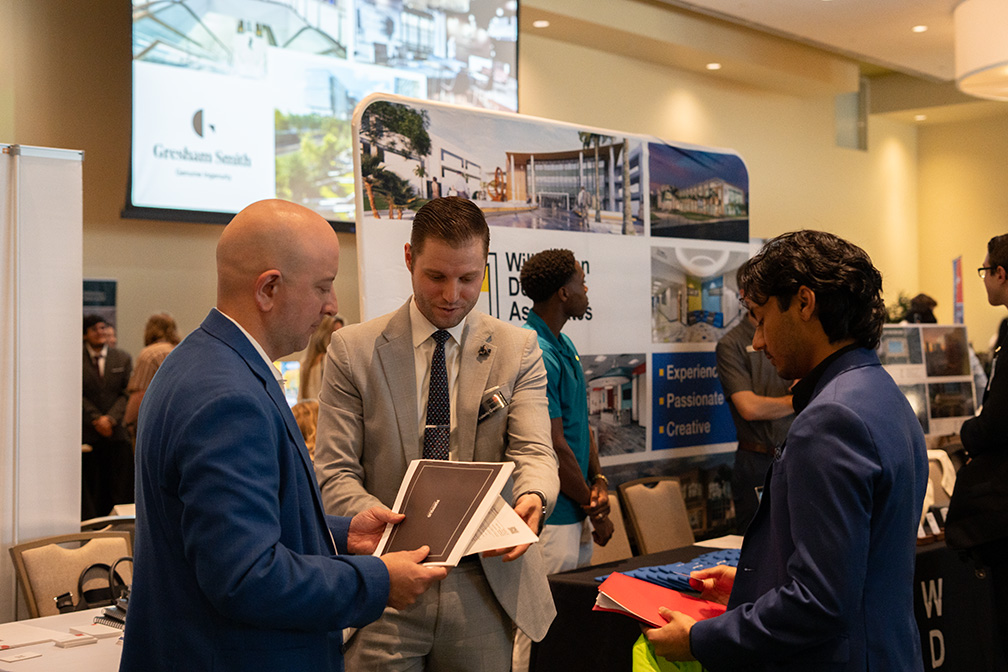
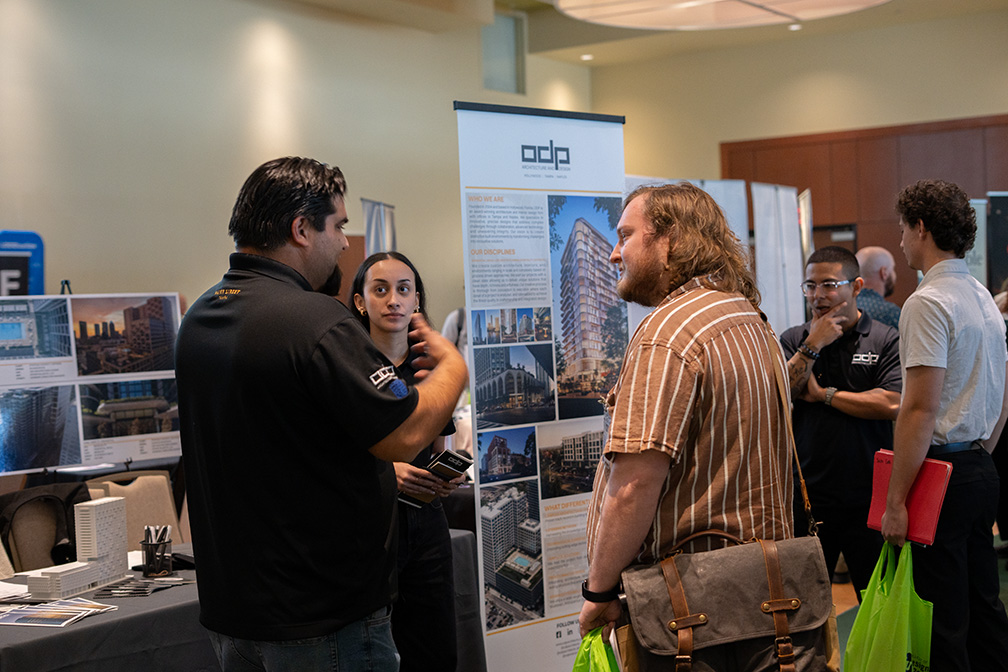
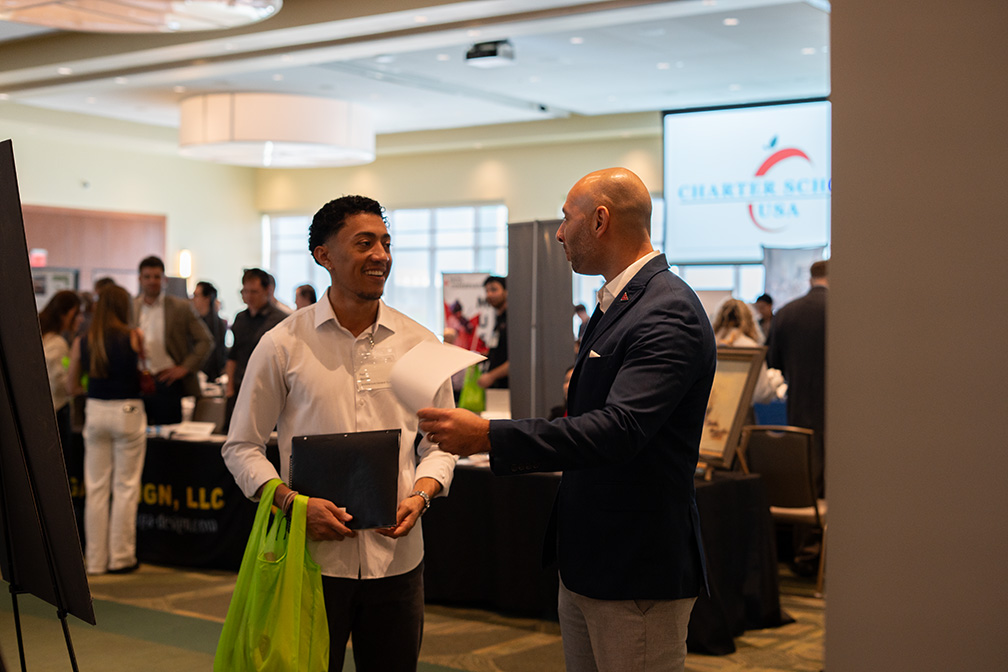
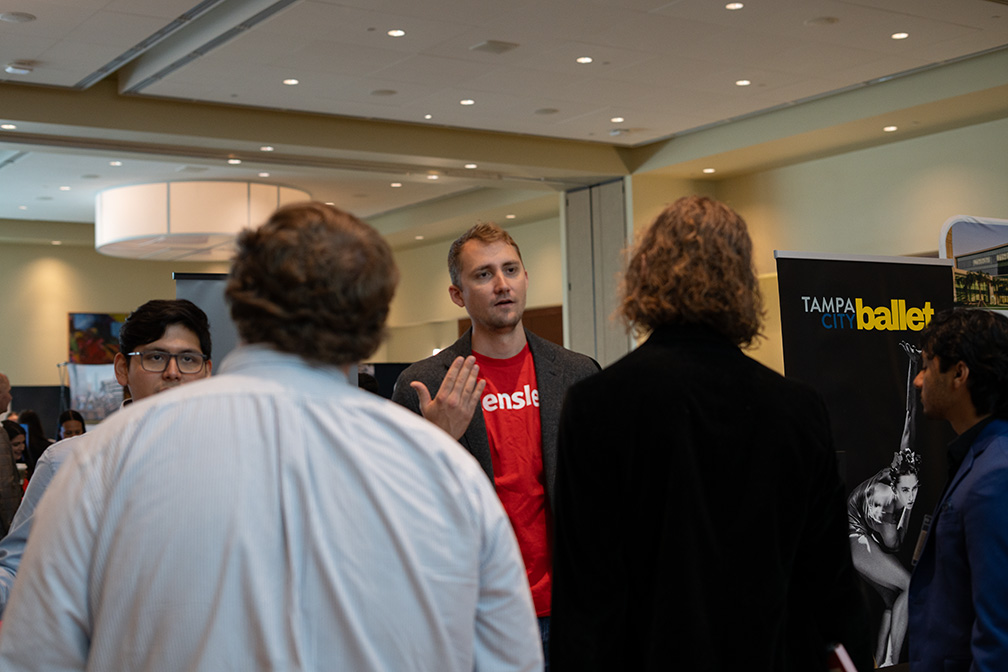
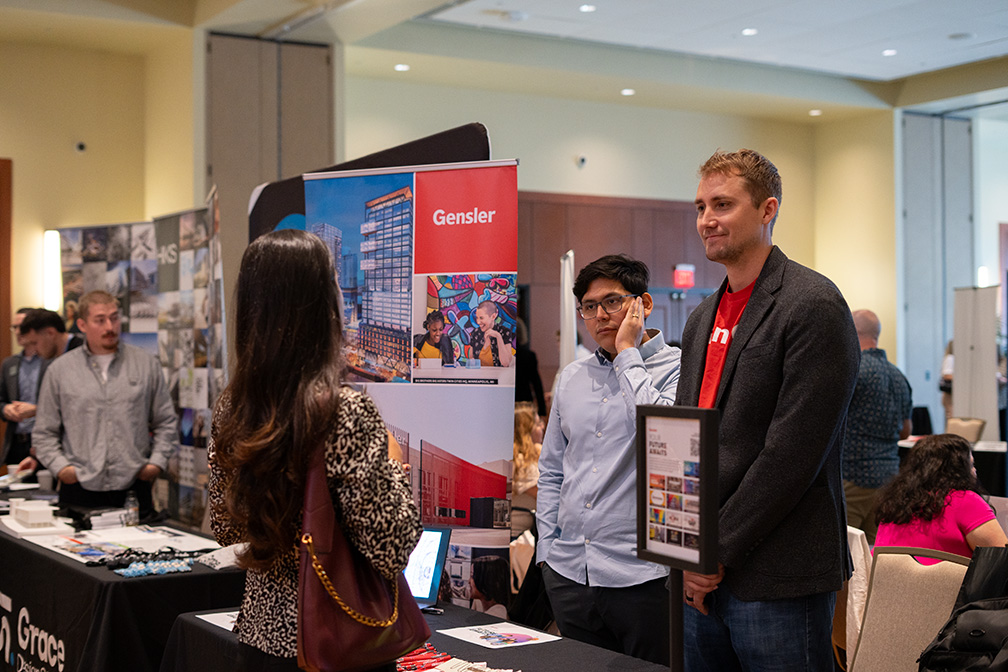
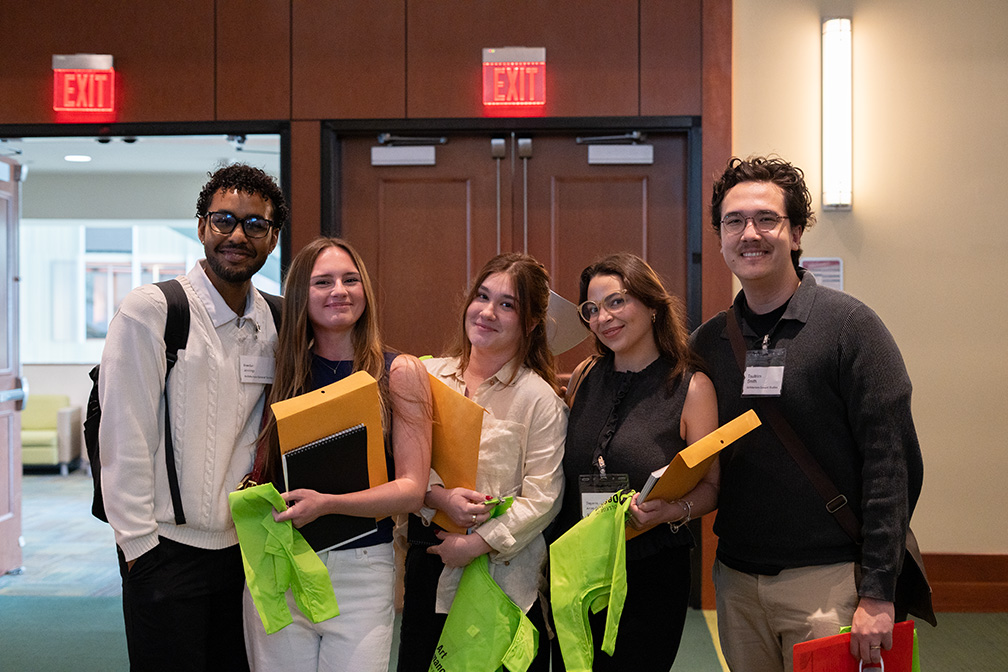
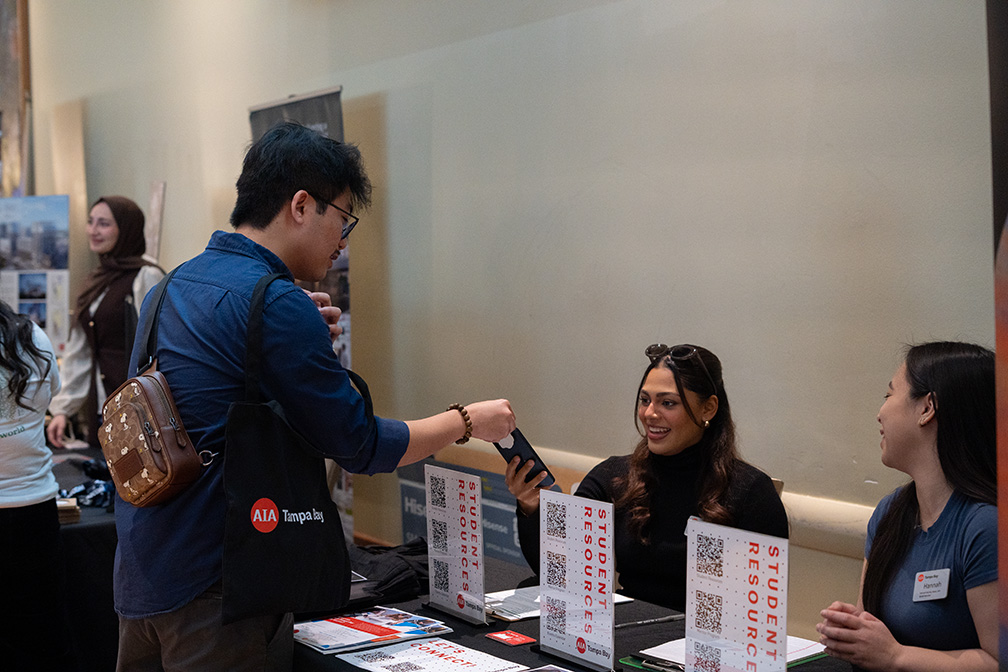
The event took place in the USF Marshall Student Center (MSC) Ballroom A–C, which was arranged with rows of tables for each participating firm and organization, complete with tablecloths and signage displaying their names. Firms were able to bring their own materials and displays, and extension cords were placed between the rows of tables so that each table had access to power. The college also prepared slides featuring the participating firms and organizations that were displayed on the ballroom screens throughout the event. At the entrance, staff and volunteers helped manage student check in and provided name tags to ensure the event ran smoothly. Light refreshments were available, and professional photographers were present to provide headshots for students.
My role also focused on outreach and student preparation. Once the final list of participating firms and organizations was confirmed, I shared it with our students through the school’s newsletter and encouraged them to prepare in advance. I recommended that students research the firms they were most interested in and come prepared not only with their resume and portfolio, but also with tailored cover letters. My goal was to help students approach the event not just as a networking opportunity, but as a moment to stand out and make meaningful first impressions with potential employers.
To further support students in preparing for the event, we also organized several opportunities for professional feedback in the weeks leading up to the expo. Through the AIAS USF mentorship program, which is organized in collaboration with AIA Young Architects Forum (YAF) Tampa Bay, students met with local professionals two weeks before the event to receive feedback on their resumes, portfolios, and LinkedIn profiles. I also met with several students individually to provide guidance and help them refine their materials.
Additionally, the NOMAS USF chapter hosted an online portfolio and resume workshop the week before the event, giving students another opportunity to connect with professionals and receive additional feedback before meeting firms at the career fair.
3. What types of employers were present?
Alejandra: Due to the unique makeup of the College of Design, Art & Performance, a wide variety of employer organizations were present at the expo. Institutions such as Busch Gardens, the Tampa Museum of Art, and the Straz Center for the Performing Arts attended to connect with students across disciplines, including theatre, dance, art, and music.
However, the largest group of employers by far were architecture firms, reflecting the strong interest in recruiting students from the USF School of Architecture & Community Design. These firms collaborate with developers, institutions, organizations, and corporations to design buildings, campuses, and communities.
Many of the participating firms are nationally recognized practices with offices across the United States in cities such as Atlanta, Boston, Chicago, Dallas, Denver, Los Angeles, Memphis, Miami, and Philadelphia, among many others. Several of these organizations also work internationally, with projects and offices located around the world in places such as Abu Dhabi, Beijing, London, Mexico City, Munich, Paris, Sydney, Tokyo, and Vancouver, to name just a few. This diversity of firms allowed students to learn about a wide range of professional paths within architecture, from local practice to global design and planning.
4. What advice would you share with new students who are preparing to attend their first career fairs?
Alejandra: The old saying is true: dress for success. First impressions matter, and presenting yourself professionally shows firms that you are taking the opportunity seriously.
Preparation is just as important. I always recommend researching the firms beforehand and identifying the ones that most interest you. Come prepared not only with your resume and portfolio, but also with a cover letter tailored to each firm you are especially excited to speak with. Taking the time to learn about their work will help you have more meaningful conversations and demonstrate genuine interest.
When writing your cover letter or speaking with professionals, be yourself. This is often the first chance firms have to understand your personality and what motivates you as a designer. If there are specific projects or ideas from the firm that inspire you, mention them and explain why they resonate with you. Authenticity goes a long way.
At the end of the day, career fairs are not only about firms finding candidates, they are also about students finding places where they feel aligned. Stand out, but also take the time to notice which firms stand out to you, especially those whose values and work resonate with your personal and professional goals. Career fairs are not just about finding your first job; they are about beginning to build the professional relationships that will shape your career.