Meet Arch Rewind
Five Architecture Students. One Podcast. A Journey Unfiltered.
About Arch Rewind
What does it really feel like to study architecture — the late nights, the brutal critiques, the creative breakthroughs, and the friendships forged in studio at 2 a.m.? Arch Rewind is a podcast hosted by five architecture students at Florida Atlantic University in Fort Lauderdale, documenting their journey through one of the most demanding and rewarding programs in the country.
In this blog post, each host speaks for themselves — in their own words — about what brought them to architecture, what they love about FAU and its downtown campus, their go-to design hacks, and their advice for anyone thinking about taking the leap into this field.
“FAU is pushing the boundaries of what normative architecture will be — with AI, Robotics, and novel approaches to solving problems.”
Meet the Hosts
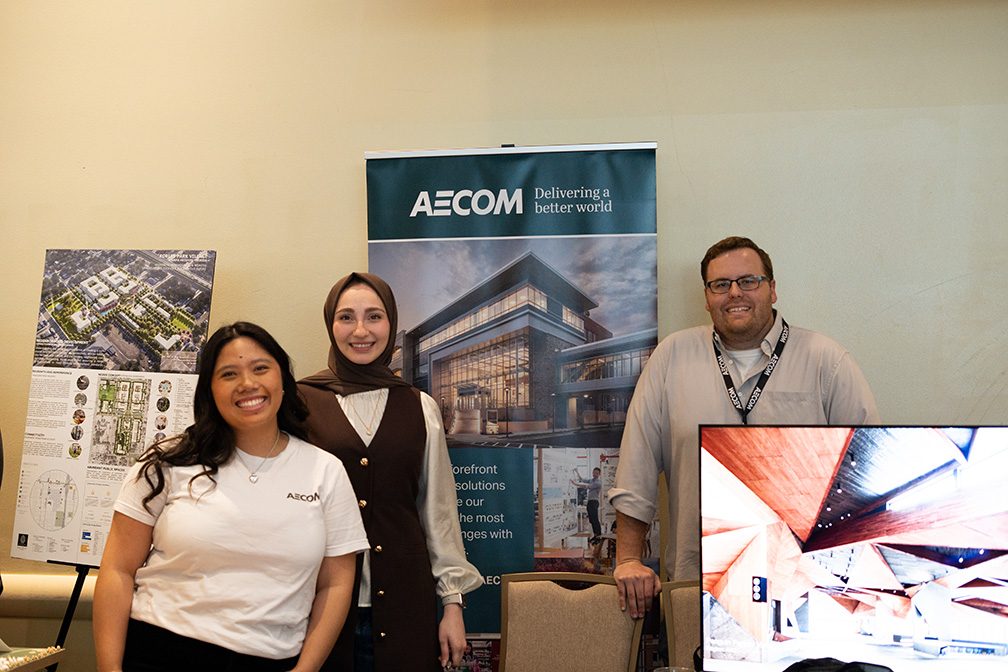
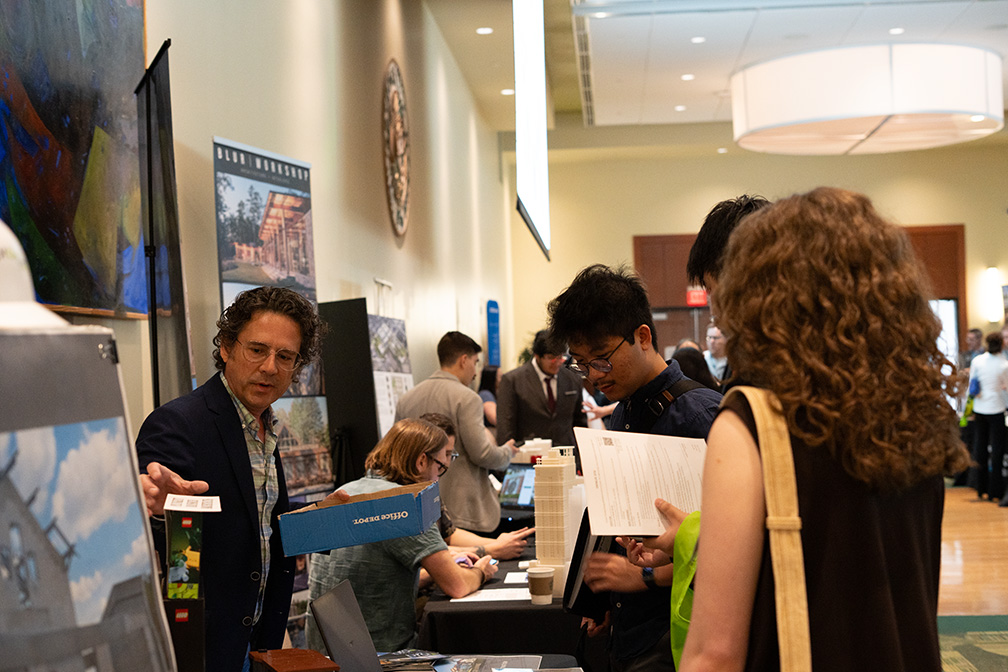
Five different paths. Five different voices. All studying architecture at FAU’s downtown Fort Lauderdale campus — right in the heart of the city they’re learning to design for.

In Their Own Words
We asked each host the same five questions. Here’s what they had to say.

1. Julia
Why Architecture?
When I first started thinking about what I would want to do for a lifetime, I realized I wanted to be part of something bigger — something that could help communities and push boundaries. With my creative skills and my passion for historic architecture, I realized I wanted to study architecture.
What’s Your Favorite Thing About Campus?
What I like most about my campus is the open floor plans of the studios, and how each lab — such as our Creative AI Lab — has the technology and support that allows us to explore our ideas and design intentions.
What Drew You to FAU?
What drew me to FAU was its drive for research and exploration of new technologies. I admire how FAU has opened the eyes of so many students to how computational design and AI can be properly used in the field of architecture.
What’s Your Go-To Design Hack?
Always have a pen and paper with you — because you never know when those creative thoughts are going to arrive.
What Advice Would You Share with Aspiring Students?
Research different schools and programs at different universities. Each one has a specific topic that their program revolves around, and you want to make sure you are entering a program that best matches your goals.
Share Your Top Time Management Strategy!
Always stay aware of what the next deliverable due is. That helps me complete assignments successfully and still leave time for other activities.
1. Giorgio
Why Architecture?
I didn’t know until someone made me aware. I designed a wall in my living room — it started from an idea to a sketch to an actual drawing, and we ended up building it. After it was built, someone saw my potential and recommended I look into architecture. I looked into it and realized I had a lot in common with this major.
What’s Your Favorite Thing About Campus?
We are in the heart of Fort Lauderdale, right in front of Las Olas, so we get to see the city come alive. We can take a break and walk around, and see the nightlife. And the studio culture is real — it stays full overnight, and the closer to midterms and finals, the fuller it gets. We also love the city views from the building’s windows.
What Drew You to FAU?
FAU gives us everything we need to learn and grow a different mindset than other architecture students. We are taught to think computationally, and this is not something many other schools do. At the end of the day, we will learn the ways of the profession when we get there — but the skills I am building now are ones I will actually use in practice, and that is amazing.
What’s Your Go-To Design Hack?
Diagram everything you want to communicate. You don’t want to try to explain your thought process after the fact. If you have it diagrammed, people can visually see your intentions — and it serves as a guide so you don’t forget anything you wanted to say.
What Advice Would You Share with Aspiring Students?
Be open-minded and don’t take criticism personally. They are not attacking you — they are teaching you what isn’t working and why. That distinction makes all the difference.
Share Your Top Time Management Strategy!
Organize your weeks in advance. There are deadlines coming from every direction, and if you don’t have them written down, there is no way to keep up — and still have time for work and life outside of school.

1. Nathaniel
Why Architecture?
I never knew I wanted to study architecture until my last years of high school. I was decent at math but not great with the sciences, so I thought — why not architecture? There are also [architects] already in my family. It became more a question of why not carry on the legacy?
What’s Your Favorite Thing About Campus?
Probably its proximity to the city. We are right in the heart of it, and that gives students a tangible opportunity to see how cities work — to see what kind of impact we can have in our own communities, and what questions we have for the future of the city. What is our role in all of it? That is an experience you don’t get anywhere else.
What Drew You to FAU?
The affordability of pursuing this profession here was a big factor. FAU offers a five-year accredited program — the only one of its kind in the state of Florida — which helps shatter many of the hurdles to licensure. But the pedagogy also drew me in. The school is at the edge of a radical transformation, pointing toward what the future of architecture should and could be, through its innovative work in AI, robotics, and other systematic approaches to problem-solving.
What’s Your Go-To Design Hack?
Using Rhino display modes for diagrams and drawings. I am using Illustrator and Photoshop less in my workflow now — Rhino does more than most people realize.
What Advice Would You Share with Aspiring Students?
Give it your all. Architecture school is demanding, but it is also for such a short time. To maximize your education, you have to be willing to commit. And always stay curious — learn about other disciplines. You never know how they tie back into architecture. Read books. Study the architects. Study history. A grounded project starts with a grounded student.
Share Your Top Time Management Strategy!
Every architecture student chuckles at this question. For me, what helps is having boundaries — a set time I wake up and a set time I go to bed. That allows me to respect my own time and for others to respect it too. A calendar helps. And you have to learn to adapt and set priorities when deadlines pile up.

1. Benjamin
Why Architecture?
I wasn’t originally planning to study architecture. I chose it as an alternative to engineering, thinking it might be easier to manage — I quickly realized that wasn’t the case. For me, architecture has been more about the journey, and I am still discovering why I enjoy it.
What’s Your Favorite Thing About Campus?
Its location in downtown Fort Lauderdale. When I need a break from studio work, I can step out to a park or explore Las Olas. The city itself becomes part of the experience.
What Drew You to FAU?
FAU’s alignment with licensure drew me in. Unlike other schools that require six years or a portfolio for admission, FAU offers a five-year program with no portfolio requirement for first-year students. After four years here, I have come to appreciate the program’s approach — from shape grammars and daylighting strategies to AI integration.
What’s Your Go-To Design Hack?
Trace overlays. They are fast, flexible, and help you work out mistakes so the final drawings are clean and intentional.
What Advice Would You Share with Aspiring Students?
Give it your all. Architecture school is demanding, but it is also for such a short time. To maximize your education, you have to be willing to commit. And always stay curious — learn about other disciplines. You never know how they tie back into architecture. Read books. Study the architects. Study history. A grounded project starts with a grounded student.
Share Your Top Time Management Strategy!
Keep drawing and keep reading. Reading sparks new ideas; drawing turns those ideas into physical form. Together, they cultivate the mindset of an architect as a lifelong learner.

1. Stanley
Why Architecture?
I had always said I wanted to become an architect when I was a kid. I got exposed to the world of architecture and construction early in life, so this was something I knew I wanted to do from the very beginning.
What’s Your Favorite Thing About Campus?
It is right in the middle of downtown Fort Lauderdale. It is interesting to see the contrast between South Florida city architecture and that of the northeast, where I am originally from. The campus location makes you think about place constantly.
What Drew You to FAU?
Honestly, I kind of lucked out. No one in my family had studied architecture before, so I had no advice on where to go. I did some research and found FAU, but there wasn’t much I could find. So I decided to take a leap of faith — and I don’t regret it to this day.
What’s Your Go-To Design Hack?
Talk to other people. Sometimes talking to students in your year or other years helps you formulate your own ideas. Other students might have a different understanding of the assignment, which can help you think through your own solution.
What Advice Would You Share with Aspiring Students?
You don’t have to sacrifice all your time just to pass. You can study and succeed in architecture while still enjoying other things in life. It is all about balance.
Share Your Top Time Management Strategy!
Know your own pace. If you are a slow worker, allocate enough time for the work. If you work fast, don’t underestimate how long things can take. It is better to finish early than to rush. And always set your priorities in advance.
Keep designing. Keep questioning. Keep rewinding.