
Posts

What is Historic Preservation and Why Does It Matter?

Hi there! My name is Haley Alvarez, and I am a rising senior at the College of Charleston studying Historic Preservation and Community Planning with a minor in Urban Studies. I am also a member of the Historic Preservation & Community Planning (HPCP) Club on campus and a member of the Committed to Charleston organization. Throughout my college career, one of the most common questions I’ve been asked is, “What exactly is historic preservation?” It’s a great question, and one that deserves more than a simple answer.

When most people hear the words historic preservation, they picture restoring an old house or protecting a well-known landmark. While that is certainly part of the profession, historic preservation is much broader. It is an interdisciplinary field that involves practices from architecture, sustainability, urban planning, and community engagement to protect the places that tell our stories. Preservation practices strive to thoughtfully manage change so that communities can grow while preserving the cultural, historical, and social character that makes them unique.
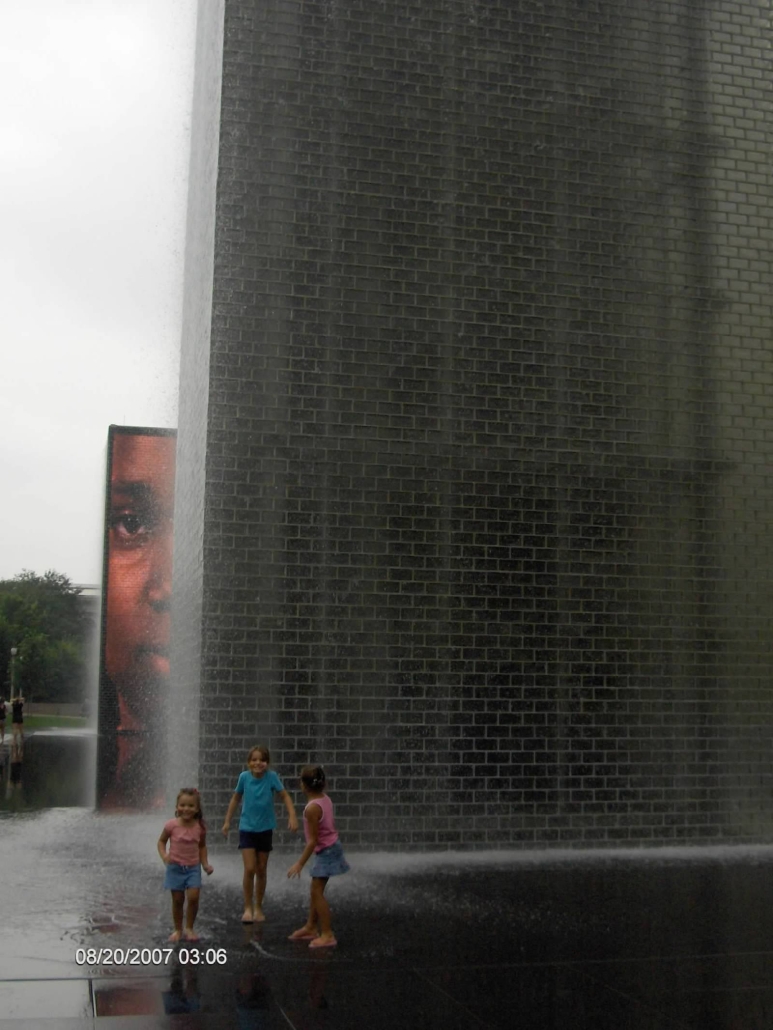

My sisters and I visiting Crown Fountain in Millennium Park. My childhood in Chicago really shaped my love for preservation and architecture.

What initially drew me to choose Historic Preservation as a career path was my childhood growing up in Chicago, Illinois. My mom would often take me on scenic drives through the city, and I was always fascinated by the architecture. Every building seemed to tell a story through its intricate details, craftsmanship, materials, and design. As I grew older, I began to appreciate that those buildings represented more than just beautiful architecture; they reflected the people, history, and culture that shaped the city. I distinctly remember the strong sense of community that existed within many of Chicago’s neighborhoods. Returning today, I’ve noticed that some of that character has changed, which has reinforced the concept that preservation isn’t just about saving old buildings; it’s about protecting the identity and sense of place that make communities meaningful while allowing them to grow and evolve.

Here’s a breakdown of how different disciplines come together in the practice of Historic Preservation:

Architecture


Architecture is one of the most recognizable aspects of historic preservation. Architecture and preservation intertwine to restore, rehabilitate, and adapt preexisting historical structures. Adaptive reuse concepts are most notable during this process to avoid demolition and find new uses for buildings, typically preserving their character and craftsmanship. Whether transforming a former city bank into a beautiful wedding venue or converting a former post office into a corporate building, preservation demonstrates how thoughtful design can connect the past with the needs of today’s communities.
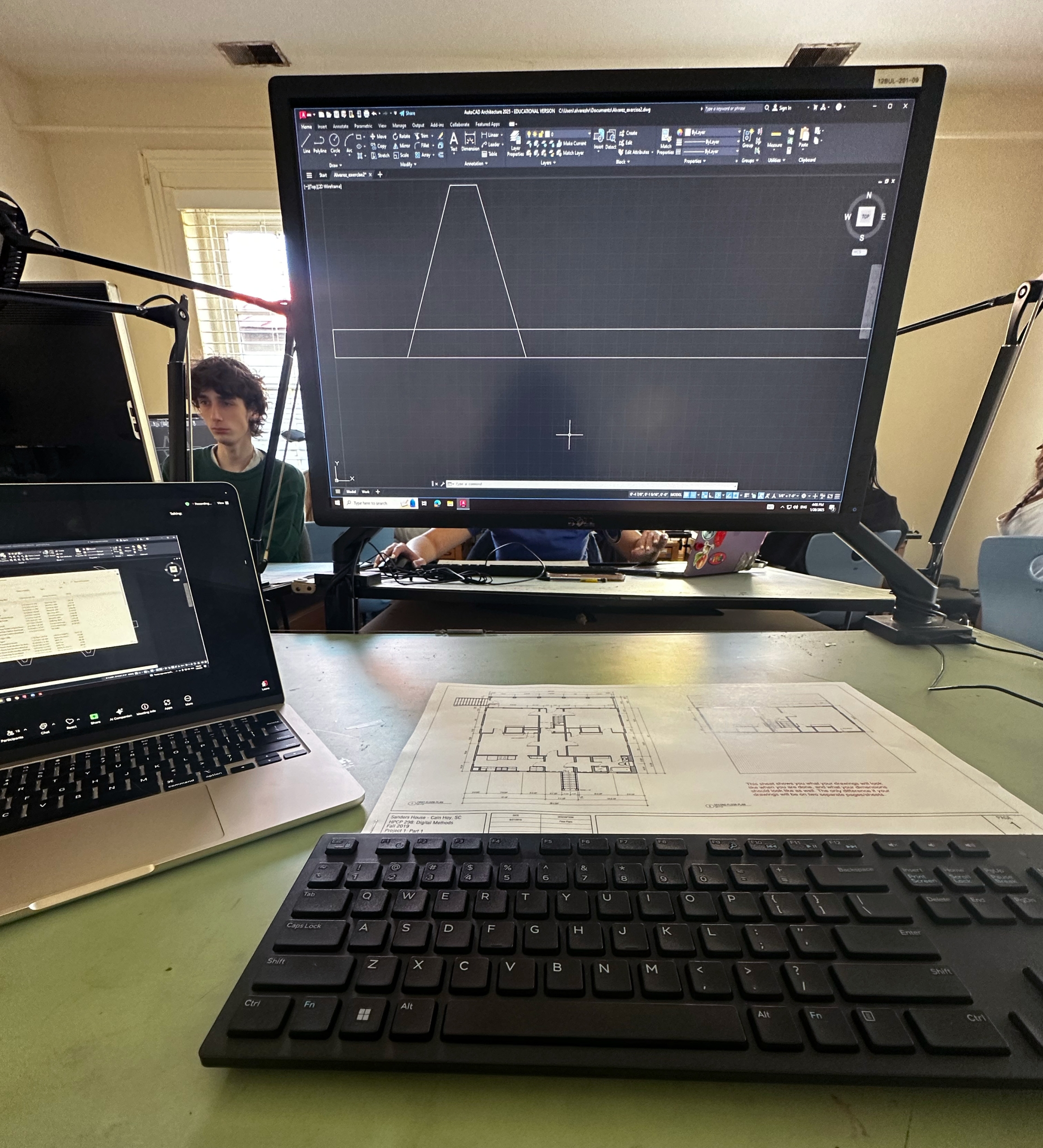


An example of the architectural digital tools used in Historic Preservation.

Sustainability


Have you ever heard “the greenest building is the one that is already built”? Historic Preservation is one of the most sustainable approaches to building. Reusing existing structures reduces construction waste, conserves energy and materials already embedded into the structure, and minimizes the environmental impact from demolition and new construction. Preservation extends the life of structures that have stood for decades, maybe even centuries, while incorporating some of today’s most innovative technologies.

Urban Planning


Urban planning examines how land use, housing, transportation, infrastructure, natural resources, and public spaces work together to shape how communities function and develop over time. Preservationists often collaborate with planners, local officials, and the community to guide zoning decisions, establish historic districts, and enforce strict guidelines that balance future growth with the protection of culturally and historically significant places. This collaboration is important in identifying what residents need and value in their community, along with responding to housing shortages, population growth, and pressures for new investments.

Why Does It Matter?

Historic Preservation isn’t about freezing a place in time, but rather about intentional decision-making that allows communities to evolve. Through the practice of architecture, sustainability, and urban planning, preservation demonstrates that the old and the new can coexist, ensuring we value what already exists as much as what’s next. As I’ve come to understand, Historic Preservation is a genuine, practical strategy for building better, more connected, and more resilient communities for the future.


The College of Charleston’s Historic Preservation and Community Planning (HPCP) Club attending the 71st Carolopolis Awards, presented by the Preservation Society of Charleston.

Career Paths in Historic Preservation

Because historic preservation is interdisciplinary, graduates can pursue careers in architecture, planning, government, museums, conservation, real estate, and community development. 

Possible career paths include:

  •     Architectural Historian
  •     Preservation Architect
  •     Preservation Planner
  •     Historic Site or Museum Coordinator
  •     Community Development Planner
  •     Historic Tax Credit Consultant
  •     Heritage Tourism Coordinator
  •     Historic Trades or Materials Conservation Specialist
  •     Blacksmith

For readers interested in learning more, the National Council for Preservation Education provides information about preservation education, professional qualifications, and career opportunities.

Life After Graduation: Becoming an Architect in Canada

Written by Benjamin Bomben of Issued for Interns

Going through architecture school is a unique experience. Pulling all-nighters, pinning up drawings, making models with an X-Acto knife and no sleep, only to then defend your design concepts in front of panels of critics. All of this while preparing yourself for a profession of continuous learning and development.

However, when you graduate from your master’s degree in architecture and you are met with the realities of the profession, you realize you are really only halfway there.

In Canada, you can’t call yourself an architect the day you get your degree. There’s an entire second chapter, one that may take years to gain the required amount of experience and to truly learn what it means to become an architect.


The Path Nobody Explains in Studio

In Canada, the road from graduate to licensed architect runs through something called the Internship in Architecture Program, or IAP. It’s a structured process where you log thousands of hours of post-grad professional experience across specific categories.

The standard roadmap to becoming an architect in Canada is completing your undergraduate degree in architecture, then going on to complete a master’s degree from an accredited architecture school. It is important to note that in Canada, the Canadian Architectural Certification Board (CACB) is the sole organization that accredits professional degree programs in architecture. If your undergraduate degree is from an accredited pre-professional program, you can typically complete your M.Arch in two years. If it is not, you will likely need to complete a three-year M.Arch program instead. You can check which schools hold CACB accreditation at cacb.ca.

Once you graduate, you begin to focus on obtaining the required hours as part of the Intern Architect Program. You are required to have 2,800 hours to be eligible to write the exams.

While you are working, although your experiences prepare you to write the exams, it can be difficult to figure out the best way to study for them. The ExAC is comprised of four three-hour exams spanning two days, and they can only be written once a year. That means if you fail any of the exams, you have to wait a full year before you can retake the failed exam(s)! While preparing for your exams, it is extremely helpful to meet regularly with your mentor and to efficiently compile all of the recommended ExAC readings to figure out what topics you need to focus on.


The Real Shift: School vs. the Profession

The bigger adjustment out of school is realizing how different the learning curve is compared to anything you experienced in studio.

In school, you spend weeks refining a concept. You iterate on floor plans. You agonize over renderings, diagrams, and perspective sections that you see as works of art. This is extremely valuable in your development, especially the ability to communicate effectively through drawing. But once you are in a professional environment, you realize that every line drawn is a representation of money to be spent, something to be built, and something to coordinate.

What surprises most graduates is how much you continue to learn once you start working, as well as how much of your day involves coordinating through email alongside AutoCAD or Revit. Architecture school develops your way of thinking, how you approach problems, and how the elegance of your solution fits within a design intent. Once you are full time in the profession, you begin to learn how buildings truly come together. You understand how your drawings translate to real construction, what information builders look for in a set of drawings, how different consultants contribute to a project, and how decisions made on paper play out on a job site.

Terms like RFIs, site instructions, addenda, and supplemental details become part of your daily vocabulary. These are things that are rarely discussed in school, but they are how design actually reaches the real world. Most of us had a sense of the complexity involved in architecture while in school, almost as this magical black box. But when you begin to work in the profession, that black box opens up, and you realize the depth of knowledge that still lies ahead.

The good news is that every day on the job is a learning opportunity. The hours you log for the IAP aren’t just a requirement to check off. They’re an education in themselves.


What We Wish We’d Known Going In

If we could go back and tell ourselves a few things before starting the IAP, here’s what we’d say:

Ask questions constantly. In school, you’re expected to have a strong concept and defend it. At work, especially early on, the smartest thing you can do is ask why something is done a certain way. When starting out, because you don’t know what you don’t know, taking a moment to reflect and ask why gives you an opportunity to truly understand what you are doing rather than simply generating output to meet deadlines. Every site visit you attend, every coordination meeting you sit in — those are learning opportunities that add up fast.

The exam is its own challenge. When it is time for you to write your exams, the ExAC covers a massive range of topics: building science, structures, professional practice, project and construction management, programming, and more. Studying for it on top of a full-time job requires a real plan. When you then factor in commuting and other events outside of work, it becomes very important to have a set of organized resources you can easily access.


Is it Worth It?

Becoming a licensed architect in Canada is demanding, but it’s also deeply rewarding. Every hour logged, every shop drawing reviewed, every exam section studied for — it all adds up to a level of competence and confidence you can’t get any other way.

The profession needs people who understand both the big design ideas and the small construction details. The IAP and ExAC process, for all its challenges, is designed to make sure you develop both sides.

If you’re a student reading this and wondering what comes after graduation — it’s a lot, but it’s totally doable. The path can be long. The learning curve is steep. And the day you finally get those letters after your name, you’ll know you earned every single one of them.


Issued for Interns is a study platform built by candidates who passed the ExAC, covering all 13 exam themes with textbook notes, practice questions, mock exams, and key readings.