
What is Historic Preservation and Why Does It Matter?
Hi there! My name is Haley Alvarez, and I am a rising senior at the College of Charleston studying Historic Preservation and Community Planning with a minor in Urban Studies. I am also a member of the Historic Preservation & Community Planning (HPCP) Club on campus and a member of the Committed to Charleston organization. Throughout my college career, one of the most common questions I’ve been asked is, “What exactly is historic preservation?” It’s a great question, and one that deserves more than a simple answer.
When most people hear the words historic preservation, they picture restoring an old house or protecting a well-known landmark. While that is certainly part of the profession, historic preservation is much broader. It is an interdisciplinary field that involves practices from architecture, sustainability, urban planning, and community engagement to protect the places that tell our stories. Preservation practices strive to thoughtfully manage change so that communities can grow while preserving the cultural, historical, and social character that makes them unique.
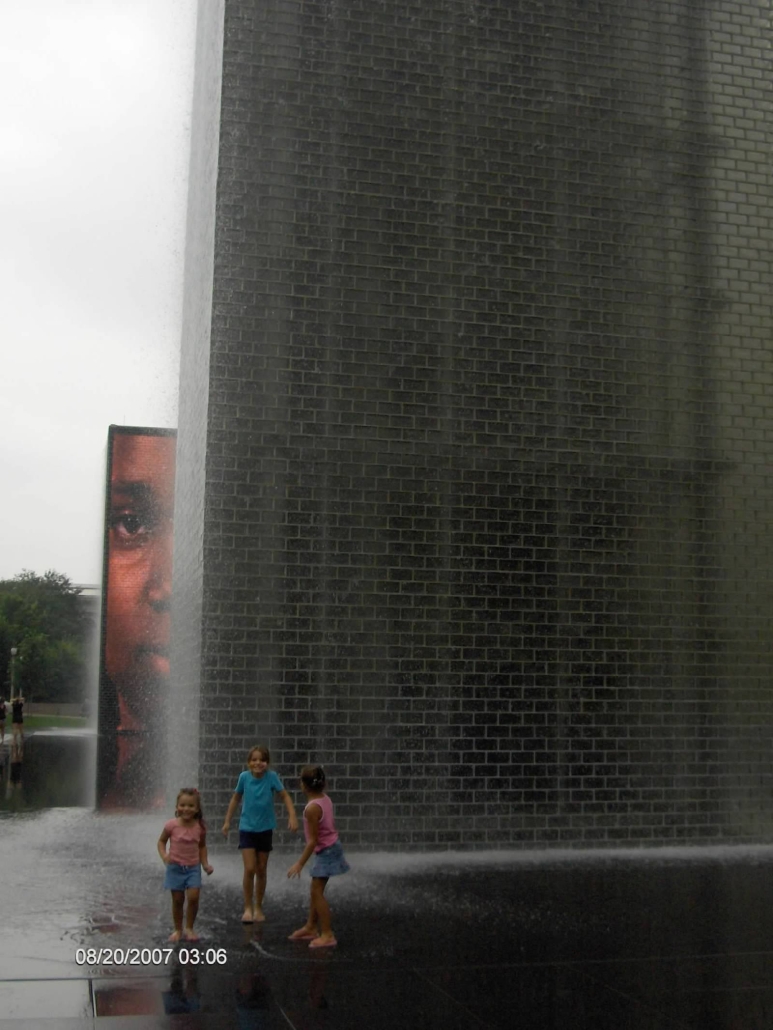
My sisters and I visiting Crown Fountain in Millennium Park. My childhood in Chicago really shaped my love for preservation and architecture.
What initially drew me to choose Historic Preservation as a career path was my childhood growing up in Chicago, Illinois. My mom would often take me on scenic drives through the city, and I was always fascinated by the architecture. Every building seemed to tell a story through its intricate details, craftsmanship, materials, and design. As I grew older, I began to appreciate that those buildings represented more than just beautiful architecture; they reflected the people, history, and culture that shaped the city. I distinctly remember the strong sense of community that existed within many of Chicago’s neighborhoods. Returning today, I’ve noticed that some of that character has changed, which has reinforced the concept that preservation isn’t just about saving old buildings; it’s about protecting the identity and sense of place that make communities meaningful while allowing them to grow and evolve.
Here’s a breakdown of how different disciplines come together in the practice of Historic Preservation:
Architecture
Architecture is one of the most recognizable aspects of historic preservation. Architecture and preservation intertwine to restore, rehabilitate, and adapt preexisting historical structures. Adaptive reuse concepts are most notable during this process to avoid demolition and find new uses for buildings, typically preserving their character and craftsmanship. Whether transforming a former city bank into a beautiful wedding venue or converting a former post office into a corporate building, preservation demonstrates how thoughtful design can connect the past with the needs of today’s communities.
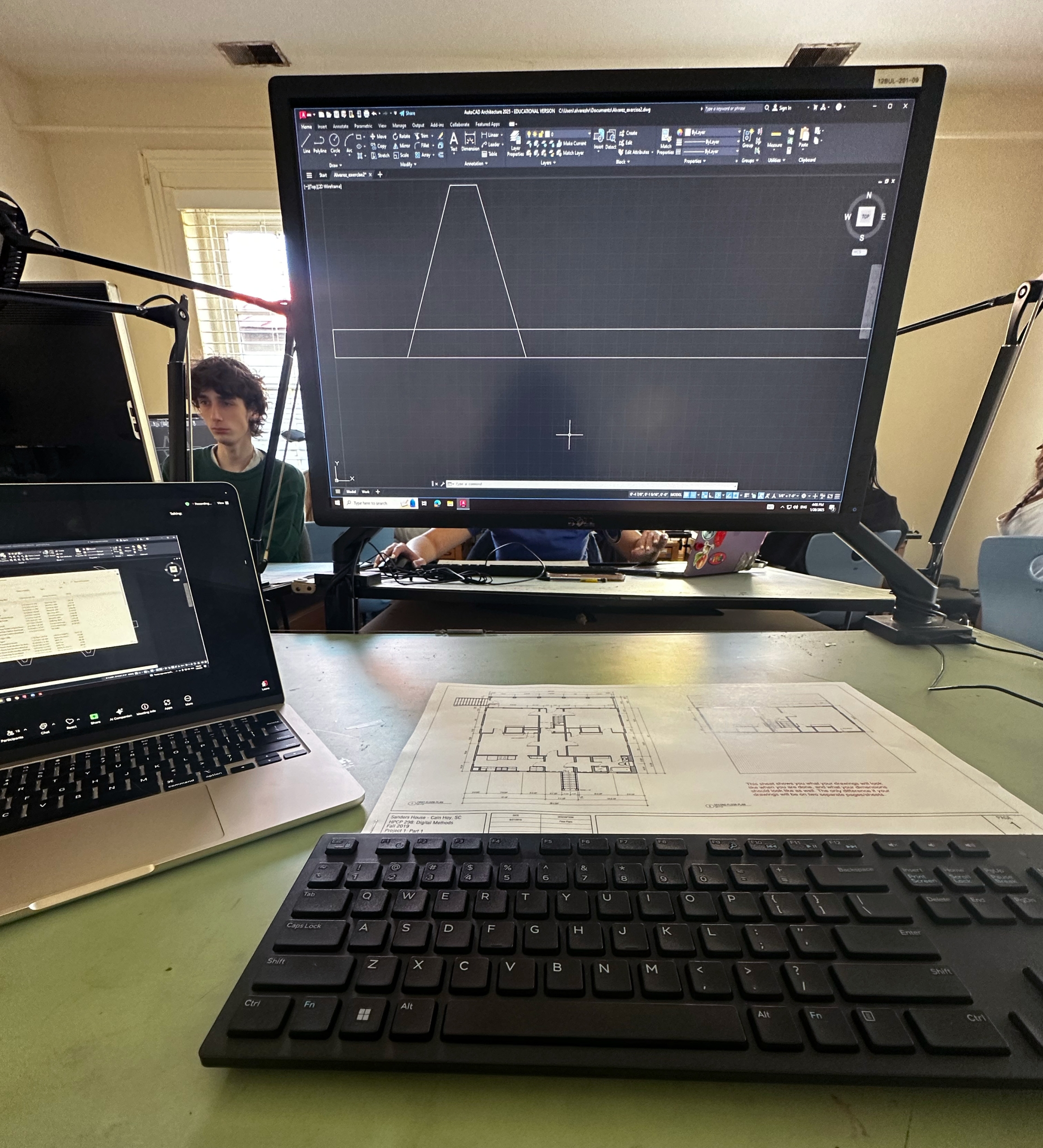
An example of the architectural digital tools used in Historic Preservation.
Sustainability
Have you ever heard “the greenest building is the one that is already built”? Historic Preservation is one of the most sustainable approaches to building. Reusing existing structures reduces construction waste, conserves energy and materials already embedded into the structure, and minimizes the environmental impact from demolition and new construction. Preservation extends the life of structures that have stood for decades, maybe even centuries, while incorporating some of today’s most innovative technologies.
Urban Planning
Urban planning examines how land use, housing, transportation, infrastructure, natural resources, and public spaces work together to shape how communities function and develop over time. Preservationists often collaborate with planners, local officials, and the community to guide zoning decisions, establish historic districts, and enforce strict guidelines that balance future growth with the protection of culturally and historically significant places. This collaboration is important in identifying what residents need and value in their community, along with responding to housing shortages, population growth, and pressures for new investments.
Why Does It Matter?
Historic Preservation isn’t about freezing a place in time, but rather about intentional decision-making that allows communities to evolve. Through the practice of architecture, sustainability, and urban planning, preservation demonstrates that the old and the new can coexist, ensuring we value what already exists as much as what’s next. As I’ve come to understand, Historic Preservation is a genuine, practical strategy for building better, more connected, and more resilient communities for the future.
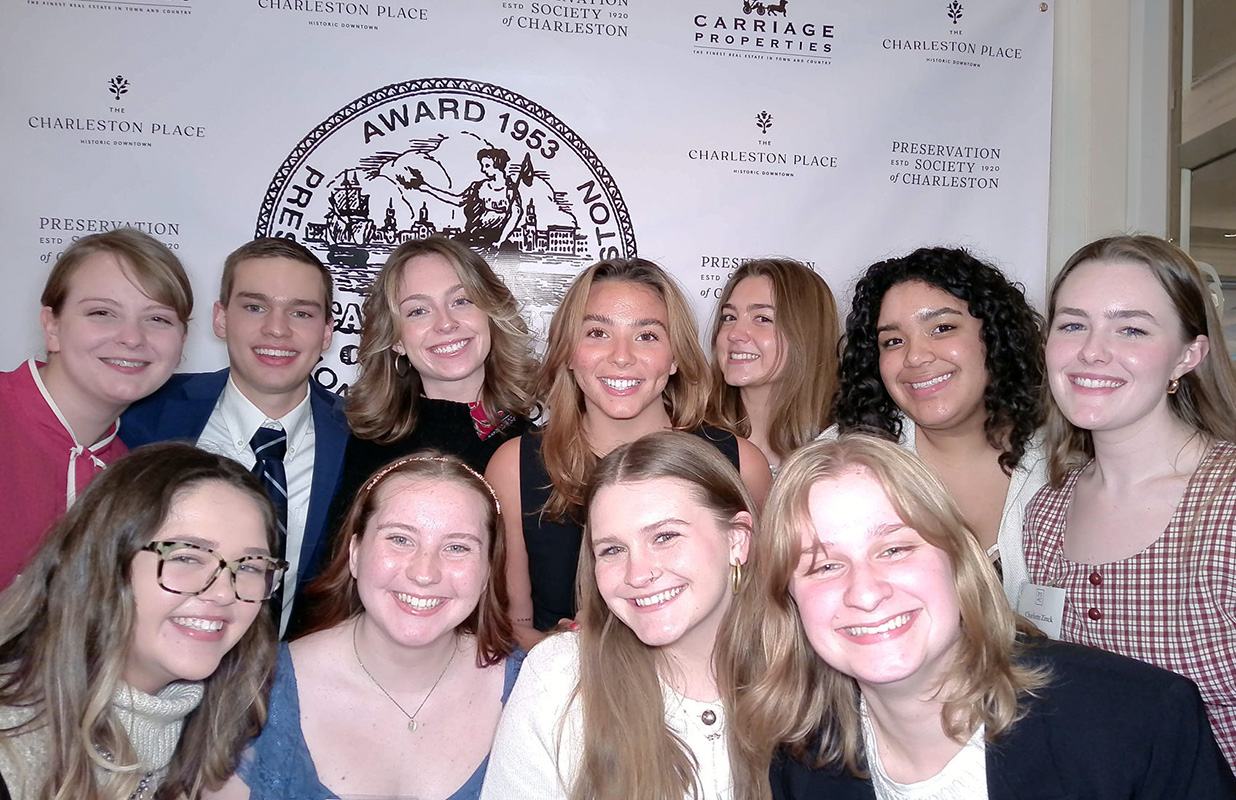
The College of Charleston’s Historic Preservation and Community Planning (HPCP) Club attending the 71st Carolopolis Awards, presented by the Preservation Society of Charleston.
Career Paths in Historic Preservation
Because historic preservation is interdisciplinary, graduates can pursue careers in architecture, planning, government, museums, conservation, real estate, and community development.
Possible career paths include:
- Architectural Historian
- Preservation Architect
- Preservation Planner
- Historic Site or Museum Coordinator
- Community Development Planner
- Historic Tax Credit Consultant
- Heritage Tourism Coordinator
- Historic Trades or Materials Conservation Specialist
- Blacksmith
For readers interested in learning more, the National Council for Preservation Education provides information about preservation education, professional qualifications, and career opportunities.