2026 Study Architecture Student Showcase - Part IV
The materials that make up a building tell a story. From mass timber and aluminum to masonry and polycarbonate, building materials play a large role in the functionality and sustainability of a space. Part IV of the 2026 Study Architecture Student Showcase features projects that explore materiality in great detail. Each featured project demonstrates how materiality plays a large role in the built environment.
Scroll below to take a look!
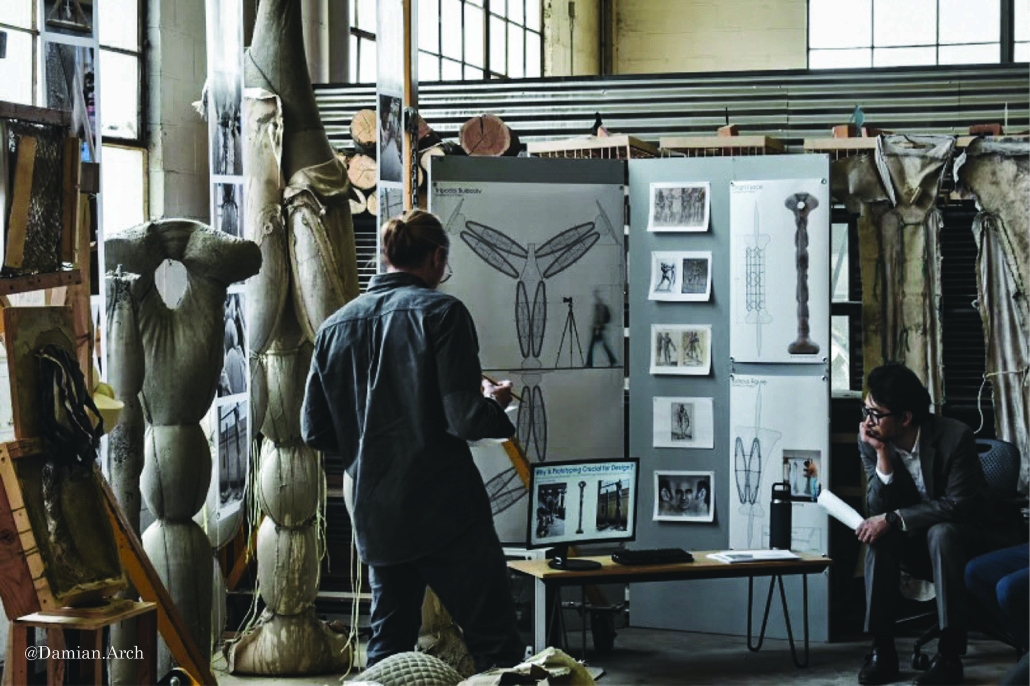
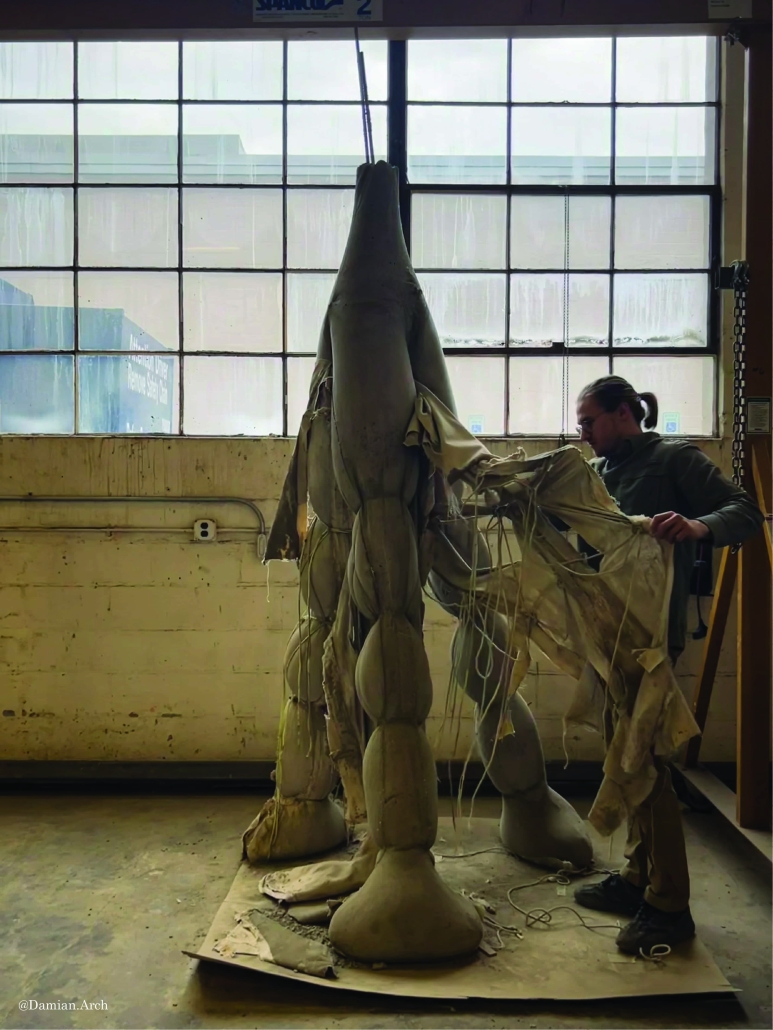
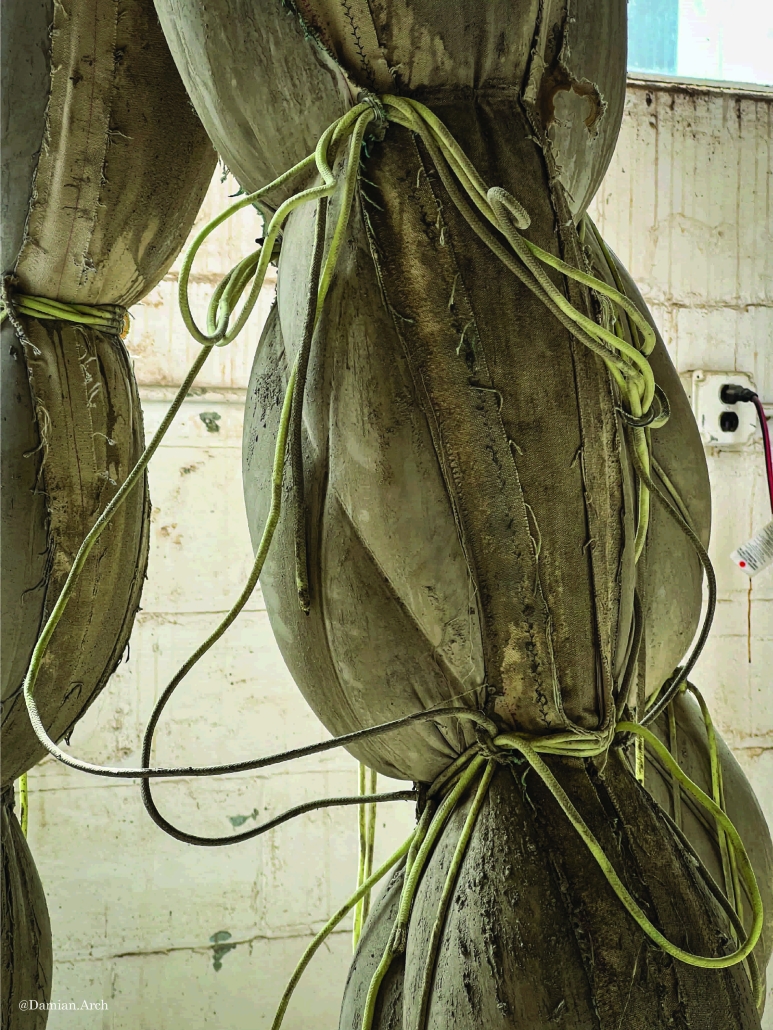
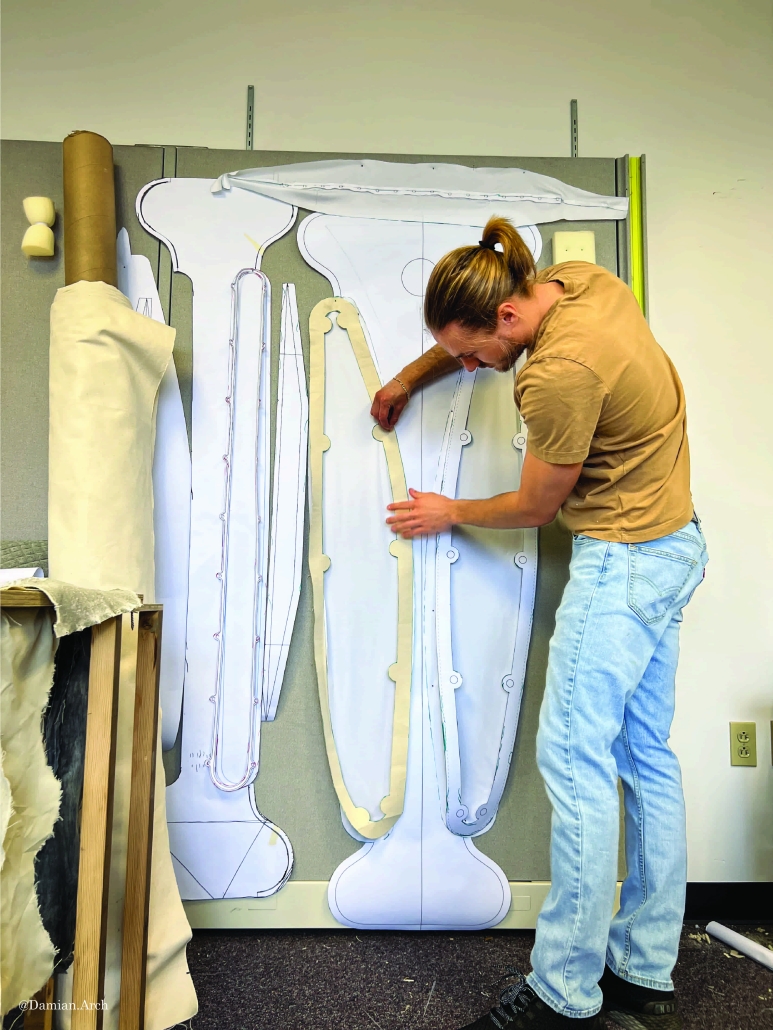
F[3] by Daniela Cantu, Staci Collins, Timotei Dudas, Ana Gaytan, Robert Guerrero, Steve Gutierrez, Luis Horcasitas, Samiha Mahzabeen, Moises Pereyra, Garrett Rodriguez & Alfredo Sanchez, B.Arch. ‘26
University of Texas at San Antonio | Advisor: Armando Araiza
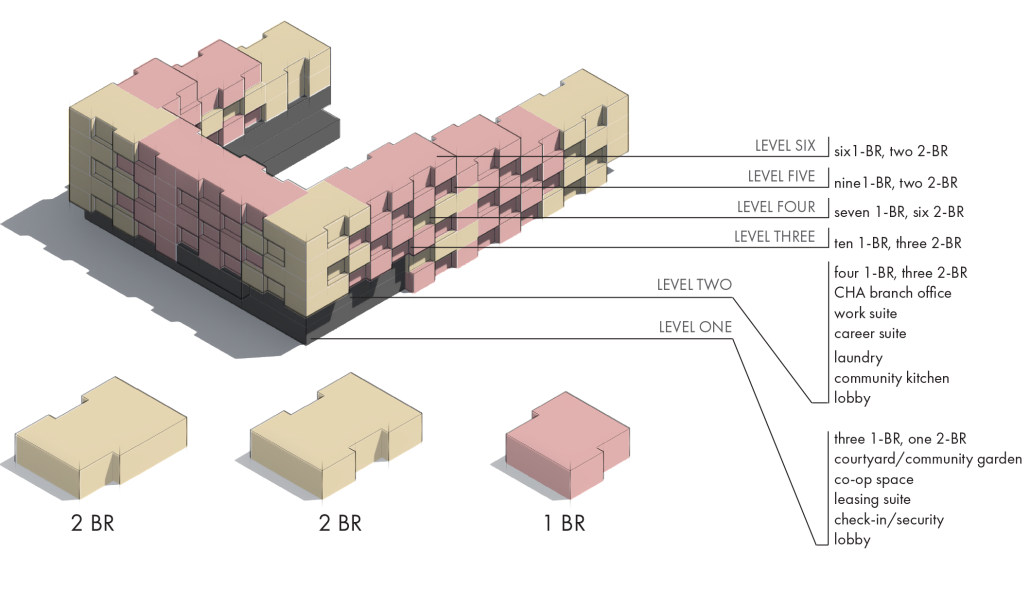
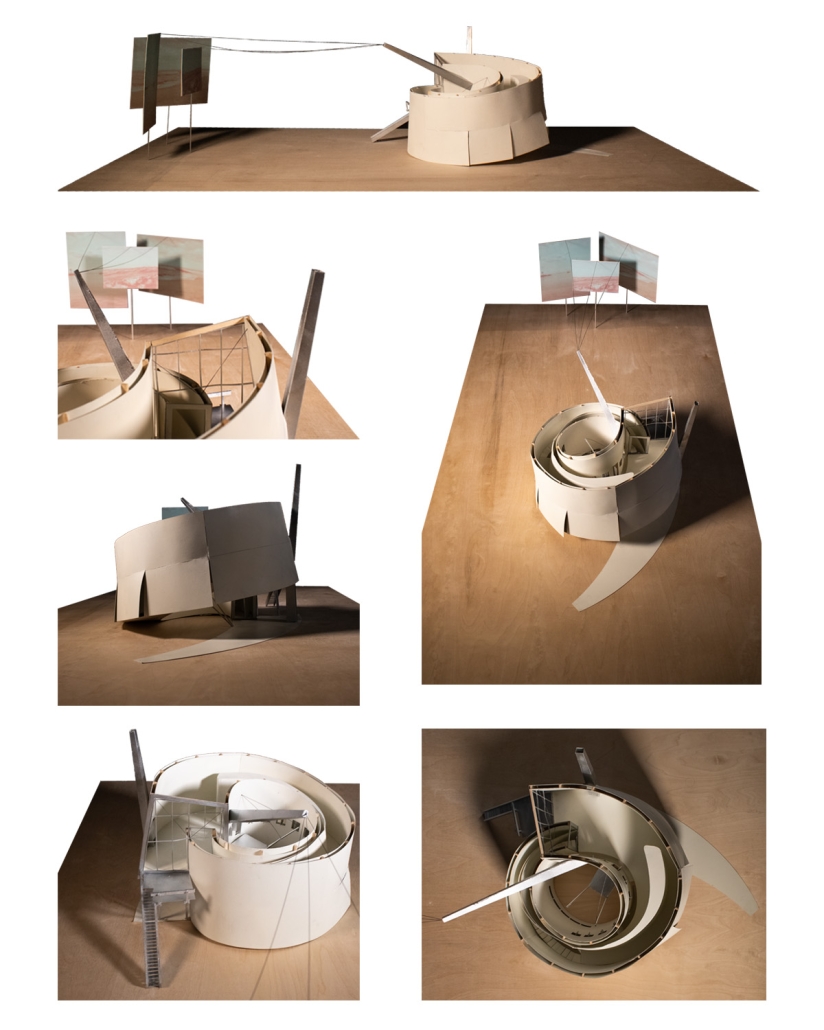
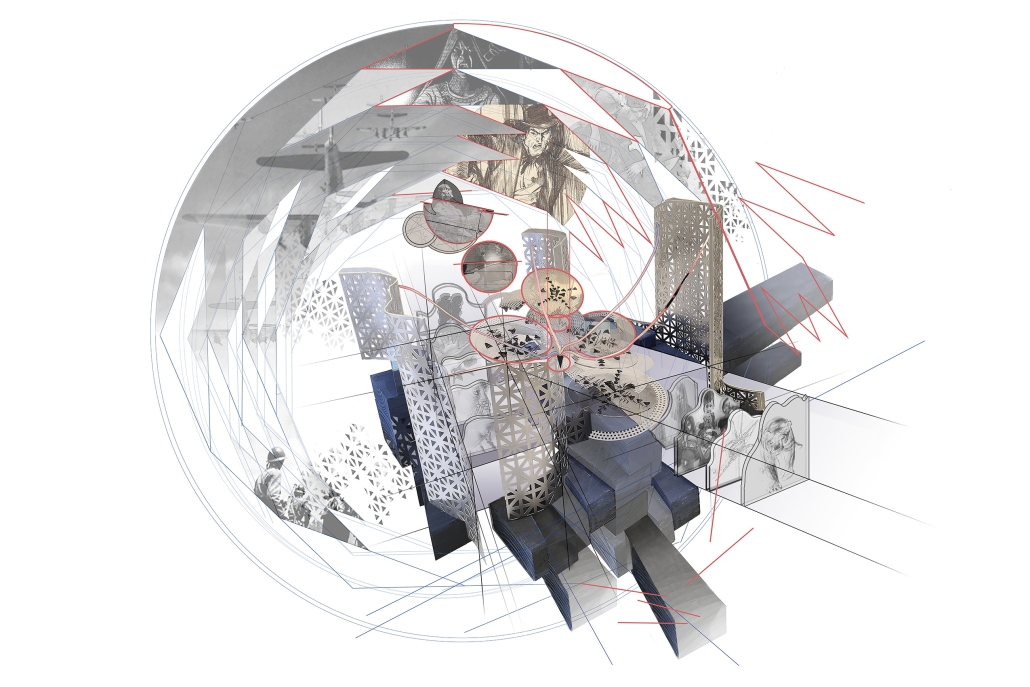
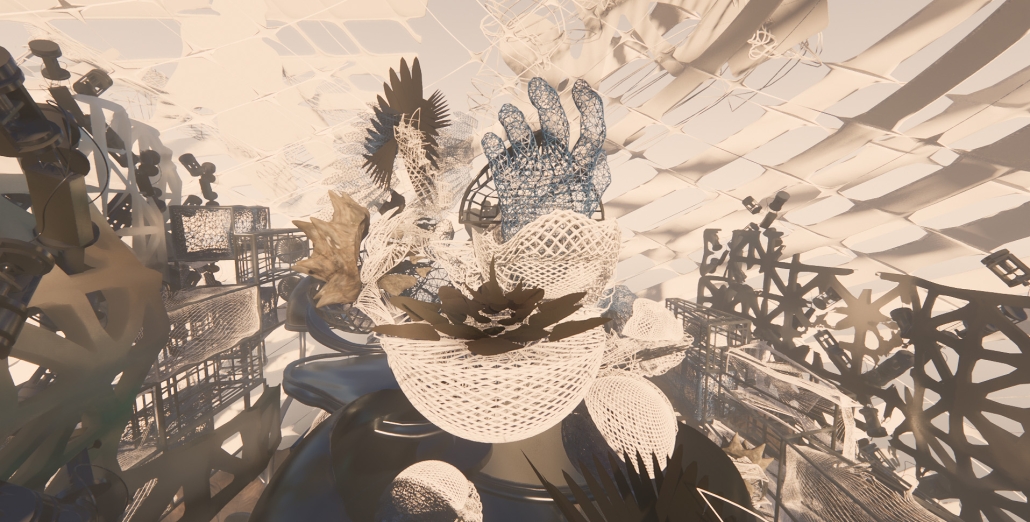
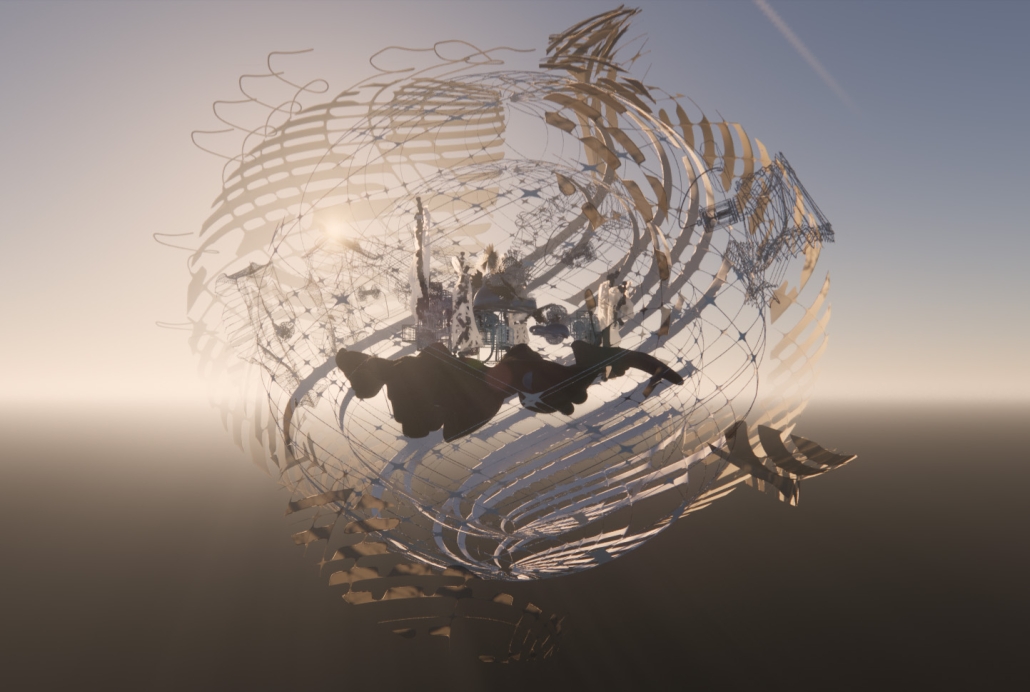
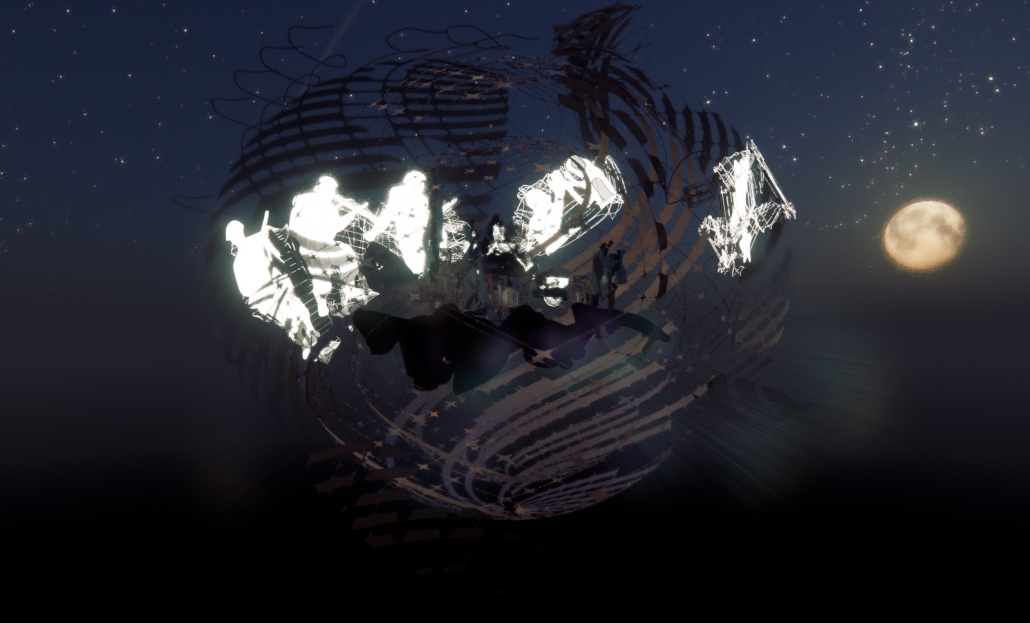
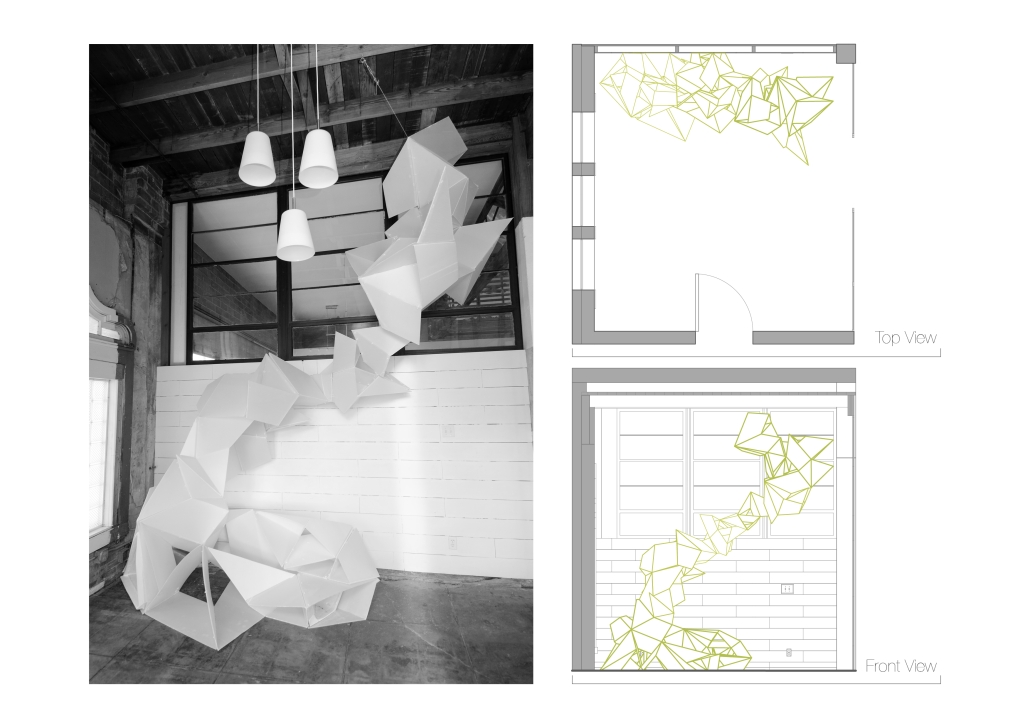
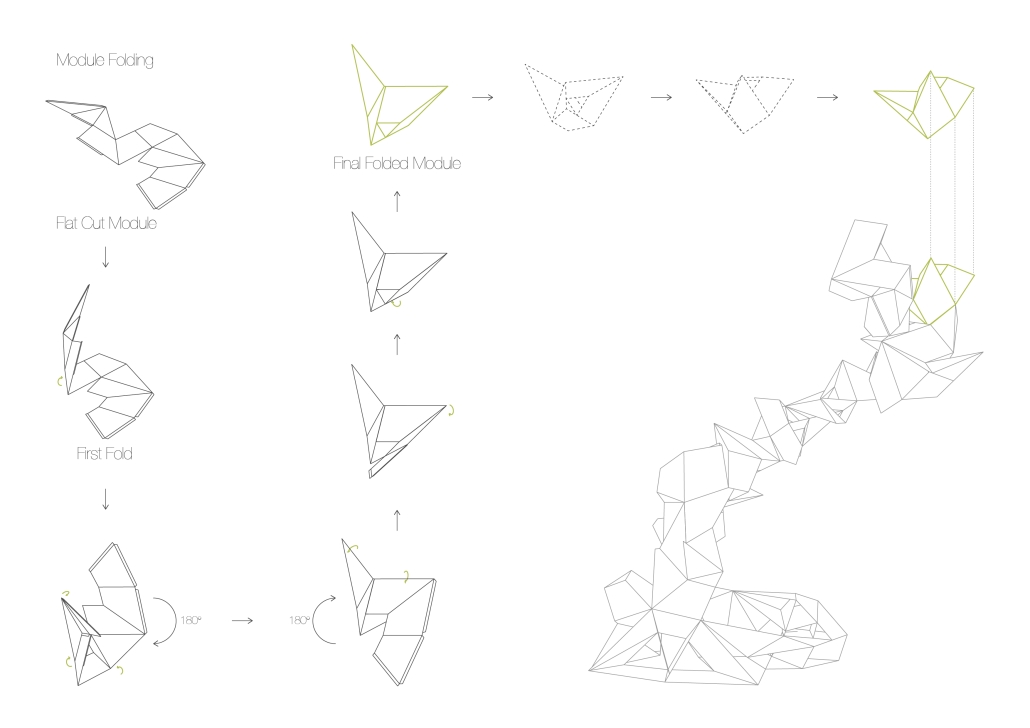
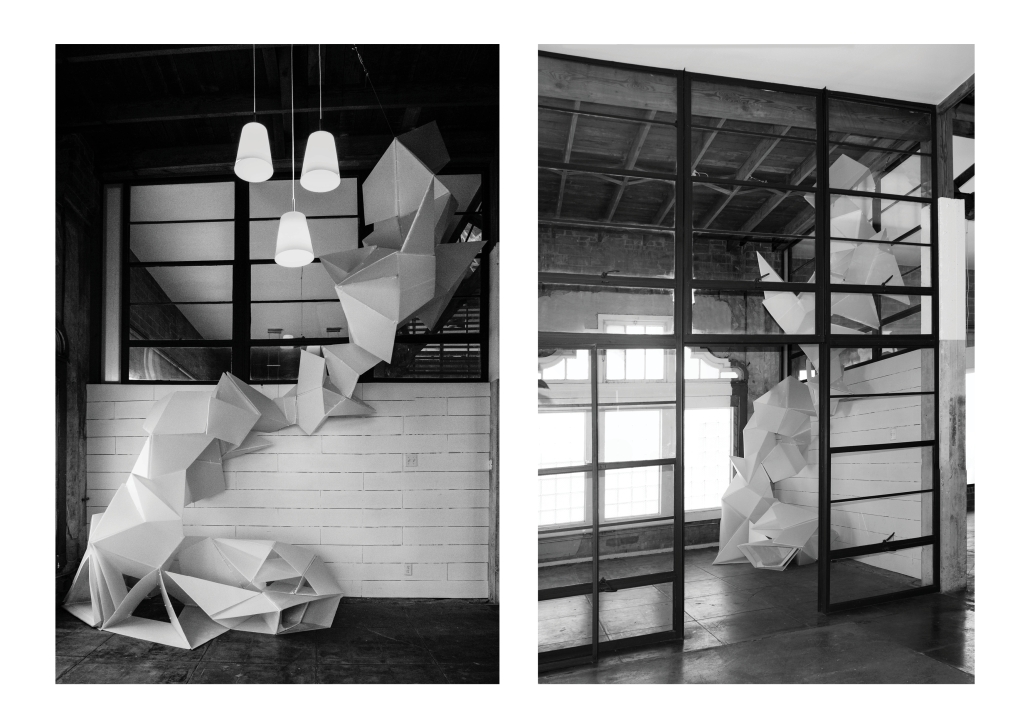
F[3] was designed for the entrance of a design studio, the moment before a visitor reaches a reception desk, where the space needs to do one thing immediately: signal what design, at its best, is capable of. It’s meant to be intriguing and inviting from the first glance.
The project was approached as an open question: how far could a single material be pushed before it told you what it wanted to become? The installation is a statement about the next generation of designers, showing what students can produce when they’re given the license to experiment with material, craft, and technology.
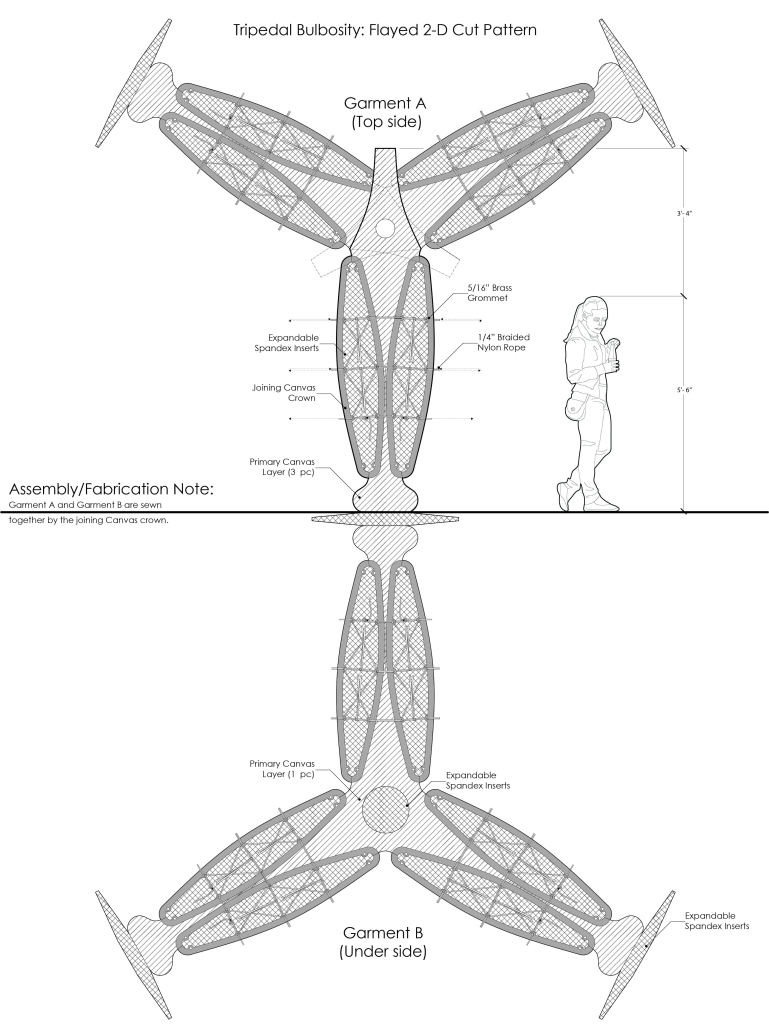
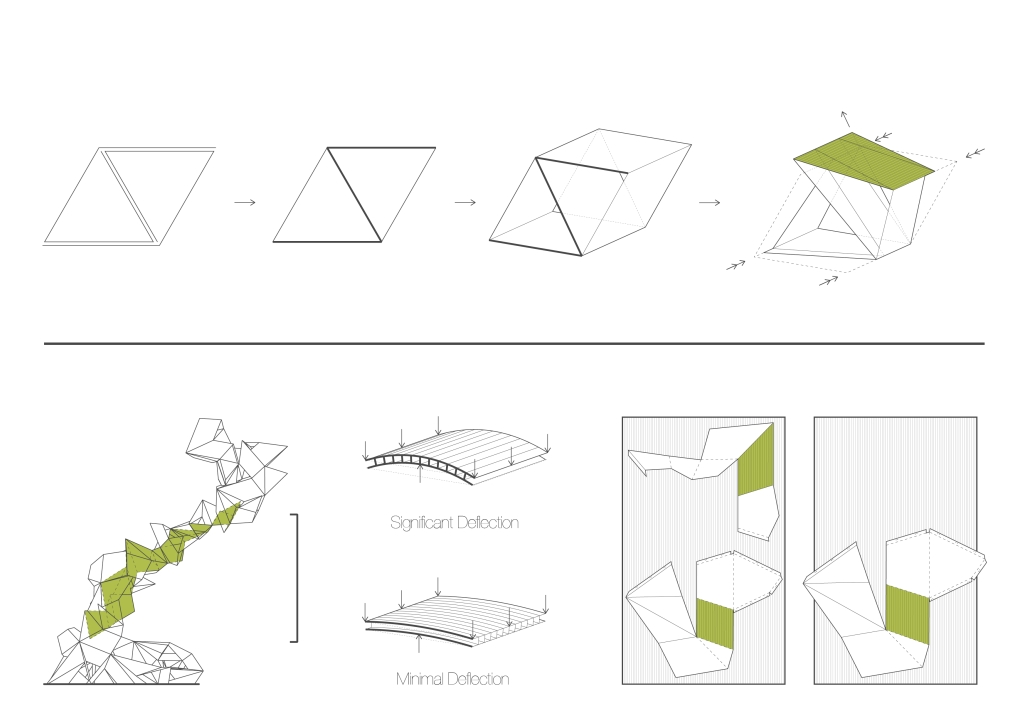
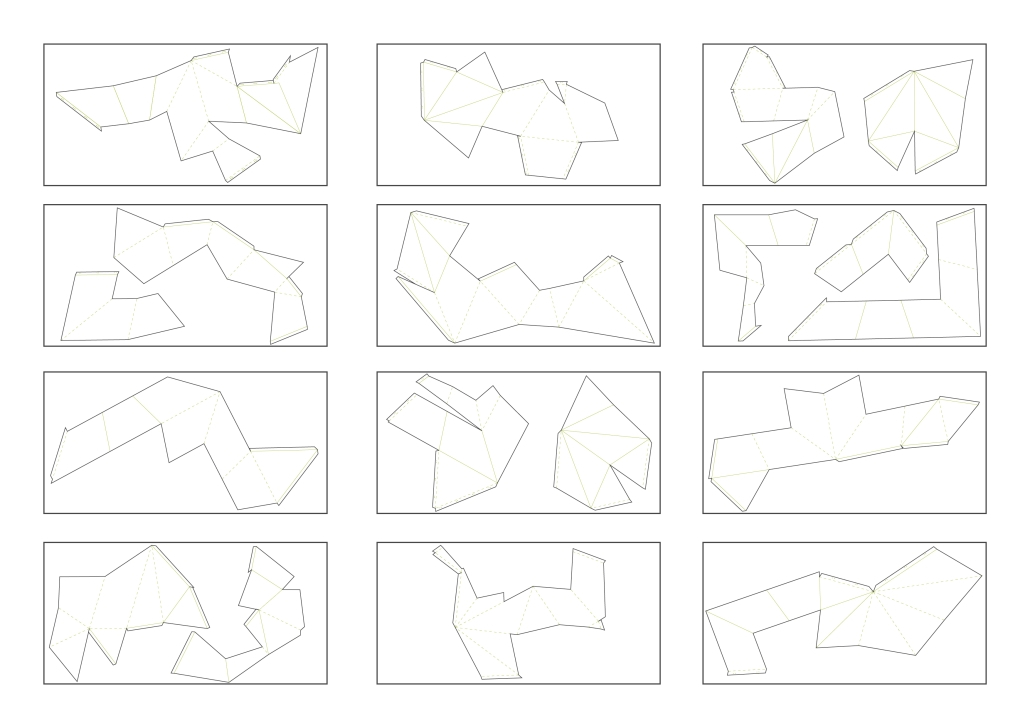
That experimentation started with understanding the material. Before any geometry was fixed, a materials board took shape: reflective dichroic film, aluminum composite and honeycomb panels, mirrored acrylic, woven textiles, faceted and wave-relief surfaces, twin-wall polycarbonate, each one tested on its own terms, for its color, its stiffness, its rigidity once folded, with a set of tests built around whatever qualities that material actually offered. The built project is positioned beside three large south-facing windows, the twin-wall polycarbonate had to do more than fold well, it had to carry and diffuse daylight, letting sun stream through its faceted surfaces and animate the space over the course of a day. Out of that process, the material stood out, for its structural rigidity once folded, for the quality of light it let through, and for how that same rigidity let individual modules interlock with one another directly, with minimal hardware. That discovery, not a predetermined shape, became the generative logic of the project. The faceted form of F[3] is a direct expression of what that material wanted to do once bent along a channeled crease.
Instagram: @armando_araiza
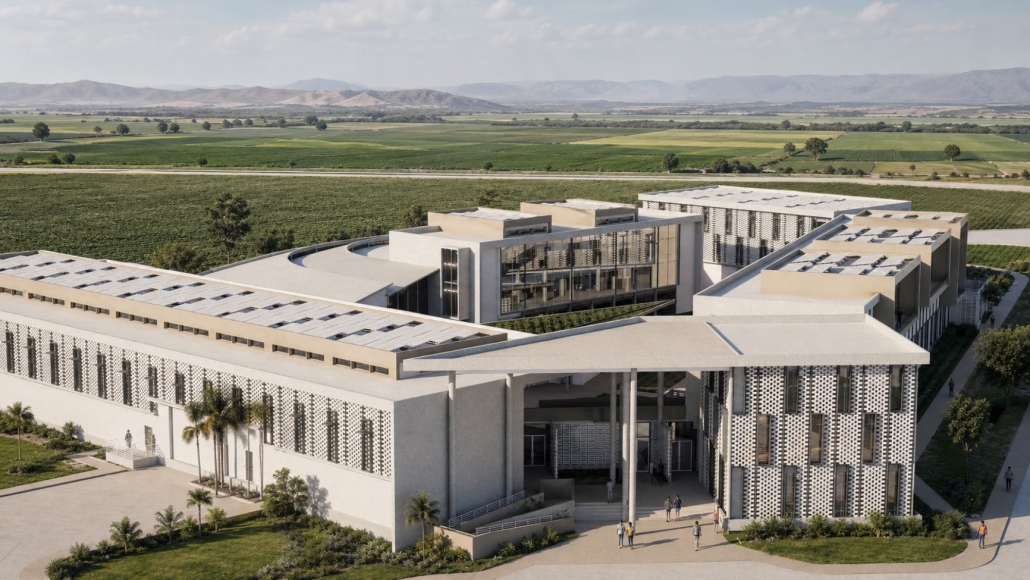
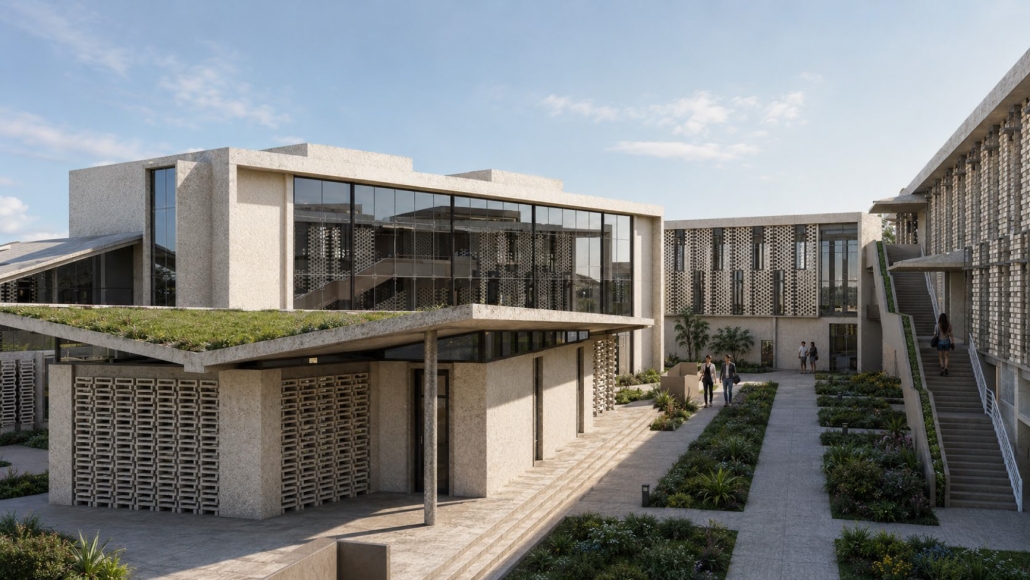
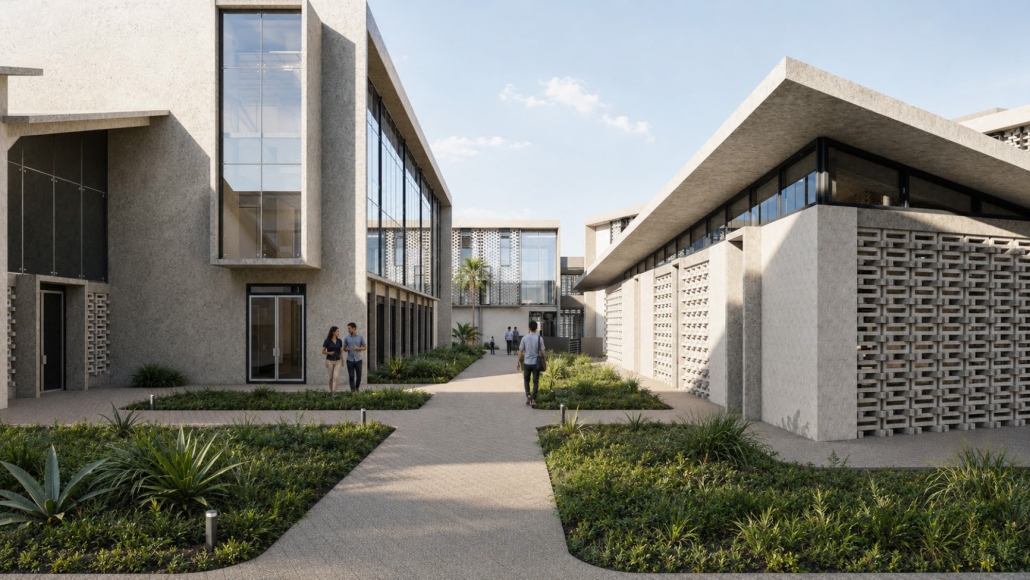
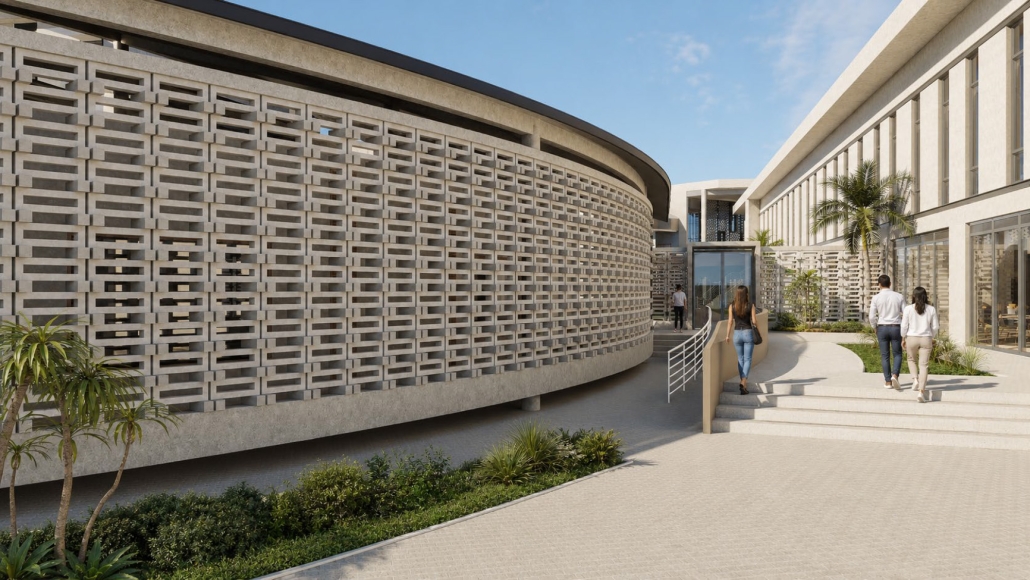
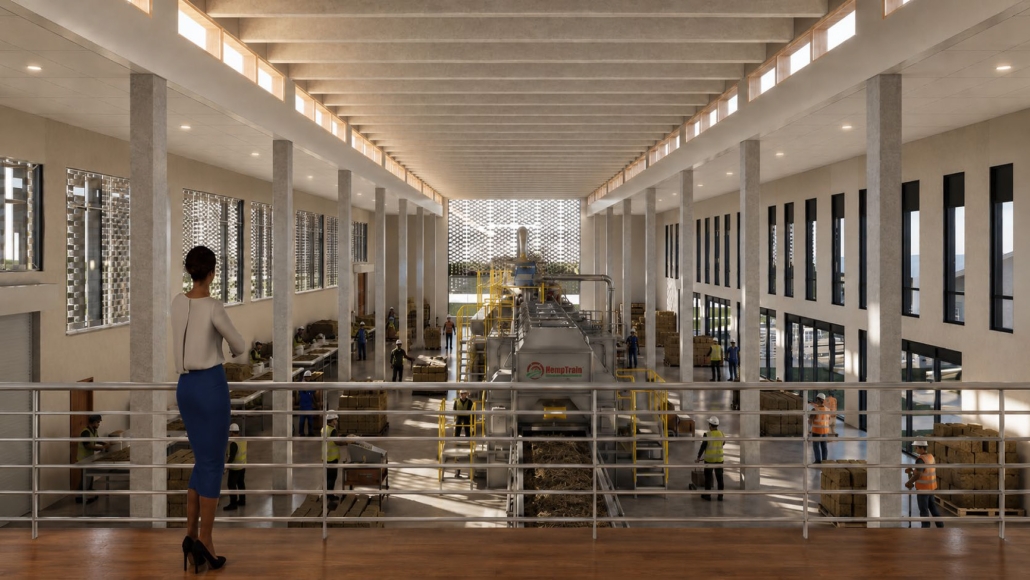
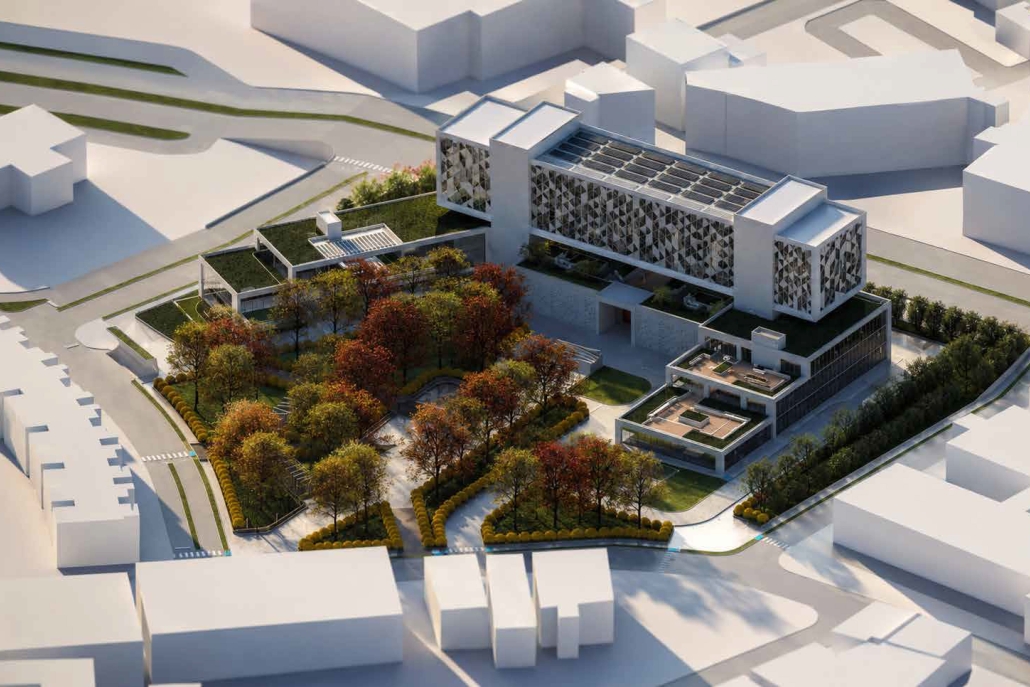
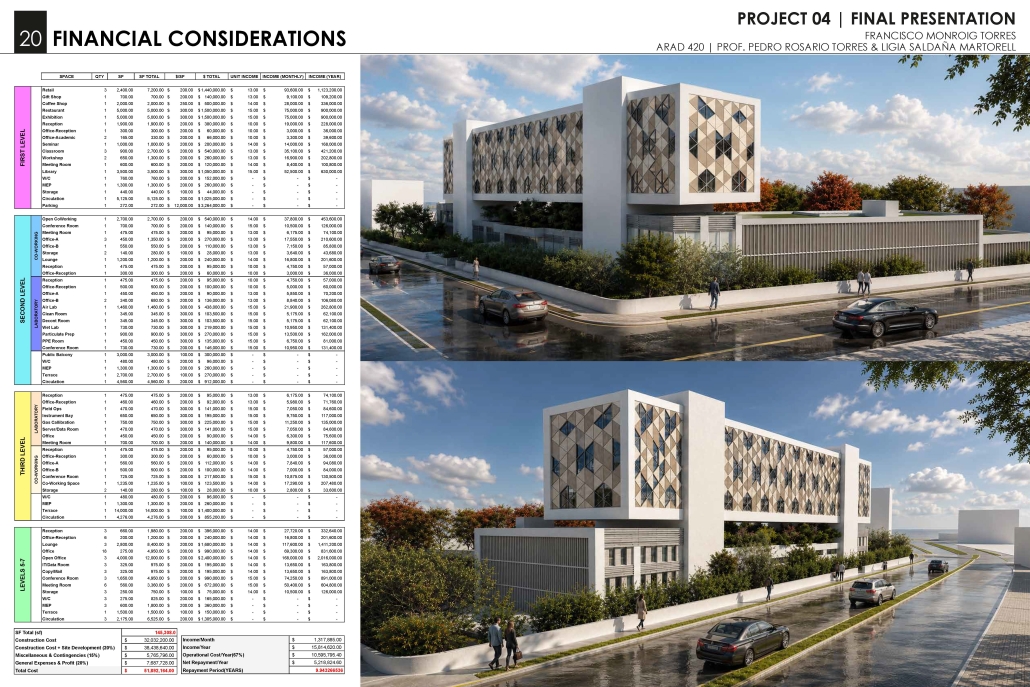
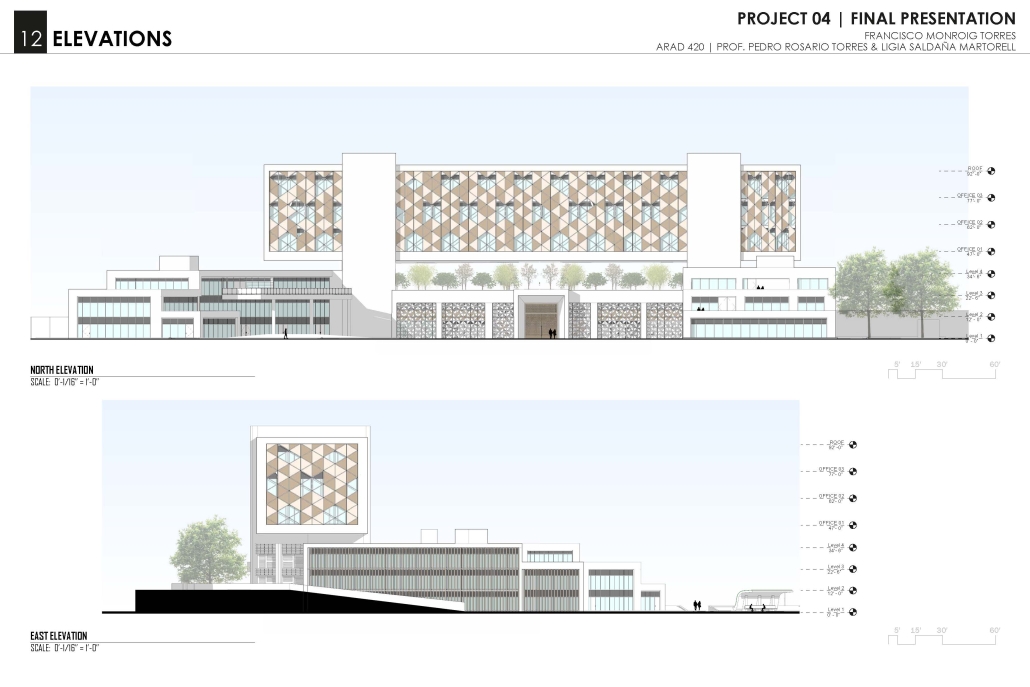
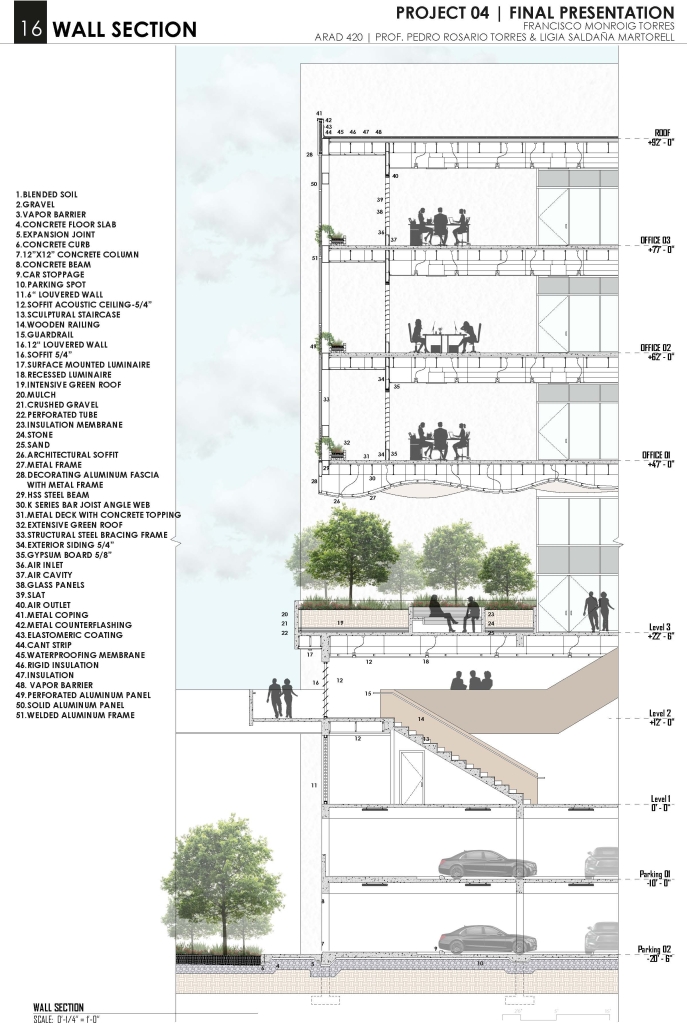
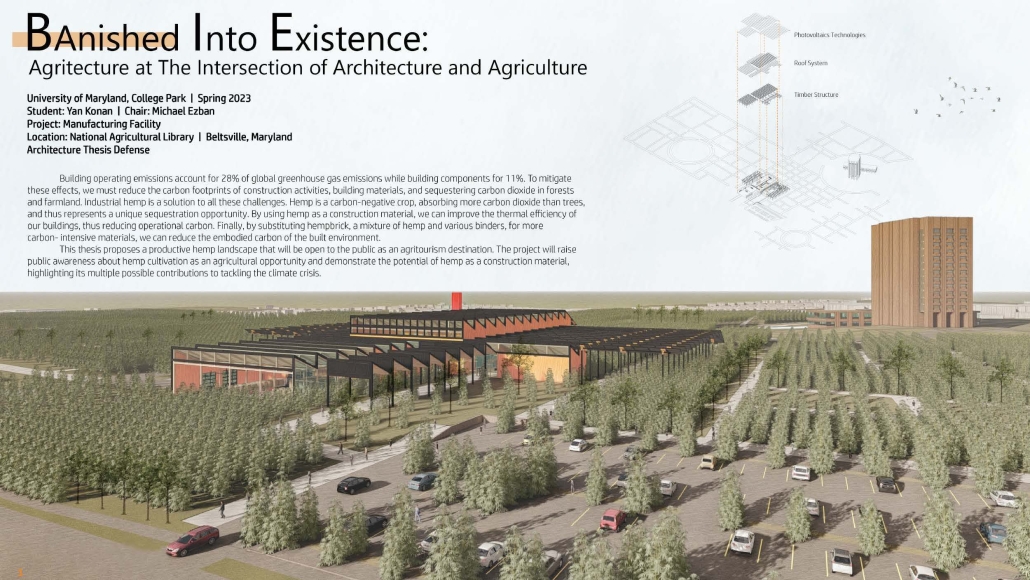
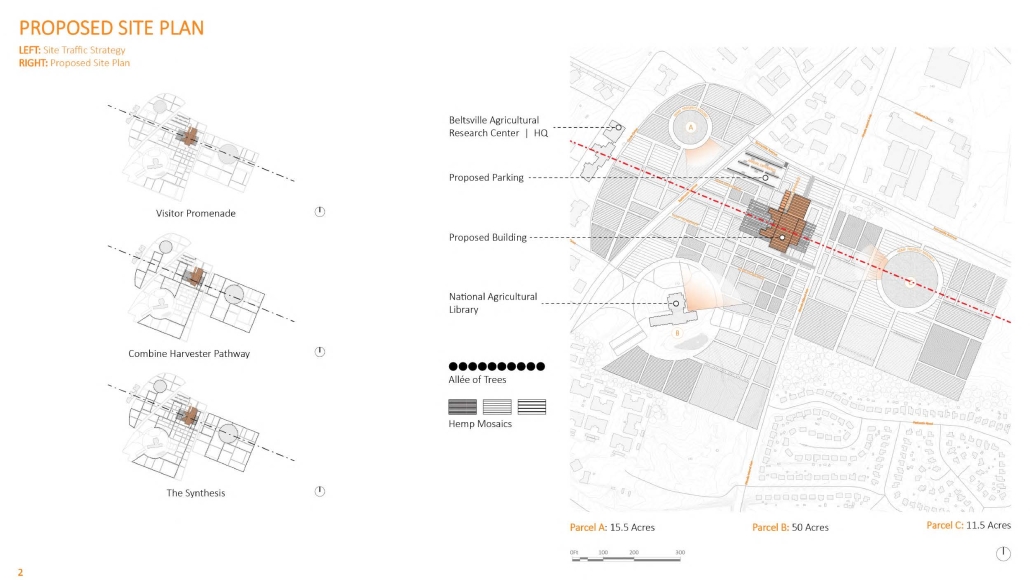
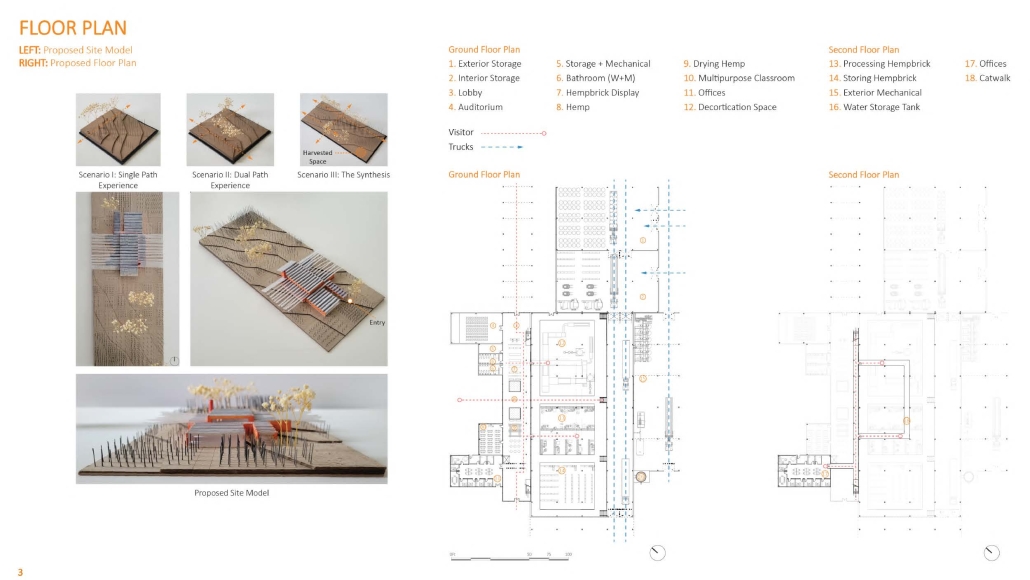
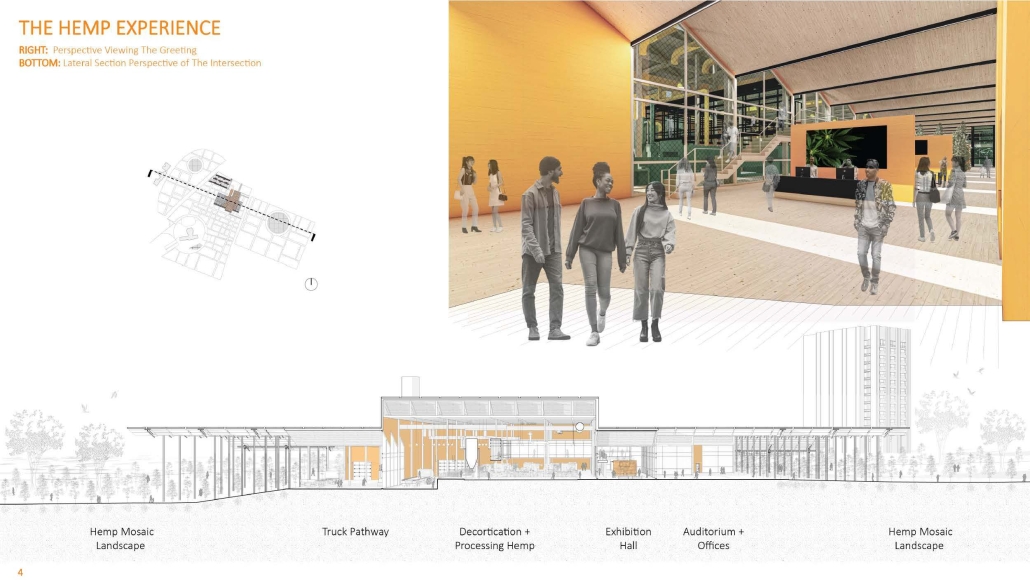
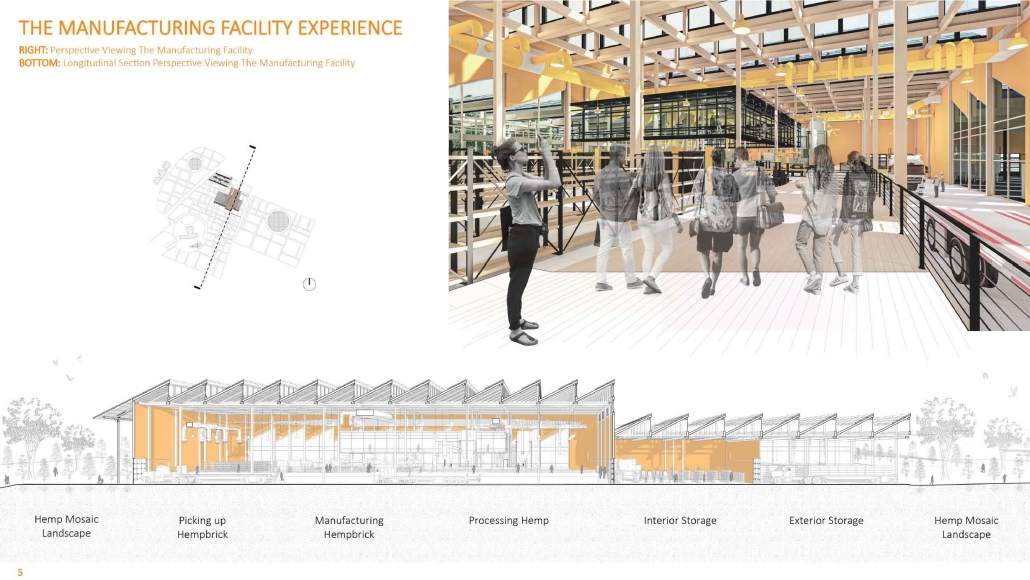
From Seeds to Architecture: Reducing the Carbon Footprint Through Bio-Based Materials – Hemp Innovation & Research Center by Adrián Vargas-Galloza, B. Arch. ‘26
Pontifical Catholic University of Puerto Rico | Advisors: Luis V. Badillo-Lozano & Pedro A. Rosario-Torres
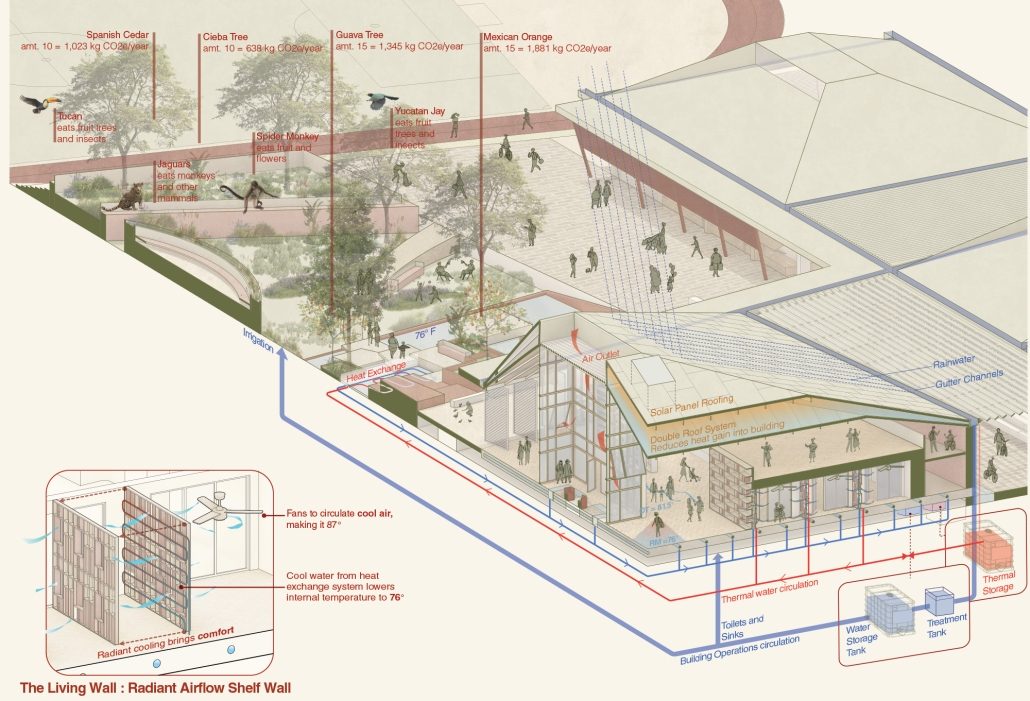
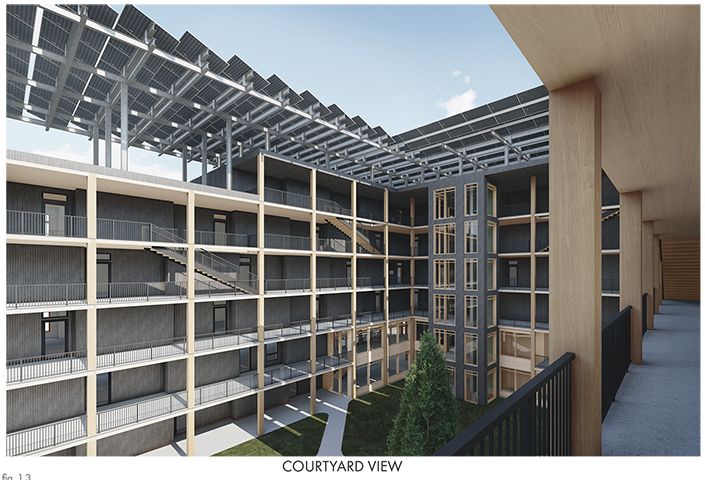
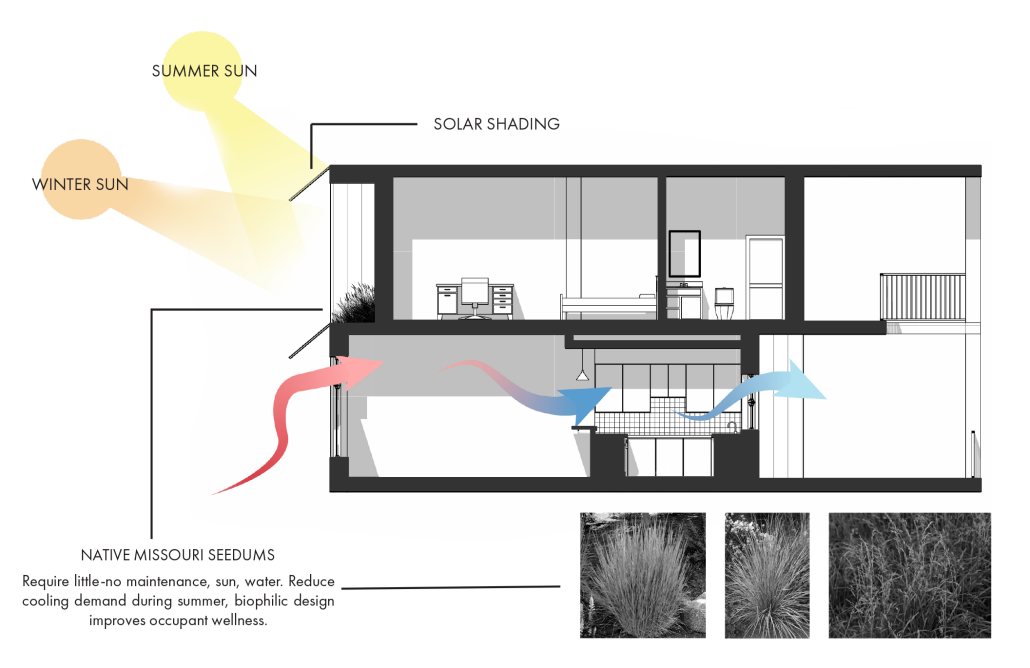
Conventional construction is one of the main contributors to environmental impact, significantly increasing carbon emissions, natural resource consumption, and waste generation. This approach relies on standard methods and materials that have been widely accepted and used for many years. However, these materials are often non-renewable, require high energy consumption for their production, and have a considerable environmental impact. In this context, bio-based materials are presented as a sustainable alternative to reduce the ecological footprint of buildings and promote more responsible practices in the construction industry.
As environmental regulations become stricter and social awareness about climate change increases, the construction industry is faced with an urgent need to adapt. In this sense, bio-based materials provide an opportunity for the sector to evolve towards a more sustainable future. These initiatives not only mitigate the negative impacts of construction, but also promote a positive change in the way architects design, aligning construction practices with global sustainability goals.
The creation of research centers dedicated to studying and developing new solutions based on these materials is essential to face current environmental challenges. These centers can become key platforms for innovation and the advancement of technologies that not only reduce environmental impact, but also promote more efficient and responsible construction practices.
It’s very important to mitigate the climate change that has affected humanity so much, by developing new ways of constructing buildings in a more sustainable way. This is where the future of construction lies, and being a pioneer in it provides the tools to take and create the first design rules of a new emerging style that is responsive to the problems that are experienced in the present and that will continue to affect the future. Now is the time to detect the peak of this immense wave that is approaching and to position correctly in this new industry of bio-based materials that is approaching.
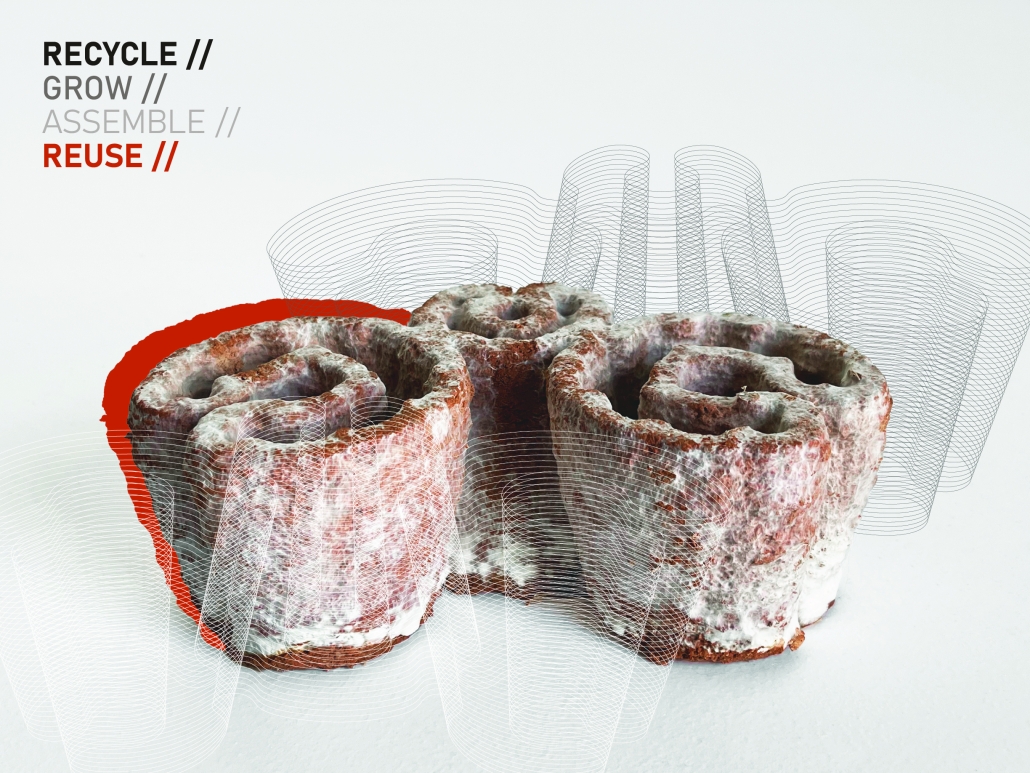
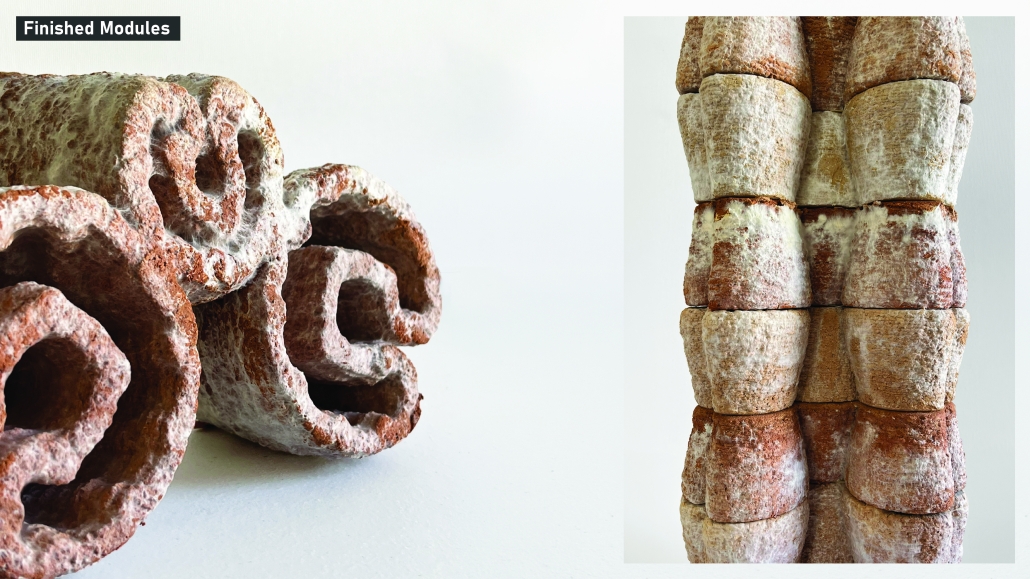
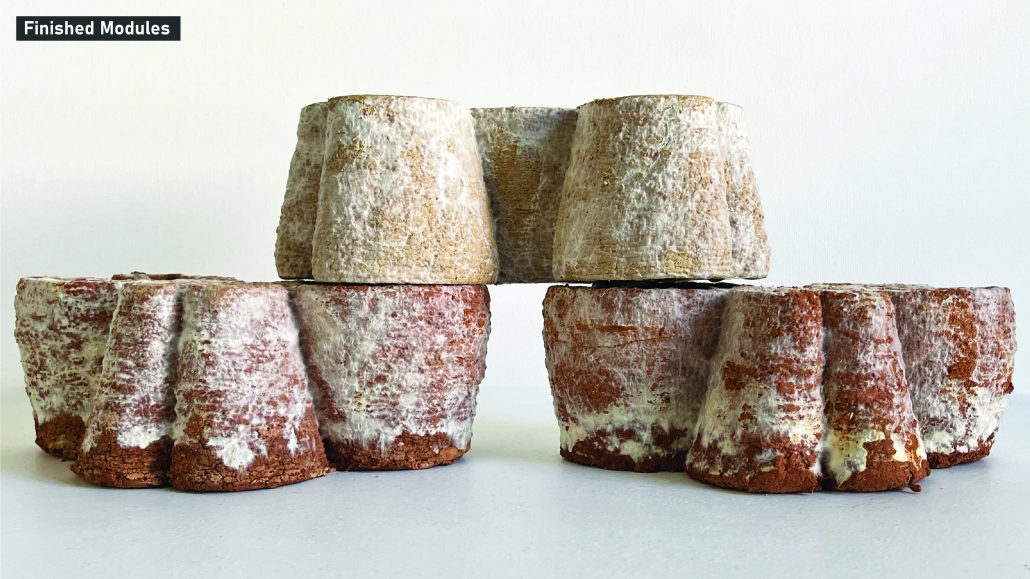
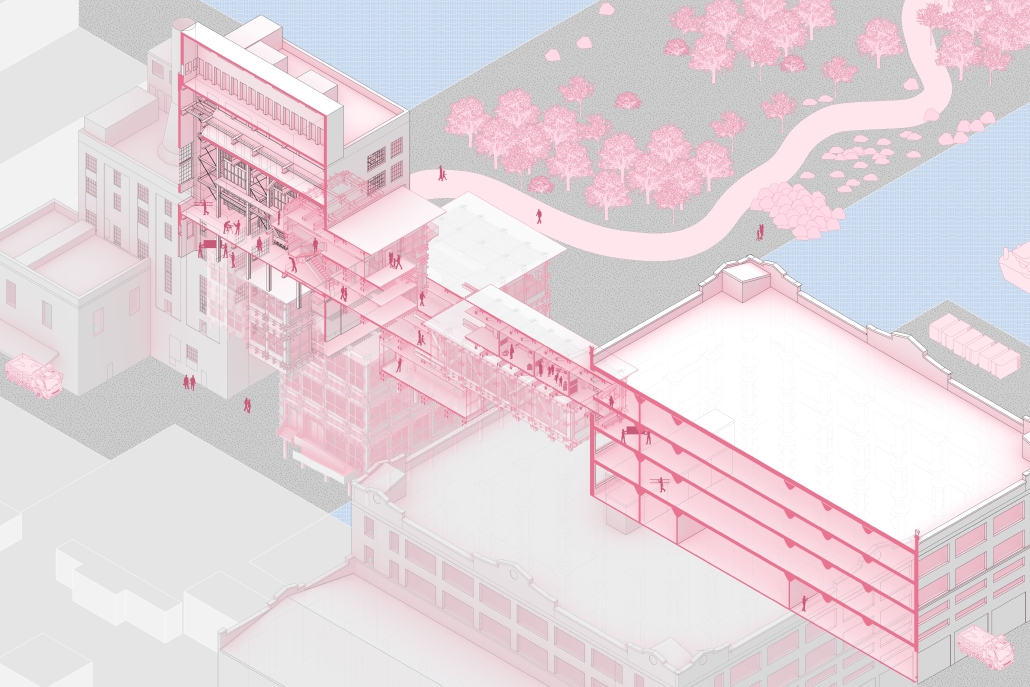
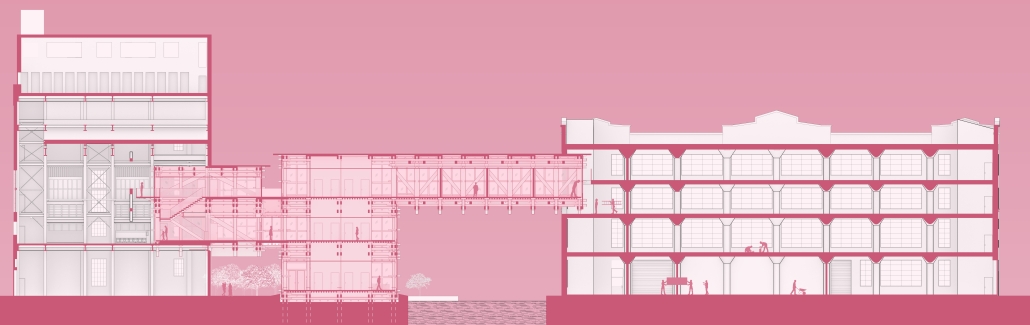
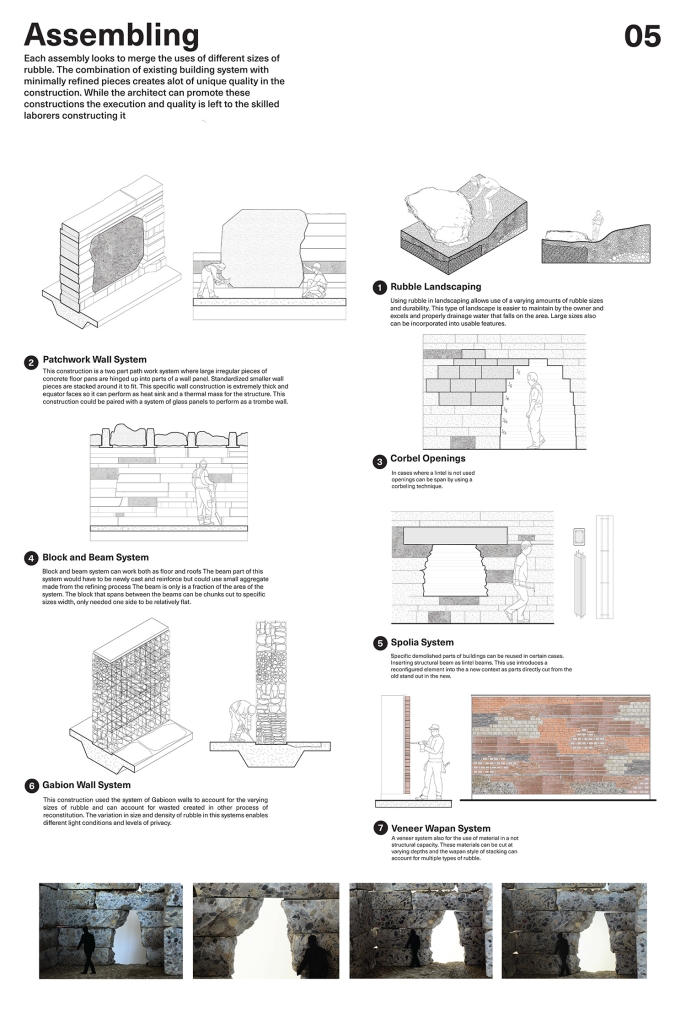
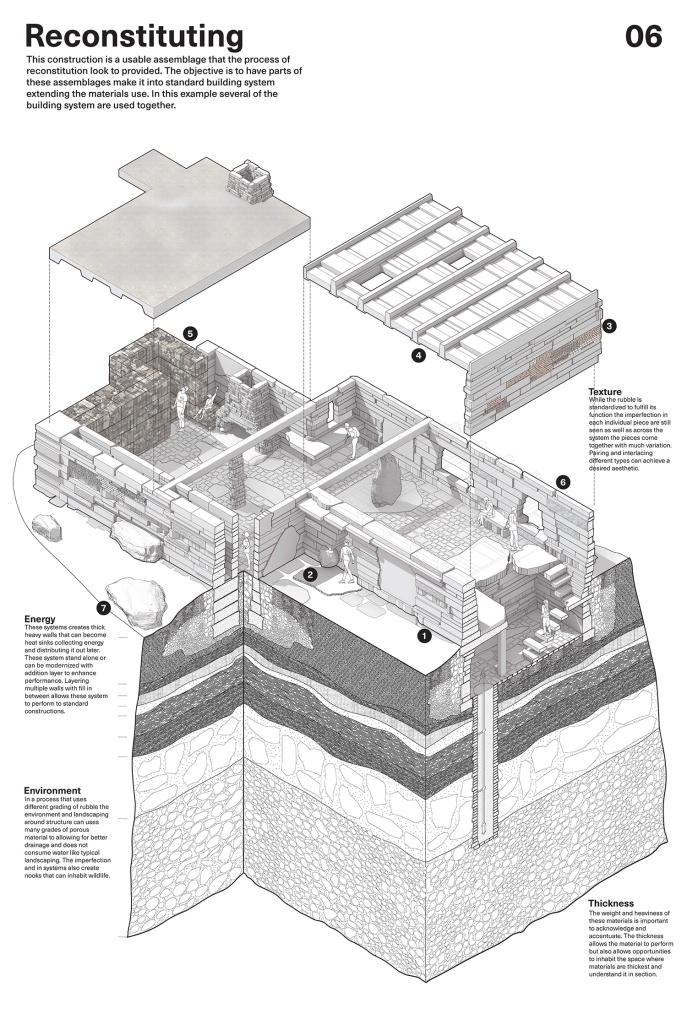
myBRIC: Structural Characterization of Mycelium-Reinforced 3D-Printed Clay with Embedded Recycled Brick Debris by James Hoppe, M.Arch. ‘26
Lawrence Technological University | Advisor: Scott Shall
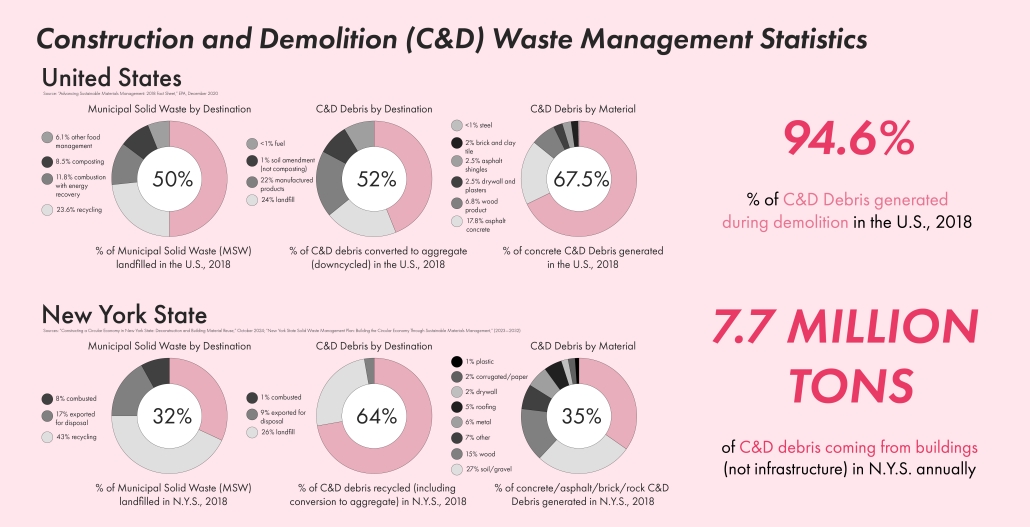
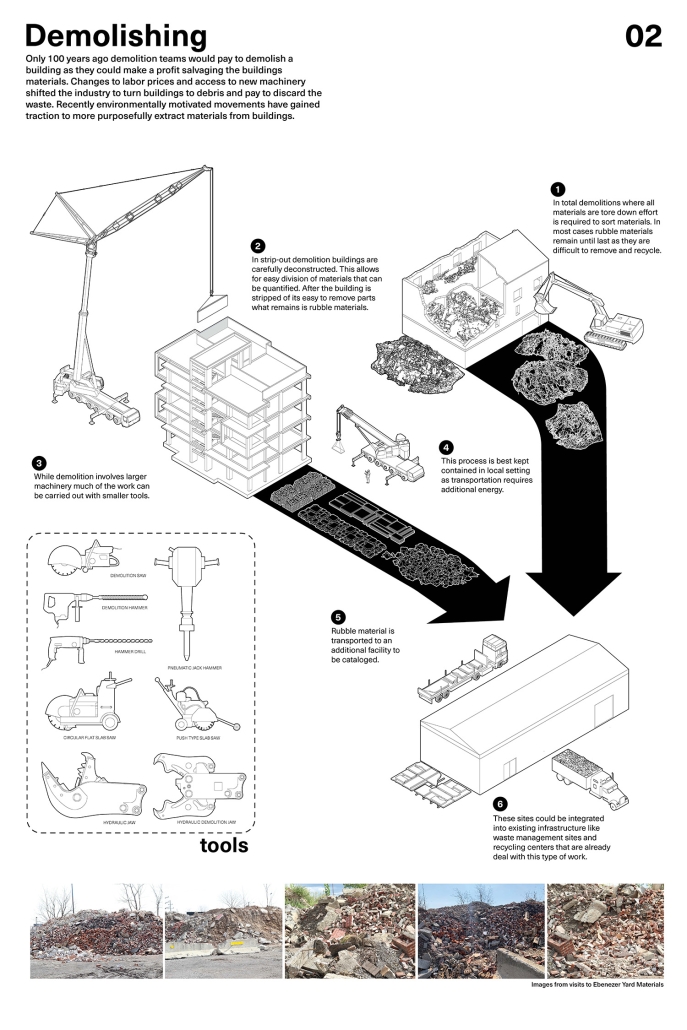
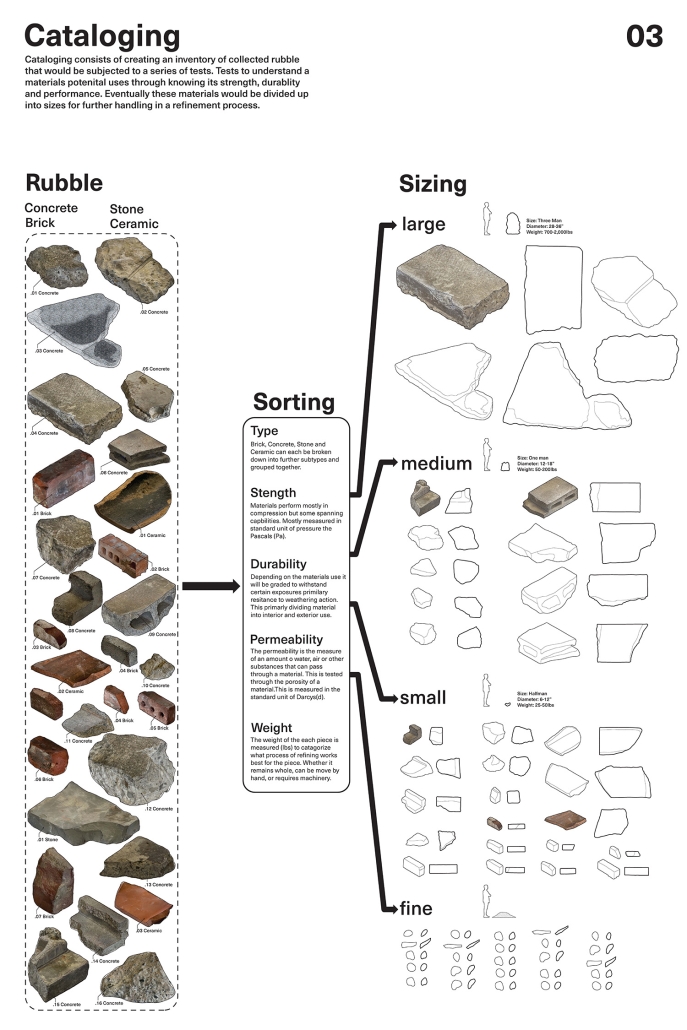
Masonry construction and demolition debris represent two of the largest offenders of embodied carbon loss in current waste streams. Fired clay brick, despite its durability and material value, has only a 12% reintegration rate into the built environment due to economic and logistical barriers associated with removing intact units from a mortared masonry assembly (EPA 2020). As a result, the most common and viable method of brick reclamation is when it is in a debris form, usually used as concrete aggregate and road subbase (Christen et al. 2022; Fořt and Černý 2020).
Fortunately, recent technological innovations are increasing our ability to reclaim masonry rubble in more varied and sophisticated ways (Dodampegama et al. 2024). In particular, 3D clay extrusion and mycelium material technology pose a great potential to effect a change in the practice of brick reconstitution (Pasupathy et al. 2023).
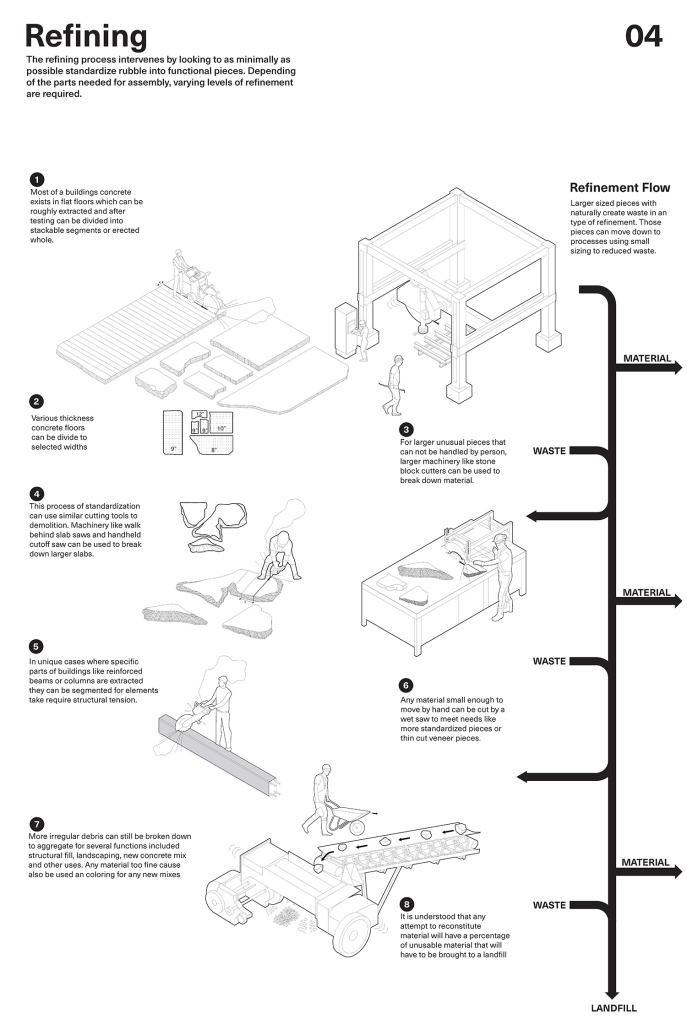
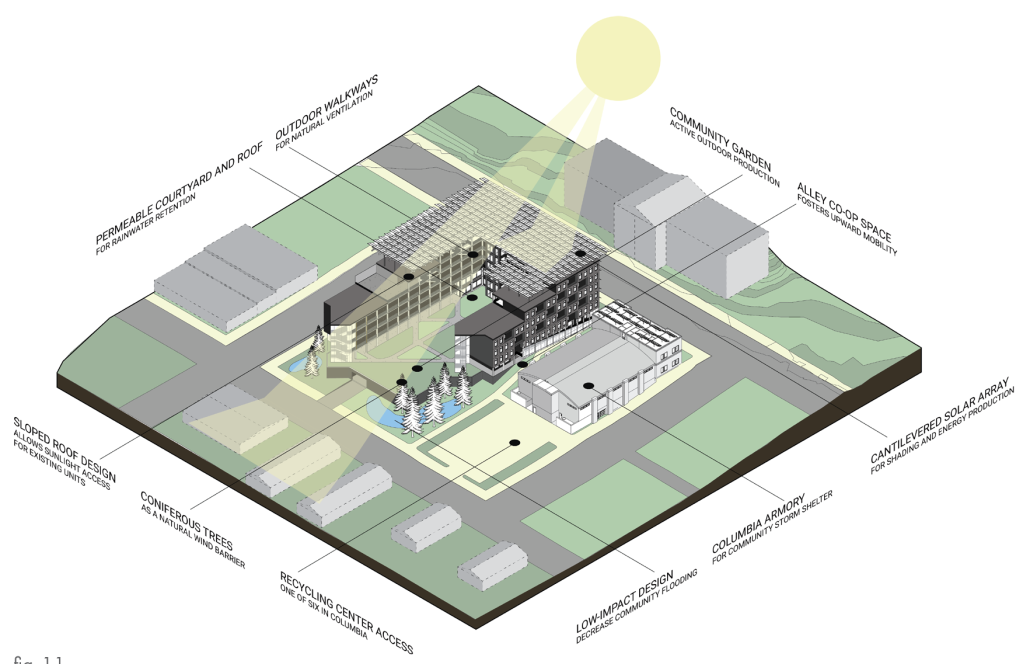
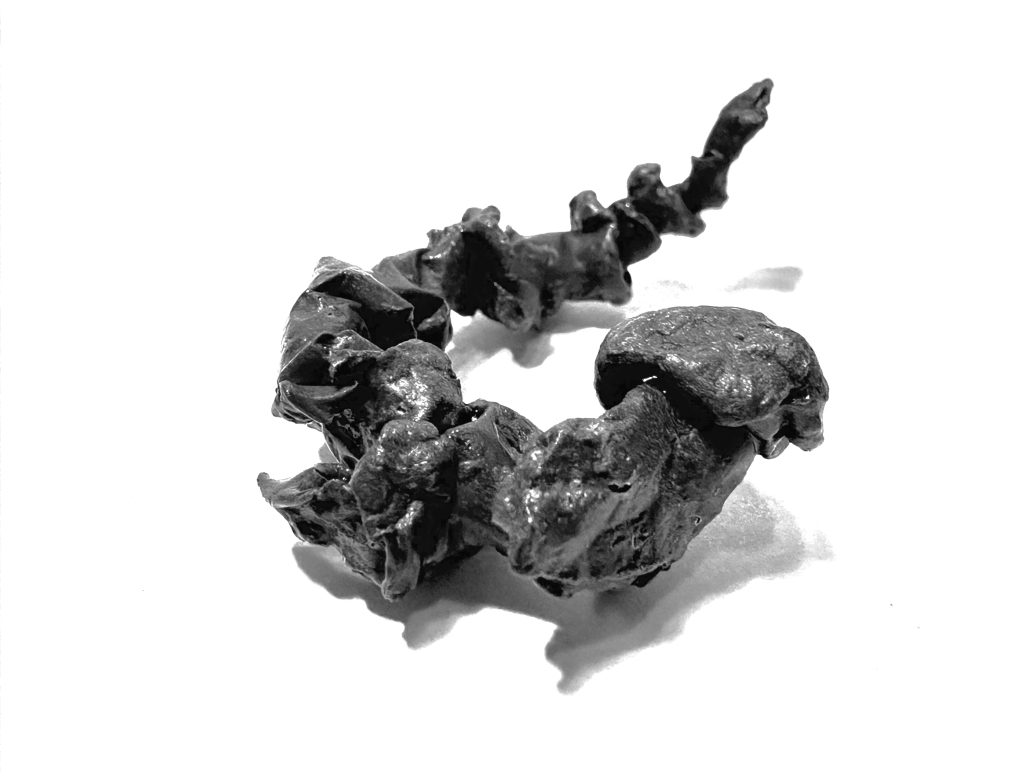
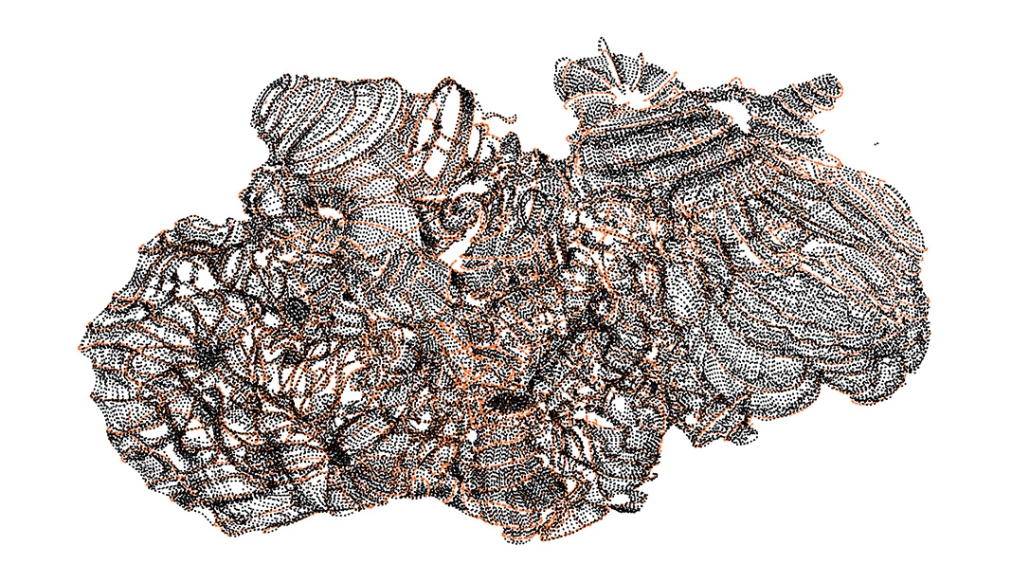
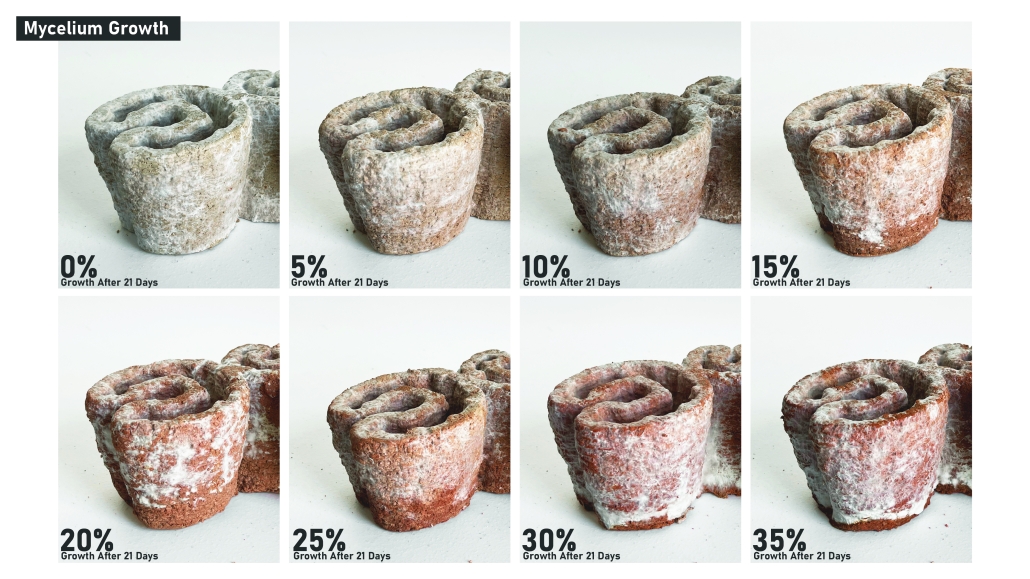
This research investigates the material feasibility of reconstituting brick demolition waste through the gradual substitution of virgin clay with pulverized reclaimed brick in 3D clay extrusions. A controlled series of printed clay modules is produced by incrementally replacing virgin clay content with recycled brick material to investigate embodied
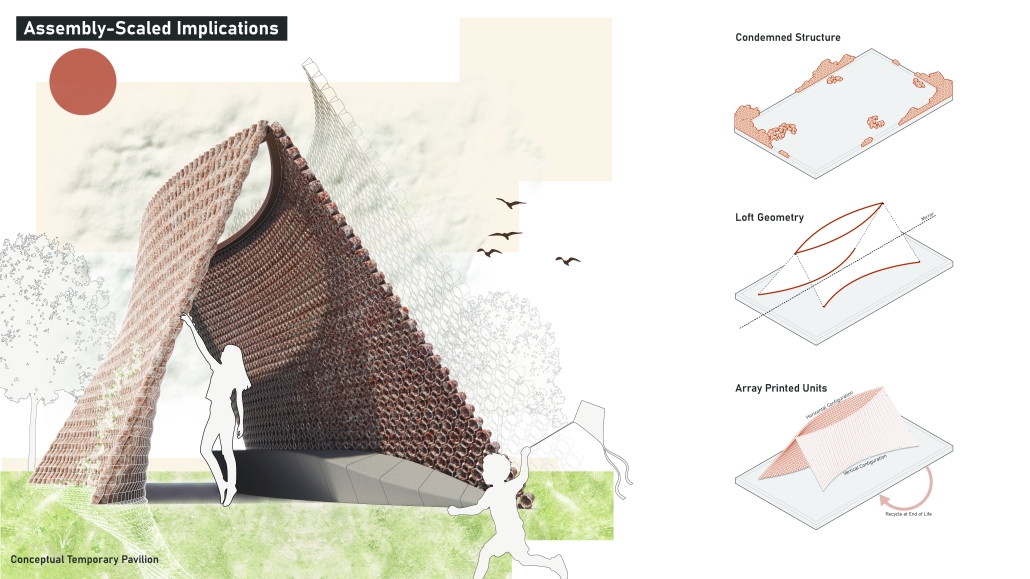
energy, cost, and time in their production while achieving a baseline module strength. Building upon prior work in digitally manufactured mycelium-ceramic composites, the study further examines the capacity of mycelium growth within these modules to restore cohesion and structural performance lost through recycled content substitution (Jauk et al. 2022). By coupling recycled masonry content with mycelium reinforcement strategies, this research proposes a fabrication workflow that repositions brick debris as a viable feedstock for sustainable architectural materials.
Click here to take a closer look.
This project received the 2026 LTU CoAD Dean’s Award and the 2026 LTU CoAD Alumni Award.
Instagram: @scott_shall
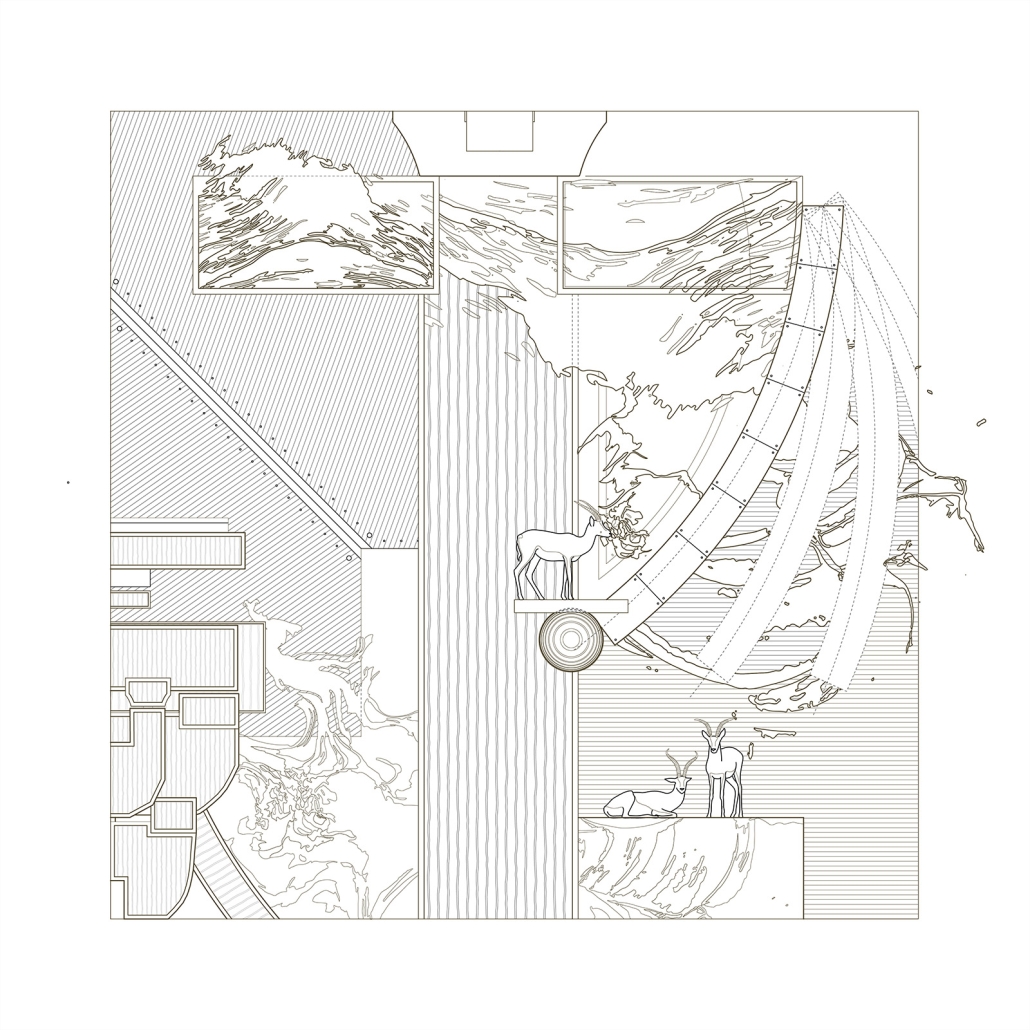
Autophagic Sacrifice – The Self-Consuming Host by Anderson Qi Han Zheng, B.Arch. ’26
Rensselaer Polytechnic Institute | Advisor: Ryosuke Imaeda
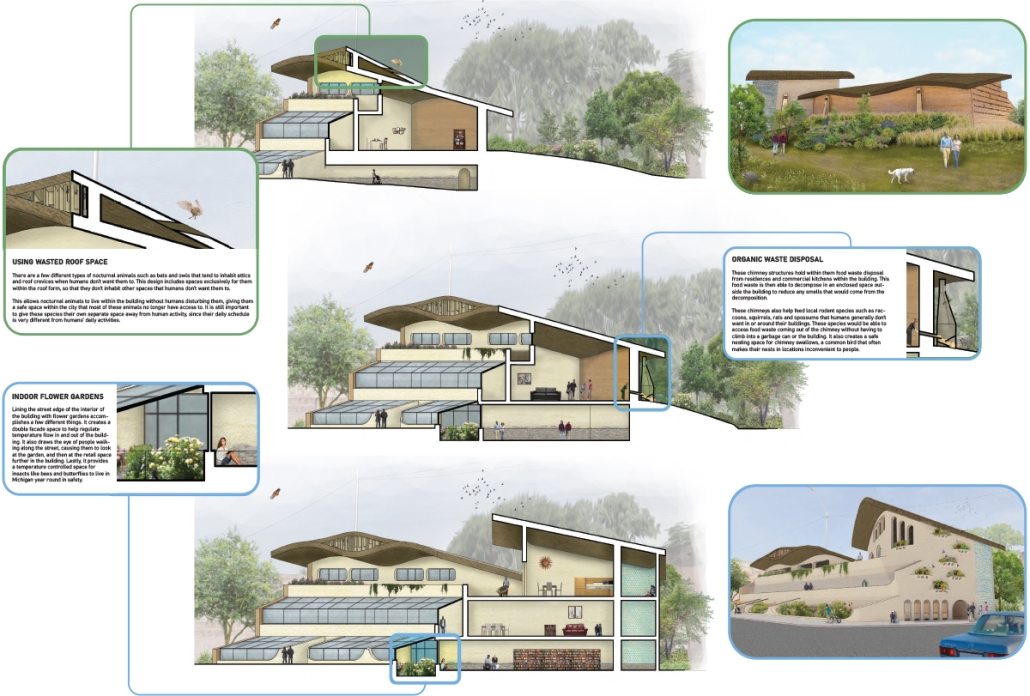
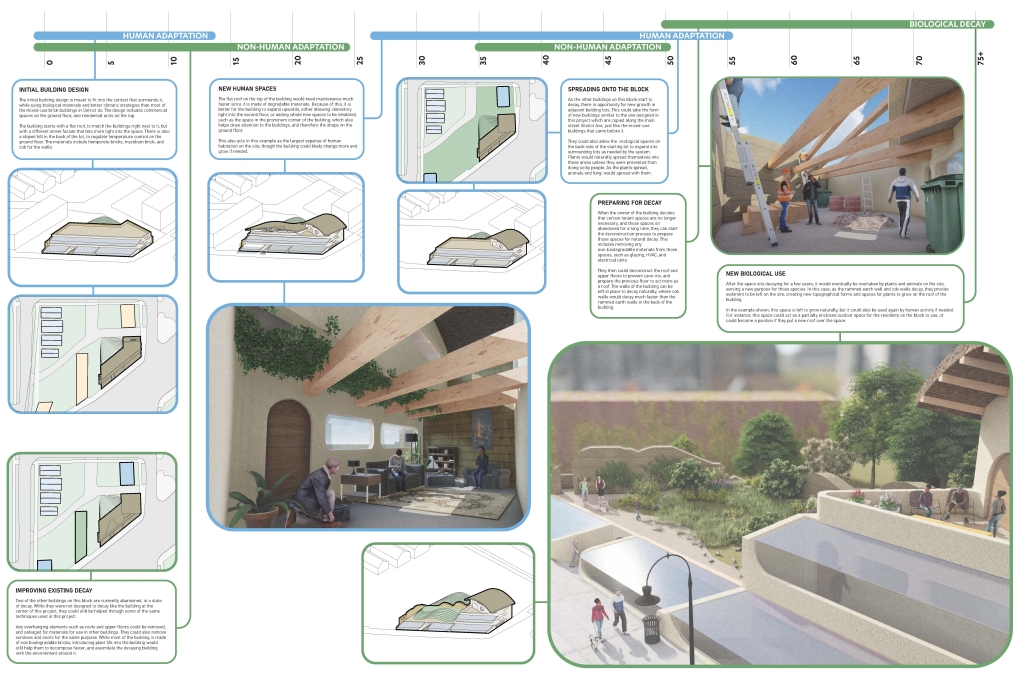
As social beings, we value reciprocal effort. We attempt to apply this to the relationship between buildings and inhabitants, but it often falls into pure functionalism. Instead of seeing them as host and guest, what if architecture is to be self-consumed? In this framework, the material lifecycle is inadvertently promoted by human activities acting as a catalyst. This project examines material reutilization as autophagy, a system consuming its own substance to maintain its presence.
The project framing draws from two theoretical references. Stanley Cook evaluates voluntary sacrifice as a moral and social tradition guided by logical reasoning. Harvey Whitehouse addresses the irrational and emotional side of self-inflicted harm. One embraces the logical necessity of a small loss for greater gain, while the other suggests that the loss itself is a means of realizing one’s identity.
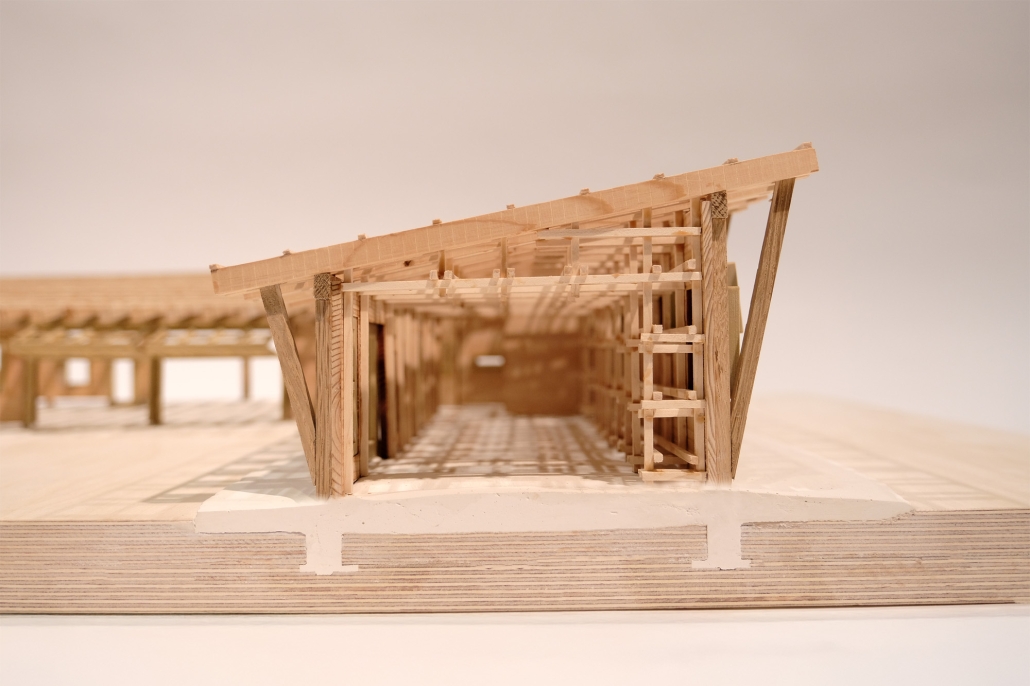
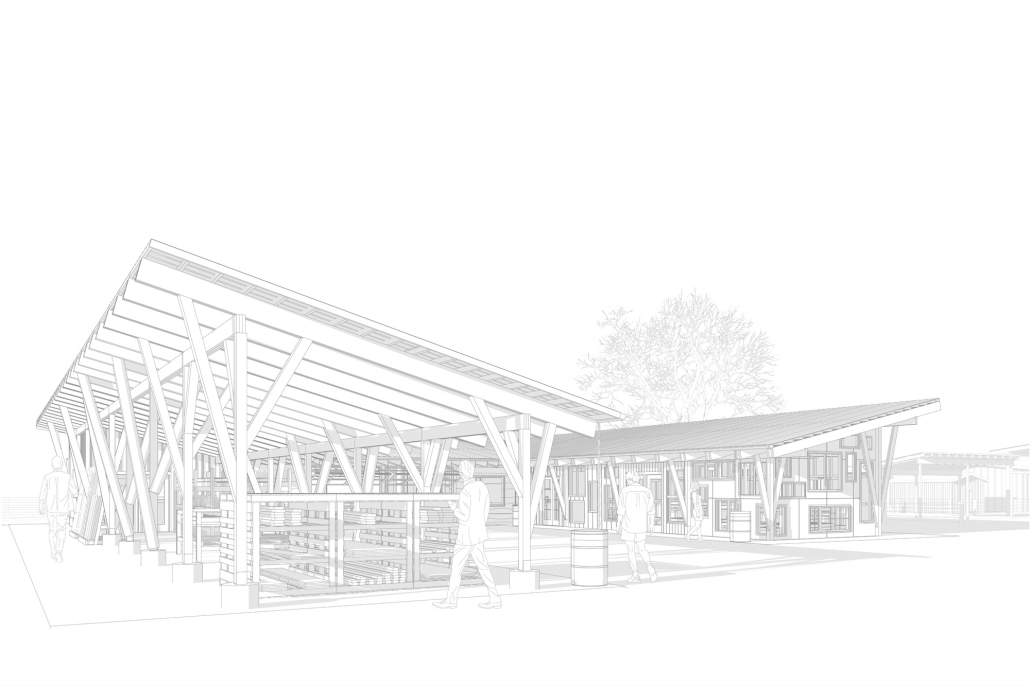
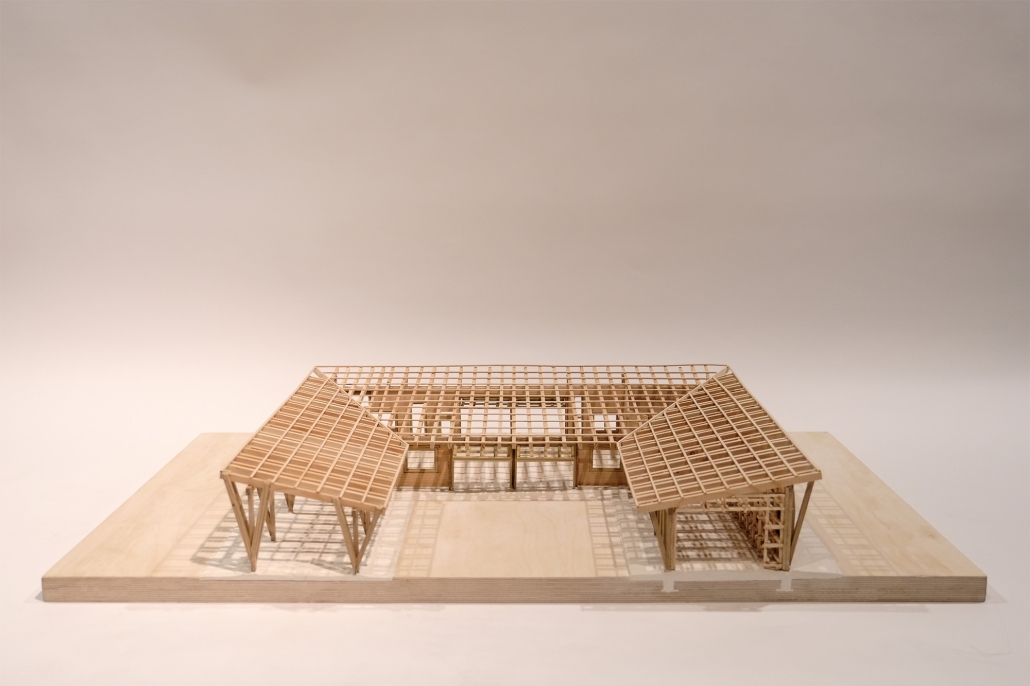
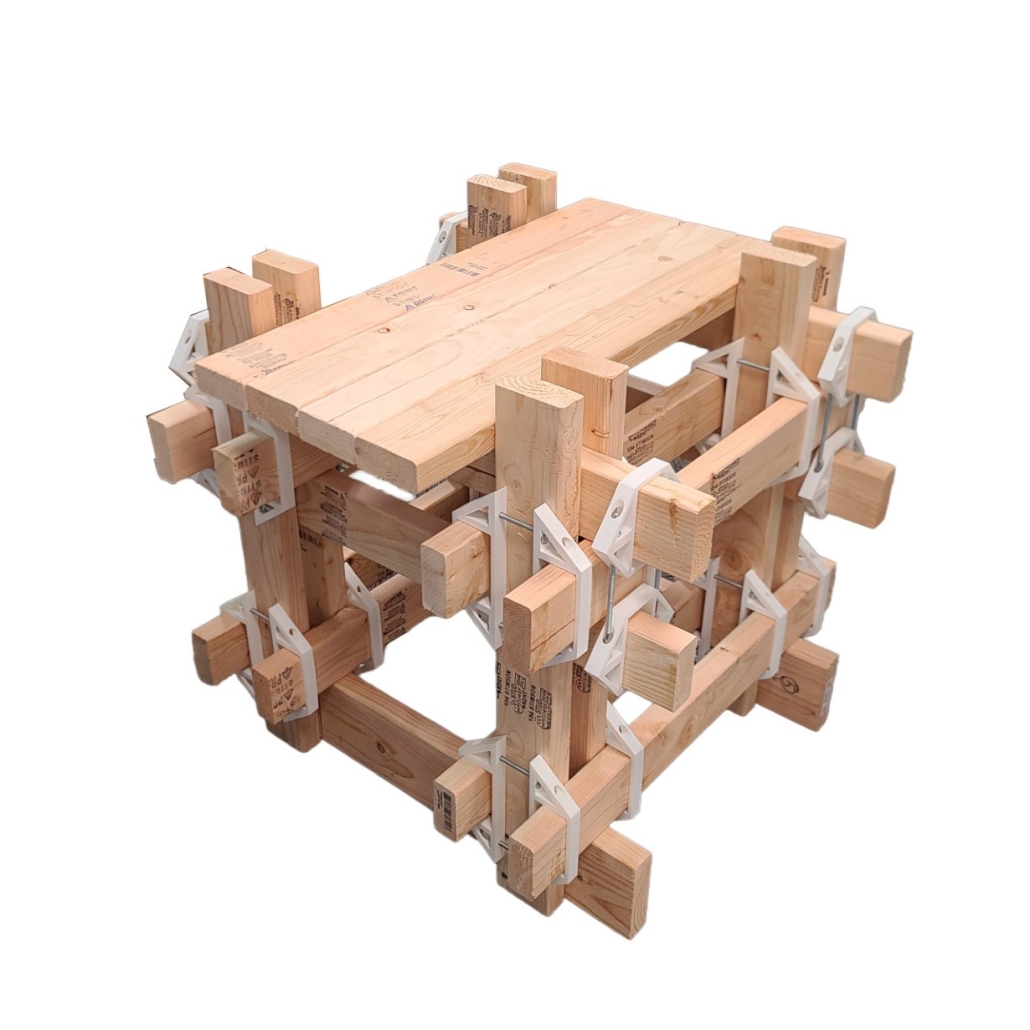
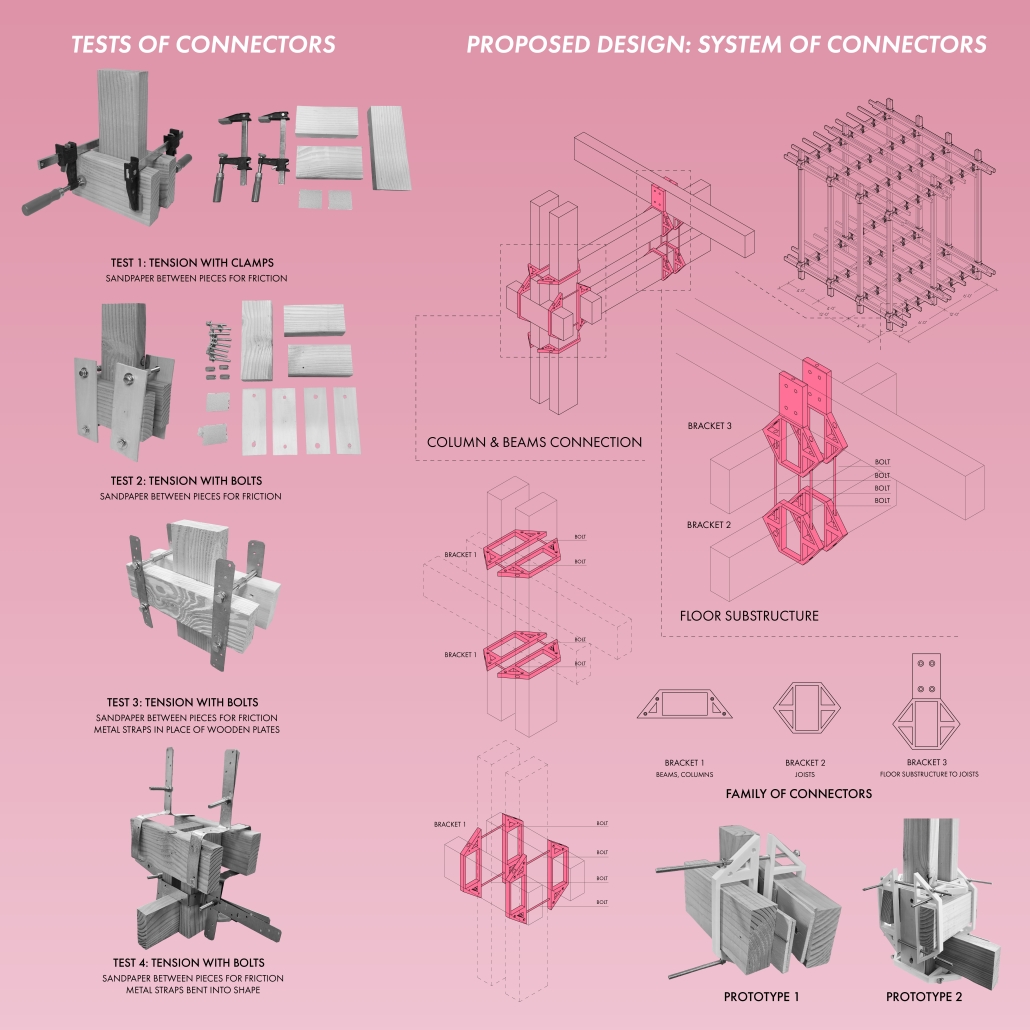
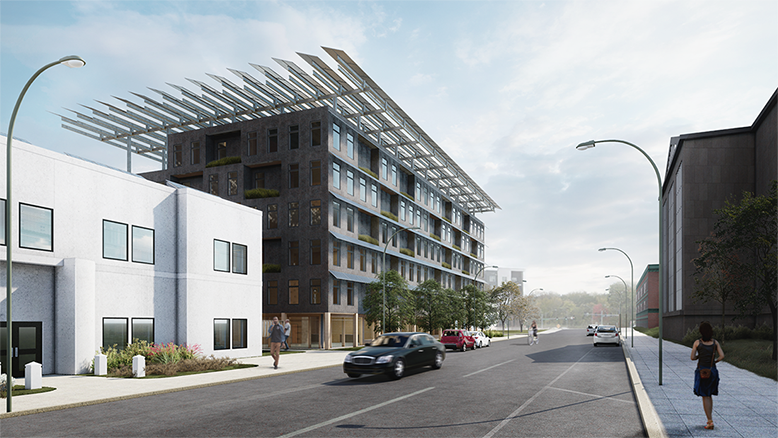
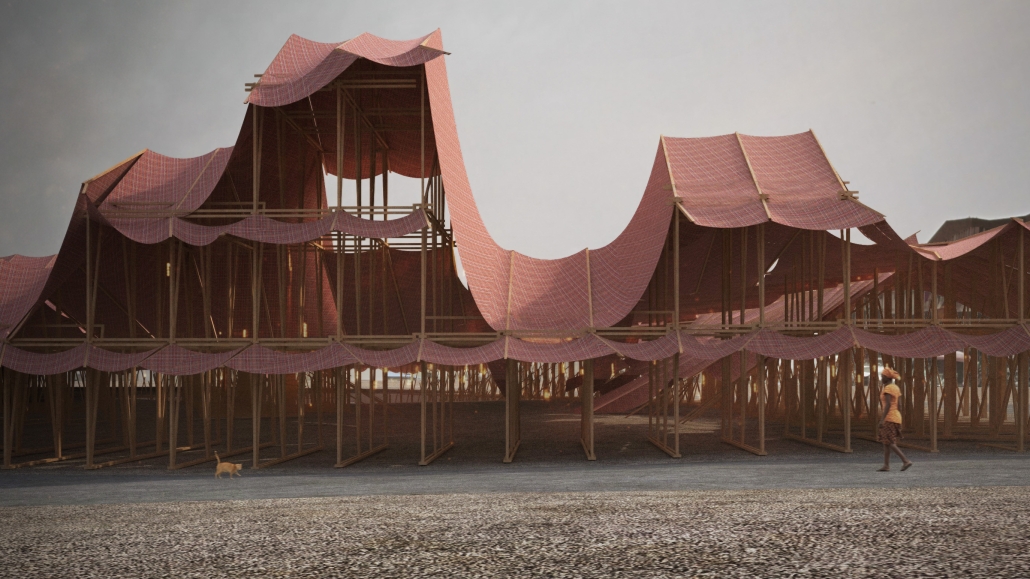
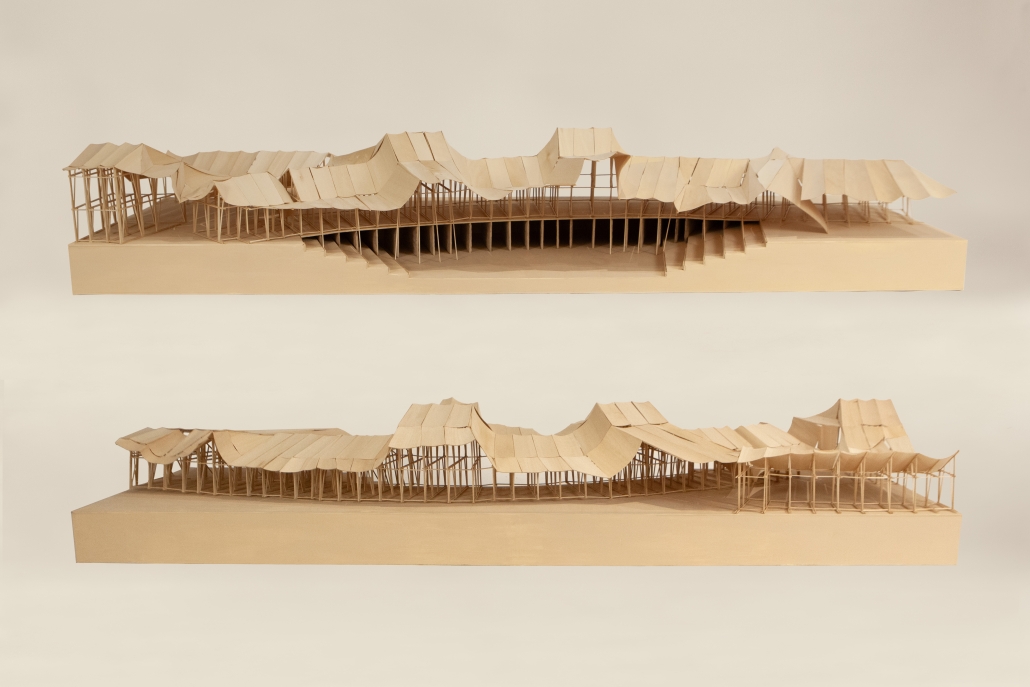
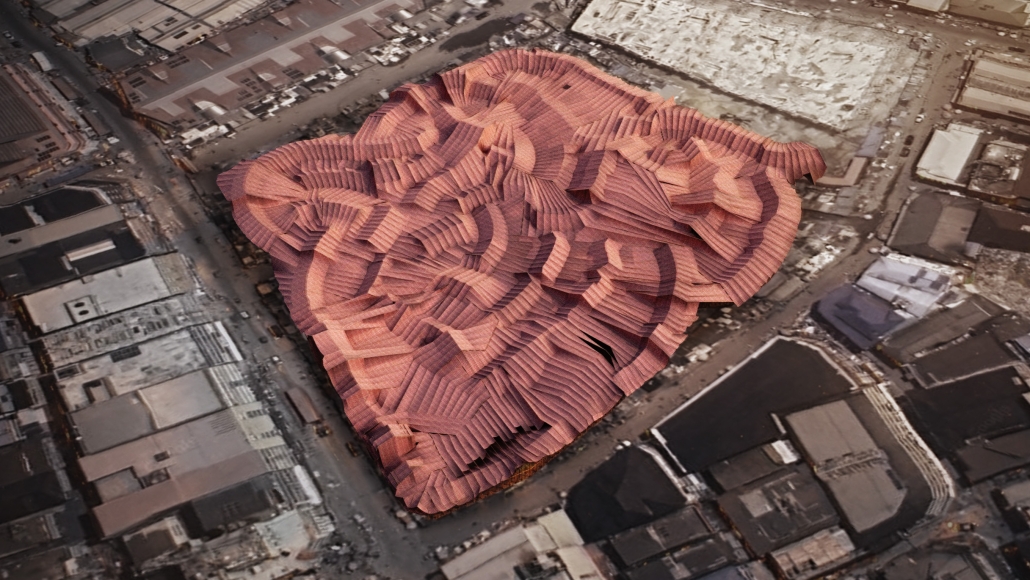
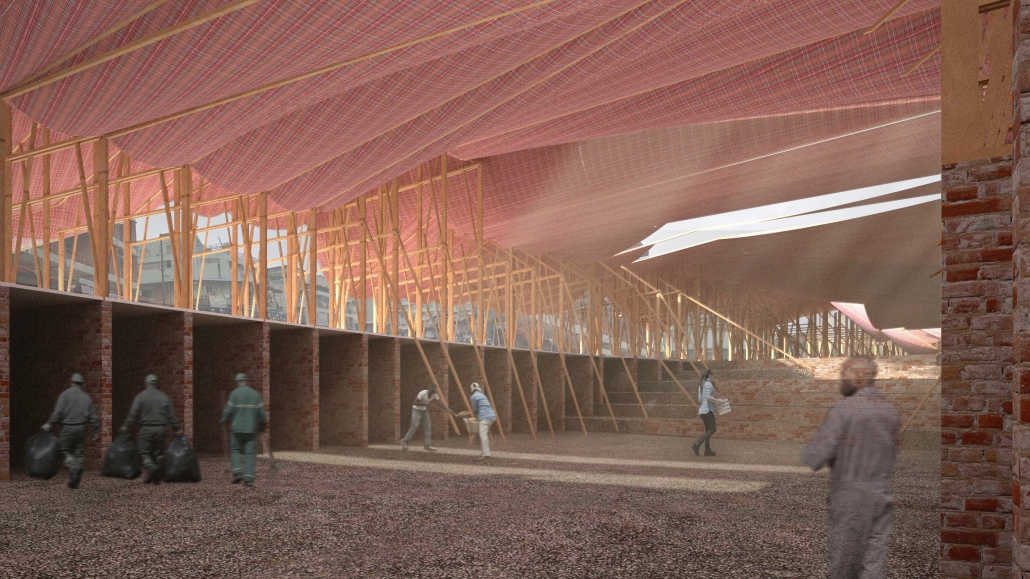
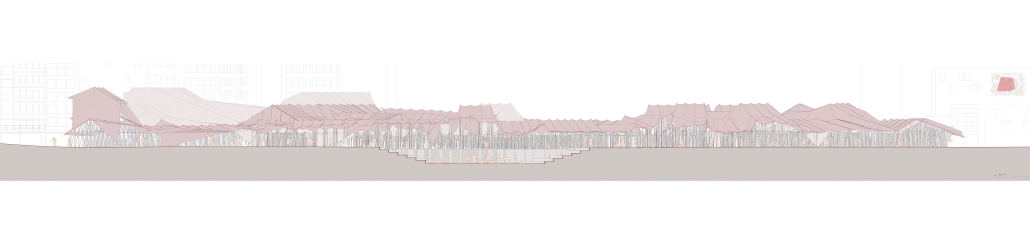
This project takes a position of self-consumption as not a permanent loss, but a way to reactivate the field through material exchange. Located within Idumota Market in Lagos, Nigeria, the project proposes a market structure that absorbs and repurposes plastic waste circulating in its surrounding environment. The host here is not limited to the architectural structure but also includes the vendors who maintain and associate their lives closely with the market. Discarded plastics, primarily plastic bags, are collected by vendors from nearby streets, gutters, and waste areas as part of routine maintenance rather than being intentionally returned by shoppers to be reused as construction materials in the market. Through a process of controlled heat, the plastic shrinks and binds carved wooden joints together. This allows the host to continuously and locally reconstruct itself without external materials. The design utilizes a modular joint system that gives individual vendors autonomy while maintaining structural consistency, apparent through the undulating canopy system, uncovering the structure while enriching spatial circulation from descending drapings. As a circular system, what is once lost may return and be metabolized into another form, gradually rejuvenating the neighborhood, while passively making the day-to-day users aware that such a loss- a transformation cycle- has been occurring seamlessly amidst the bustling streets of the outdoor market.
This project was awarded the Architectural Research Centers Consortium’s (ARCC) King Student Medal for Excellence in Architectural + Environmental Design Research.
Instagram: @aqhz.architecture, @ryoimaeda
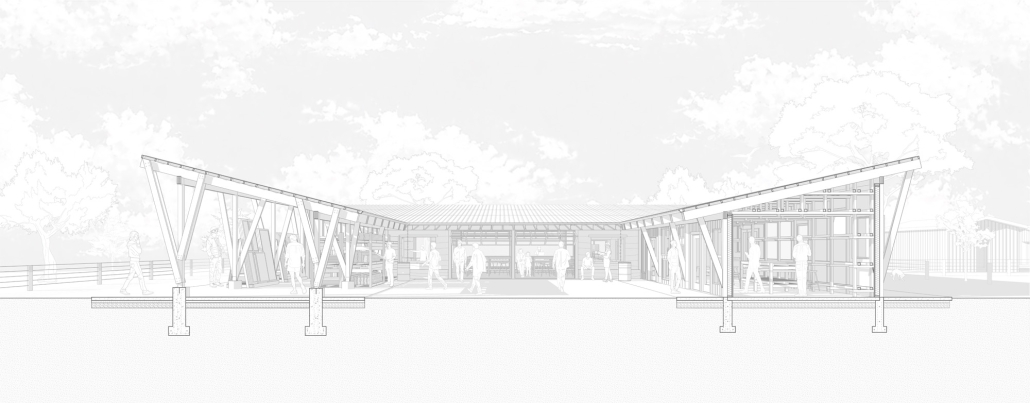
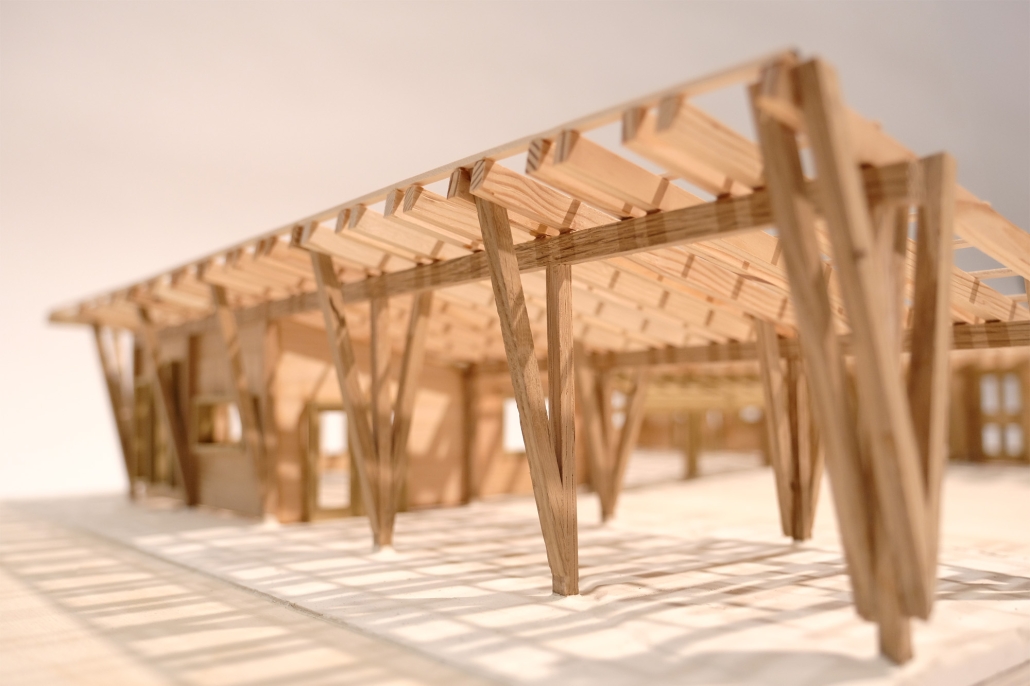
THE TIMBER STAGE: Design Proposal for Virginia Tech’s Mass Timber Theater by Z. A. Saleh Zebermai, M.Arch. ’26
Virginia Tech Washington-Alexandria Architecture Center | Advisors: Ezgi Isbilen, Paul Emmons & Susan Piedmont-Palladino
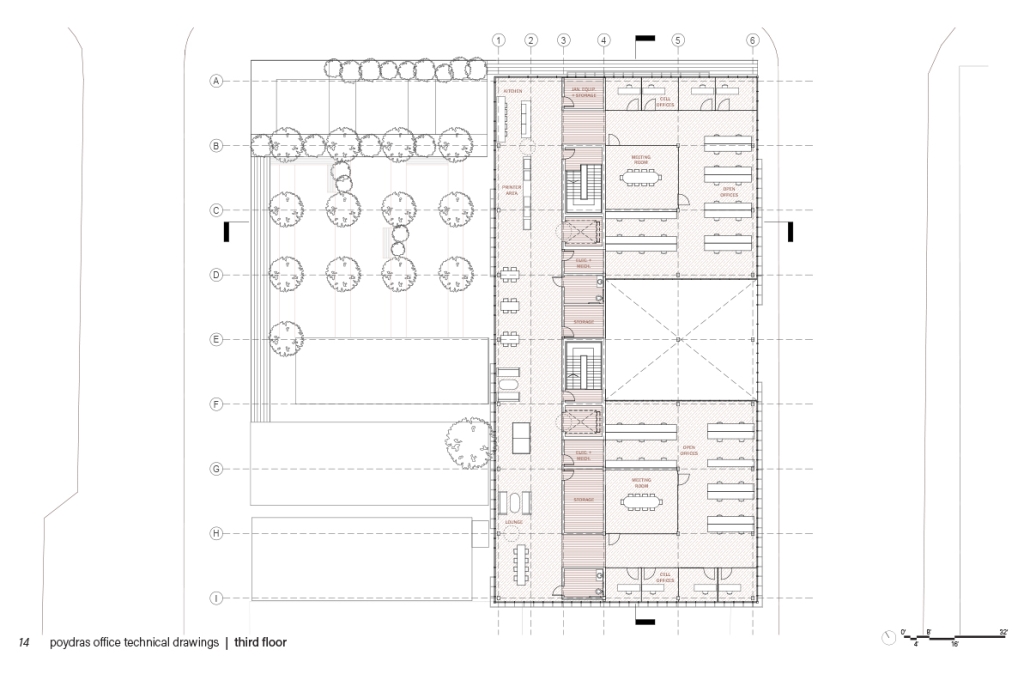
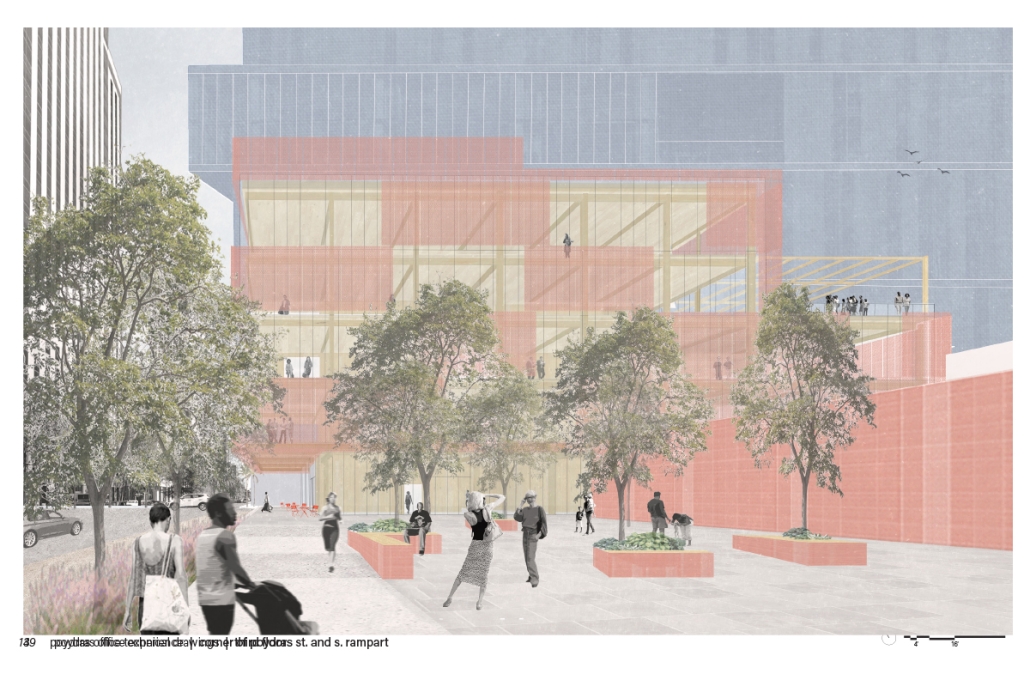
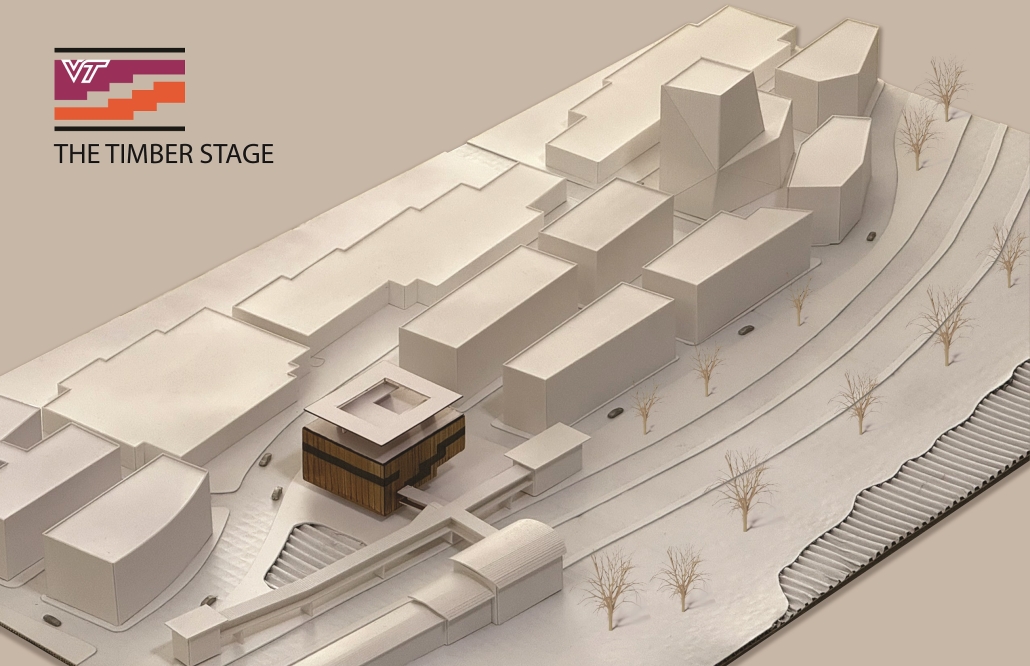
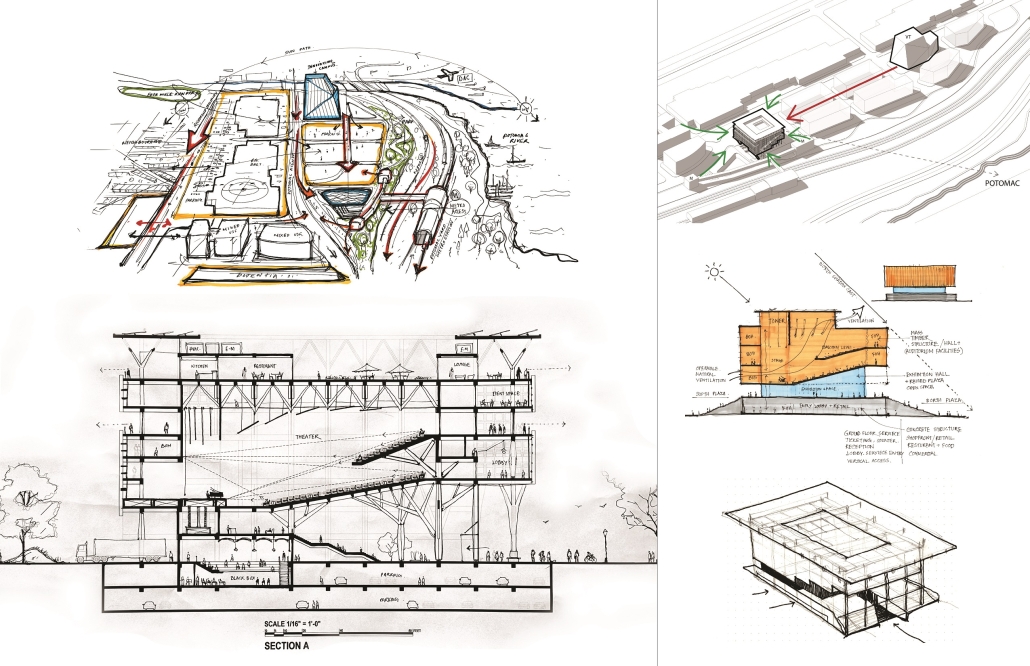
This thesis is a design proposal for a theater complex for Virginia Tech’s extended campuses in the Washington, D.C. region. Despite Virginia Tech’s growing footprint and increasing student numbers in Northern Virginia, the school does not have space for graduation ceremonies. [This] proposed project matches the need and Virginia Tech’s presentation in this area as a forerunner of innovative sustainable practices.
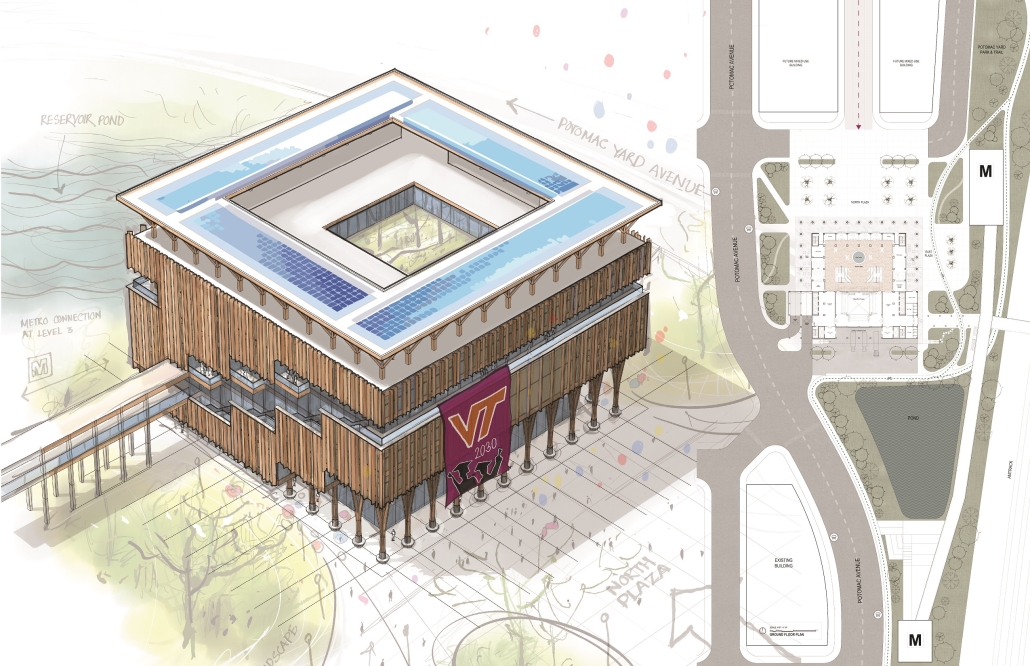
Consequently, the project investigates the potential of mass timber as a structural and building material for a large space like a theater. The thesis begins with finding the appropriate site through an analytical urban study of the City of Alexandria. Comparing access, distance, relevance, future projection and other factors, the proposed site is at Potomac Yard, near the metro station and Virginia Tech’s Innovation Campus. Then, a detailed study of the site investigates its urban potential and the observations are translated into design strategies for further development about the building form, urban spaces, orientation and directions.
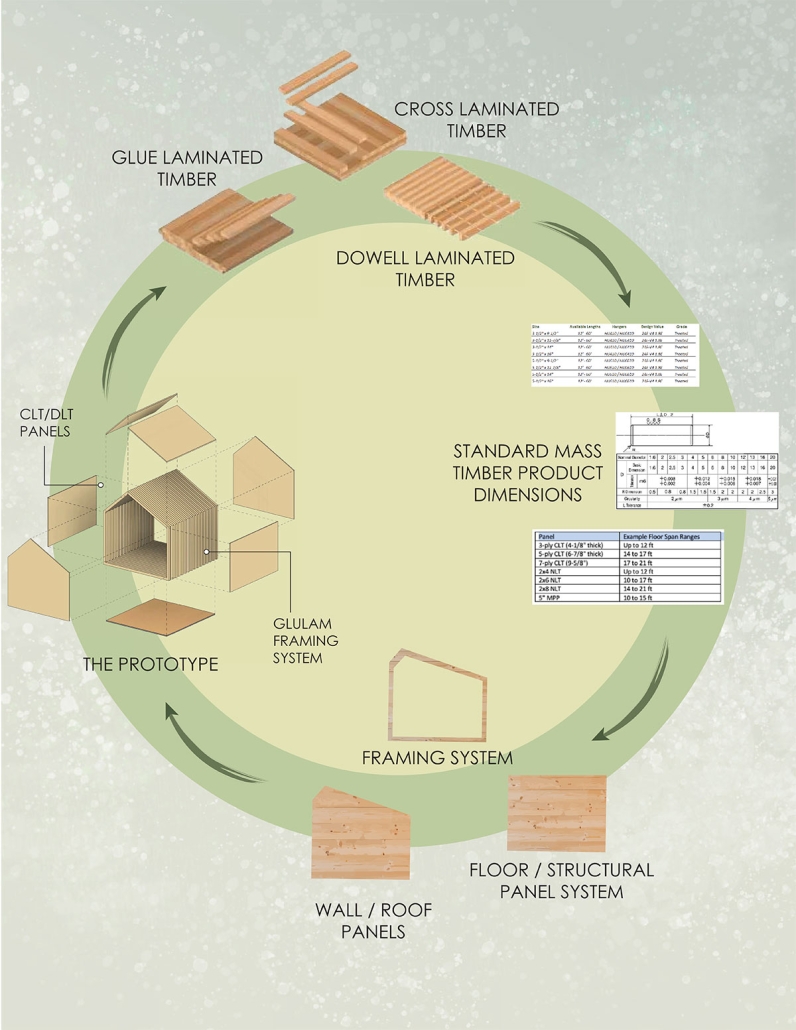
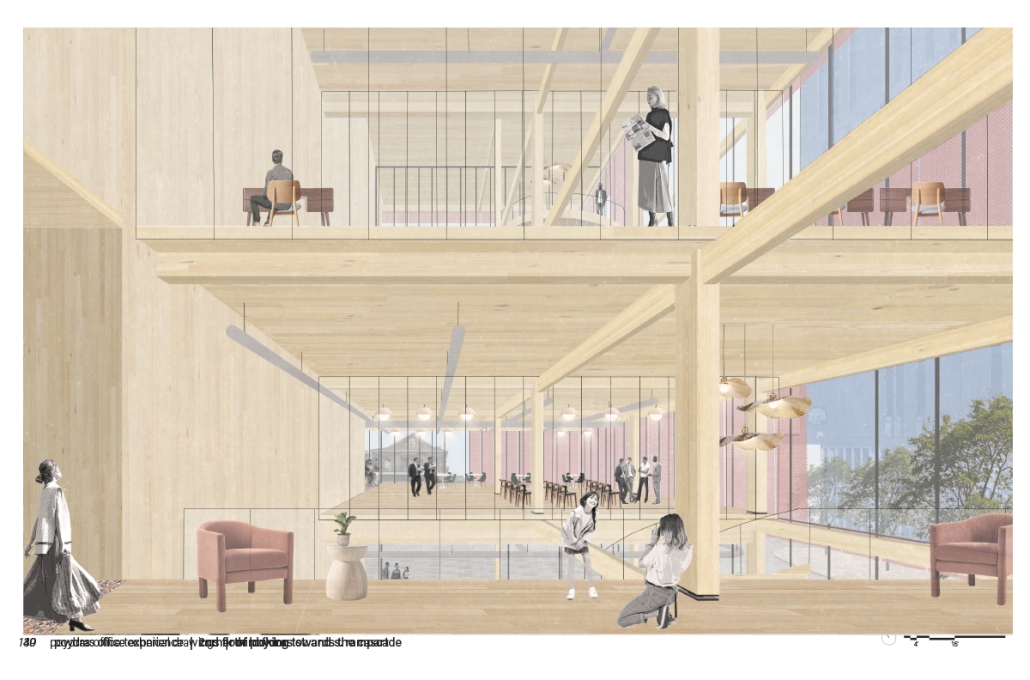
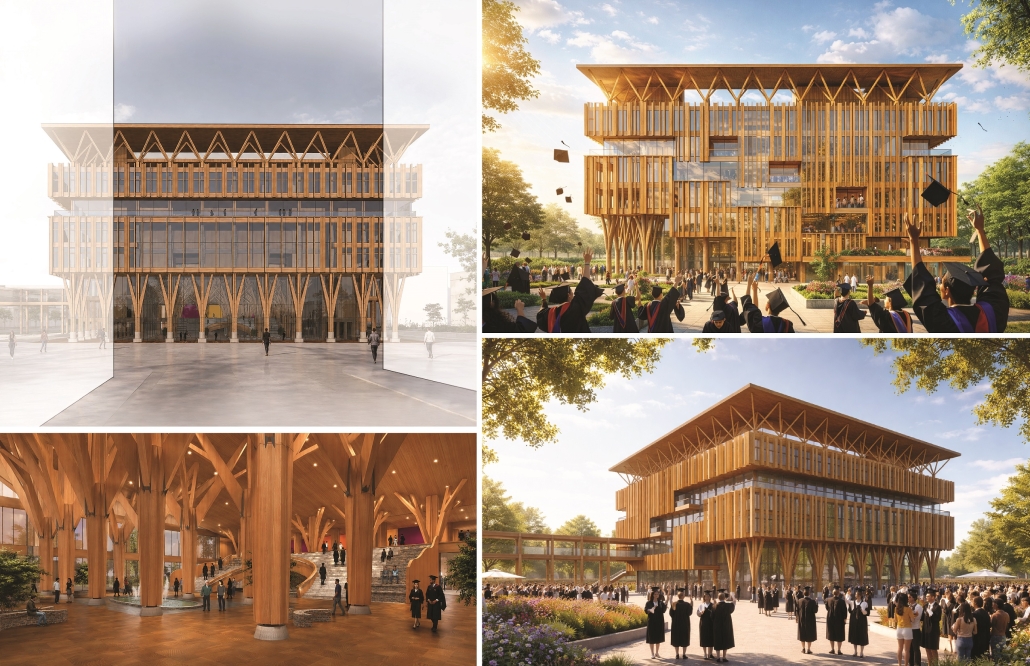
Investigation of mass timber as a building material revisits the study of ancient timber roof building techniques of the Norwegian Churches, searching for the relationship between the shipbuilding techniques and the large-span timber truss system, which can be interpreted to modern buildings along with the latest technological development in the mass timber industry. Timber can be used for both technical and aesthetic purposes. The comparative study showed how mass timber is the appropriate material for the context considering sustainability, carbon footprint, material quality, sourcing, etc.
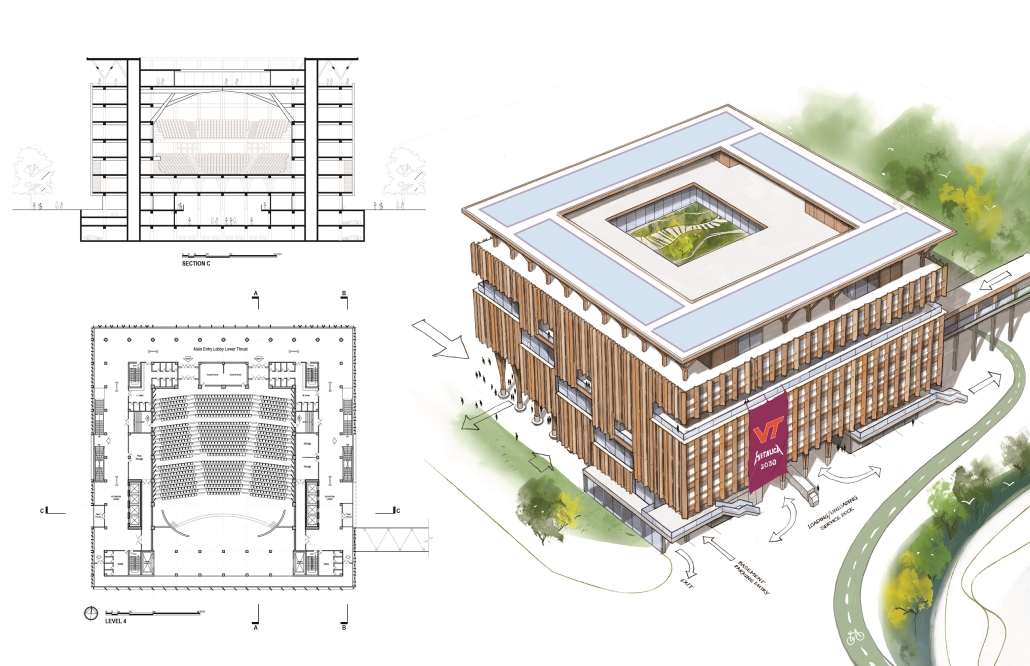
Although a large part of the program of the proposed design is the Commencement Event for Virginia Tech, there are other flexible functions of the building which serve the community on a regular basis. A high-performance building facing a large open Public Plaza creates a dialogue between the current innovation campus building through an axis of pedestrian movement.
Additionally, this project explores solar gain through a double-layered exposed timber screen, modular timber construction and joining details, Biophilic indoor shadow patterns, smooth circulation for a large gathering and the technical aspects of a high-performance theater space. Combining all the design considerations, the thesis proposes a meaningful public building which serves Virginia Tech as well as the local community.
This project received an Honorable Mention for the 2026 WAAC Thesis Prize.
Instagram: @saleh.zebermai, @vt_waac, @e_isbilen
Phong Nha Karst Gallery by Tai Le, M.Arch. ’26
Carnegie Mellon University | Advisor: Laura Garofalo
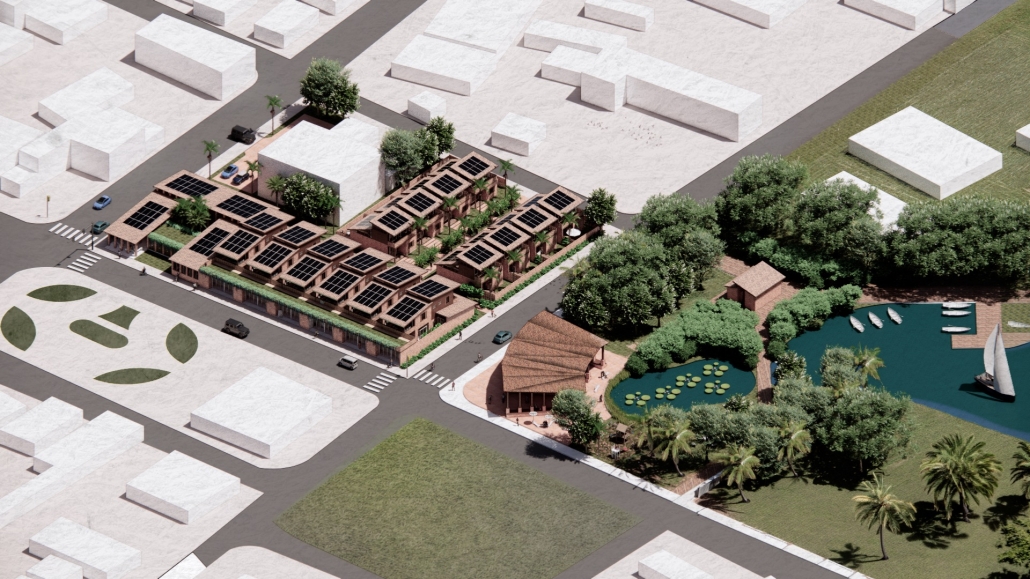
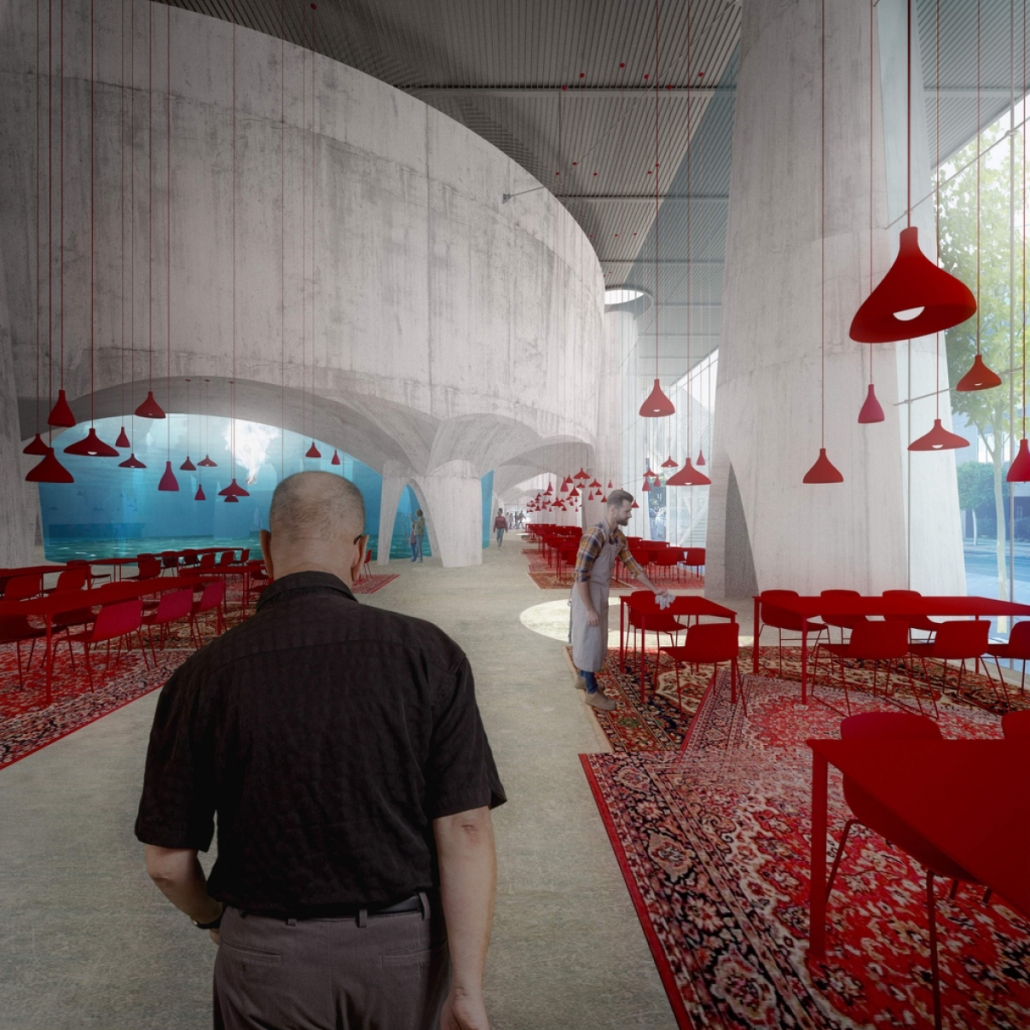
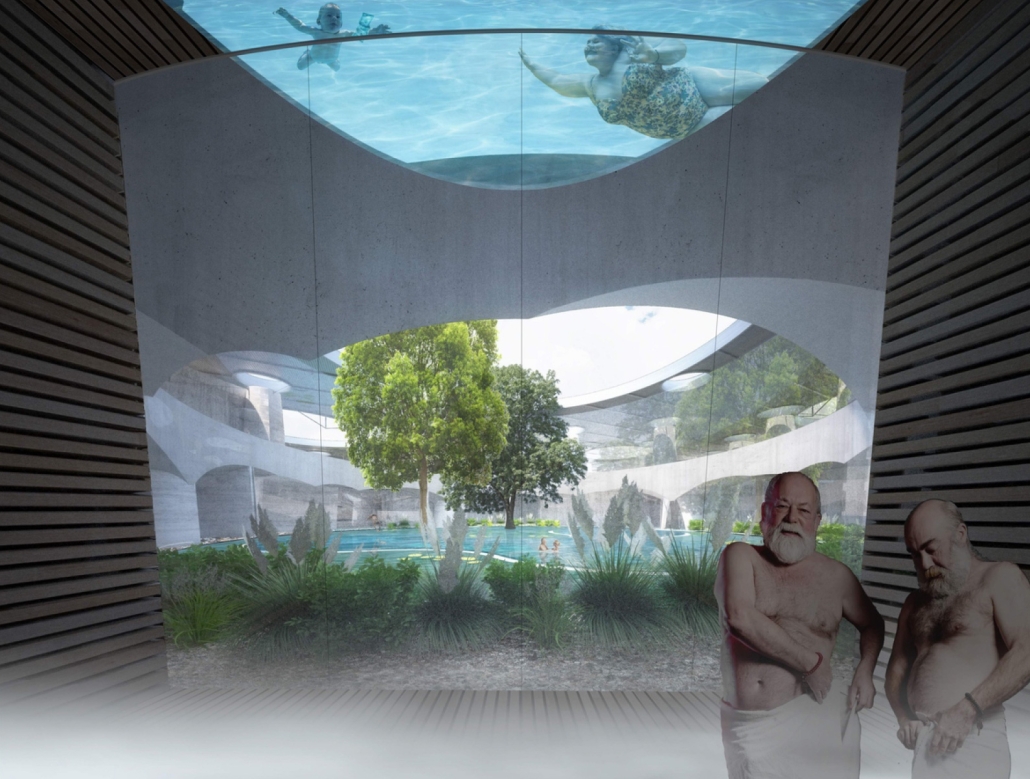
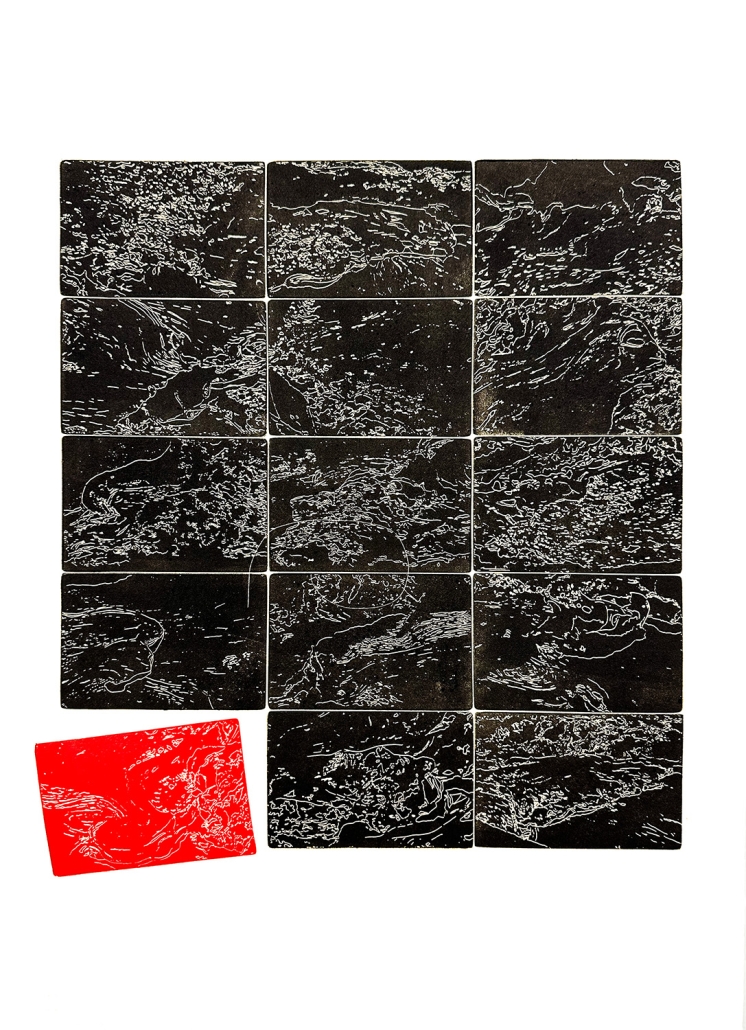
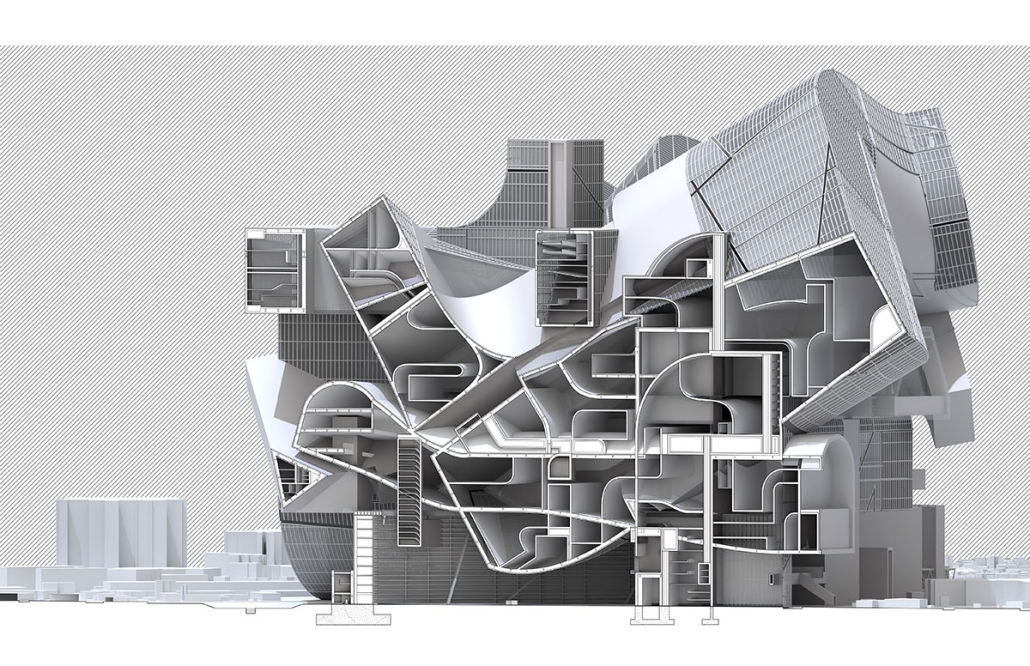
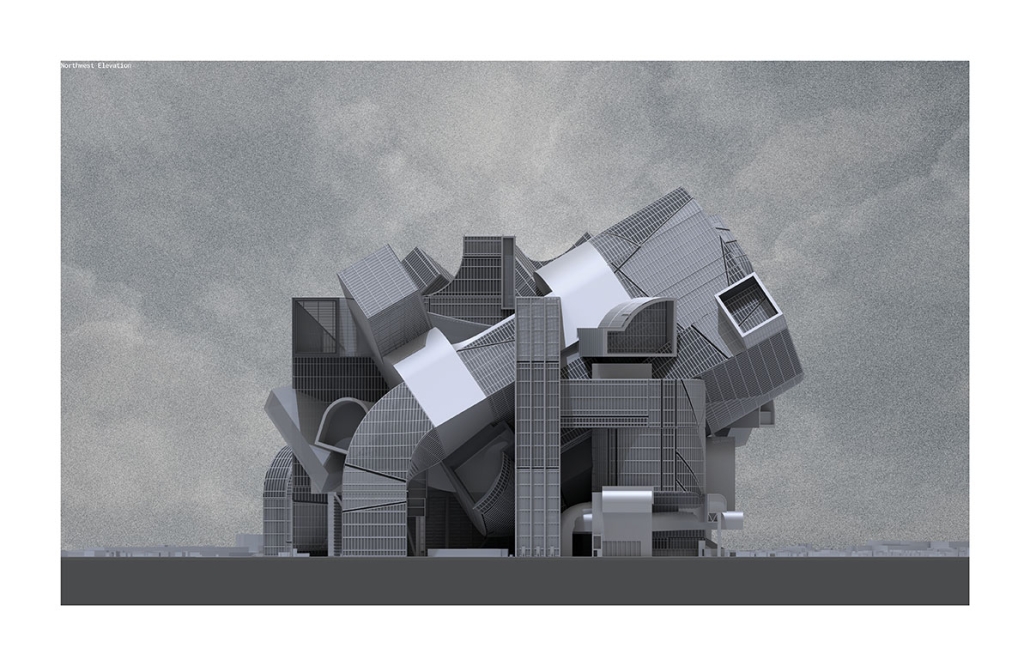
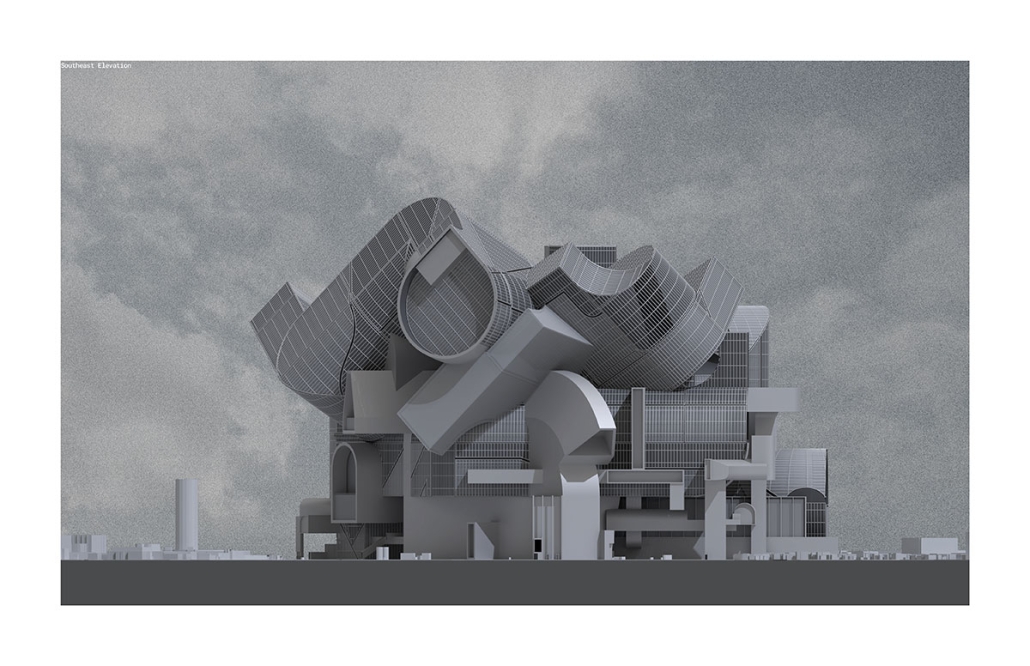
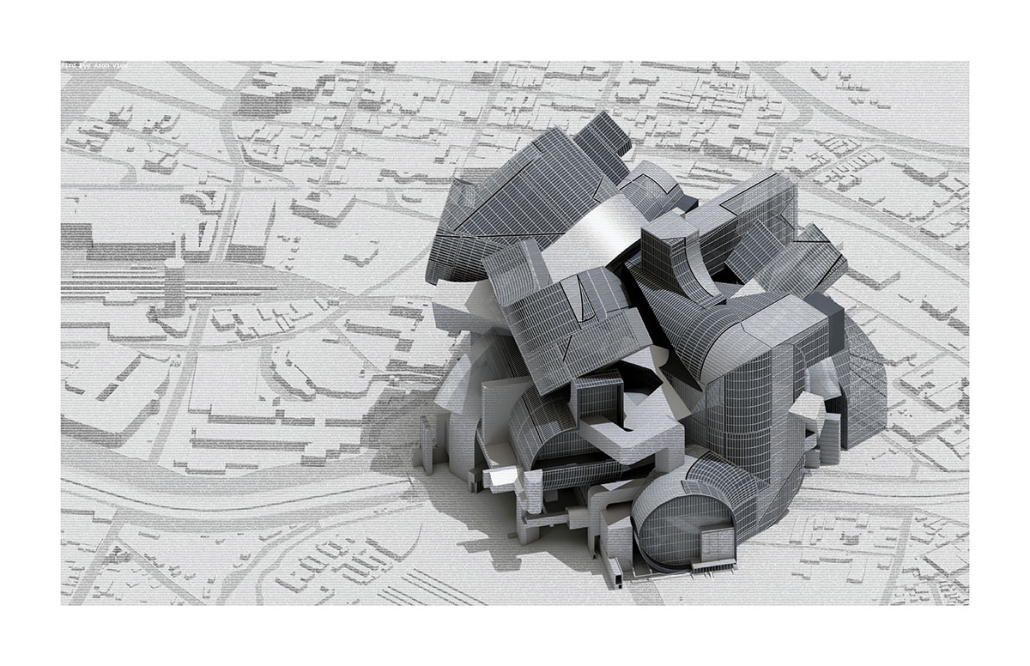
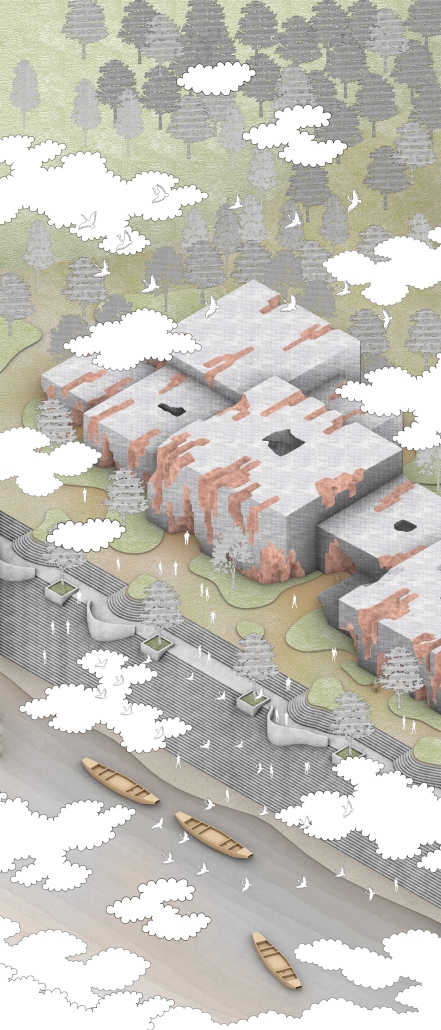
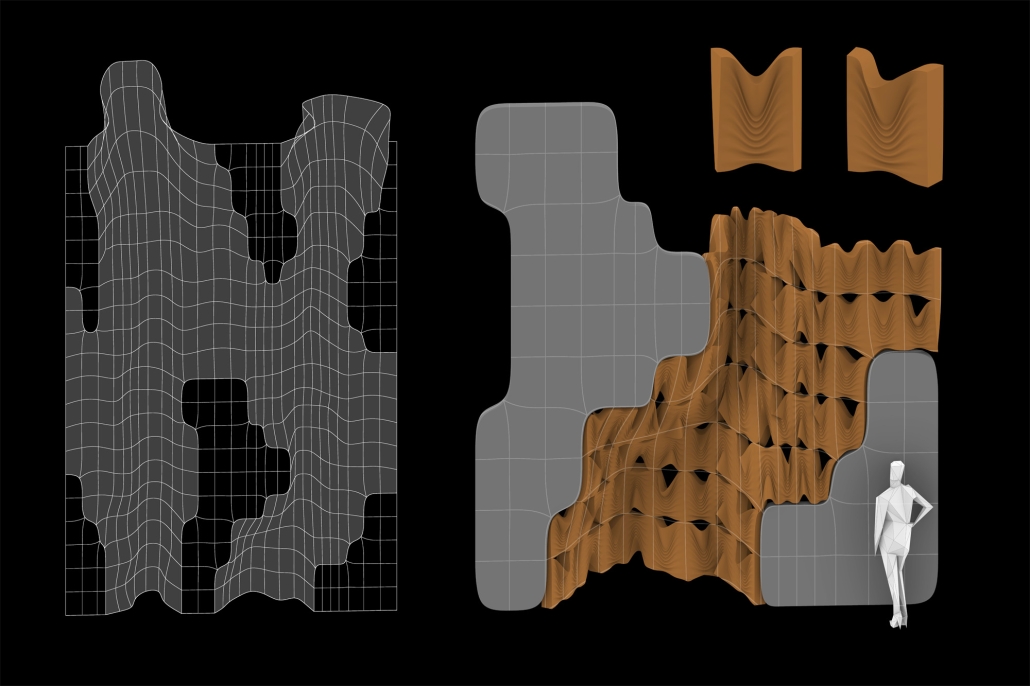
Tai Le’s Phong Nha Karst Gallery integrates visitor services at the entry of one of the most historically significant and complex karst environments in Asia. The Phong Nha Karst Gallery is located along the Son River at the threshold of Phong Nha–Kẻ Bàng National Park in the Quảng Bình region of Vietnam. These environments are formed by the dissolution of soluble bedrock, creating multi-scalar linked caverns. The building is conceived as a set of blocks linked to create interconnected spaces through a soft flowing volume, translating the dissolution logic of karst formation into a rhythmic sequence of compression and expansion within a clearly manmade form.
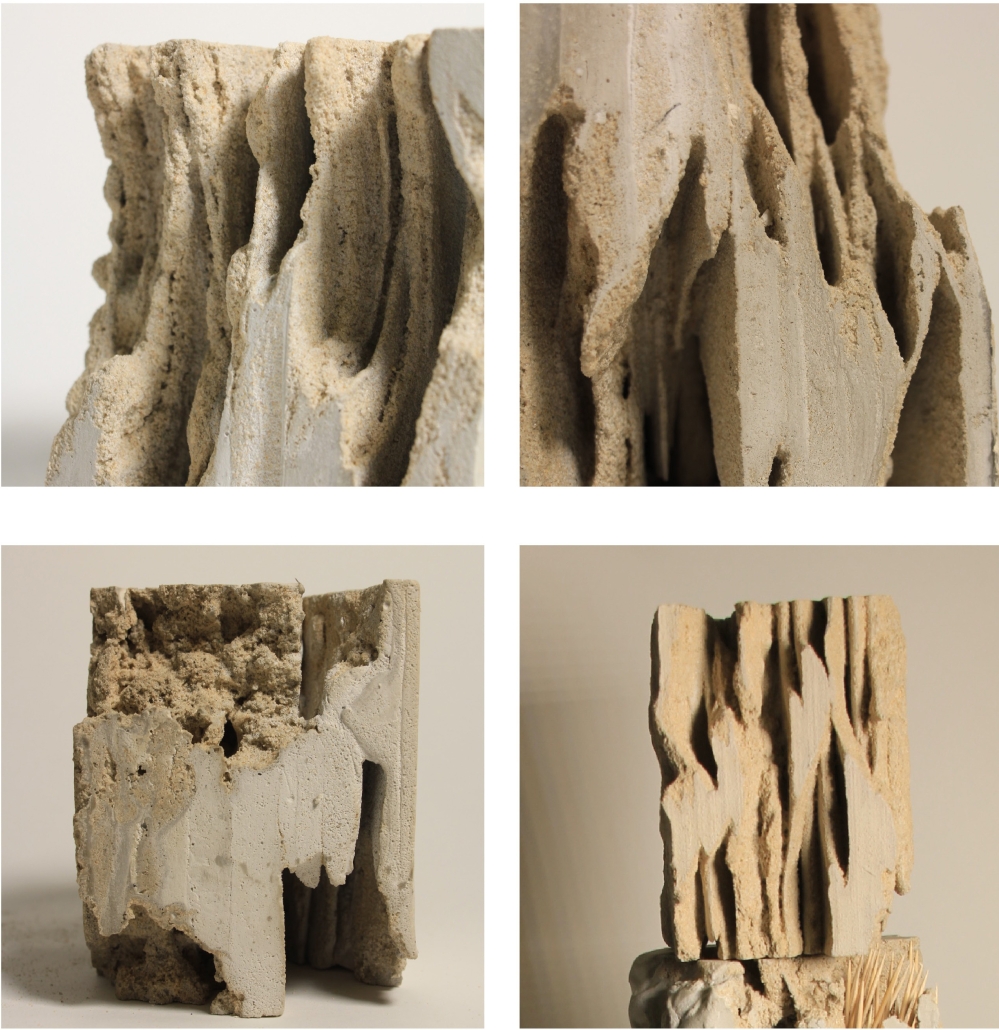
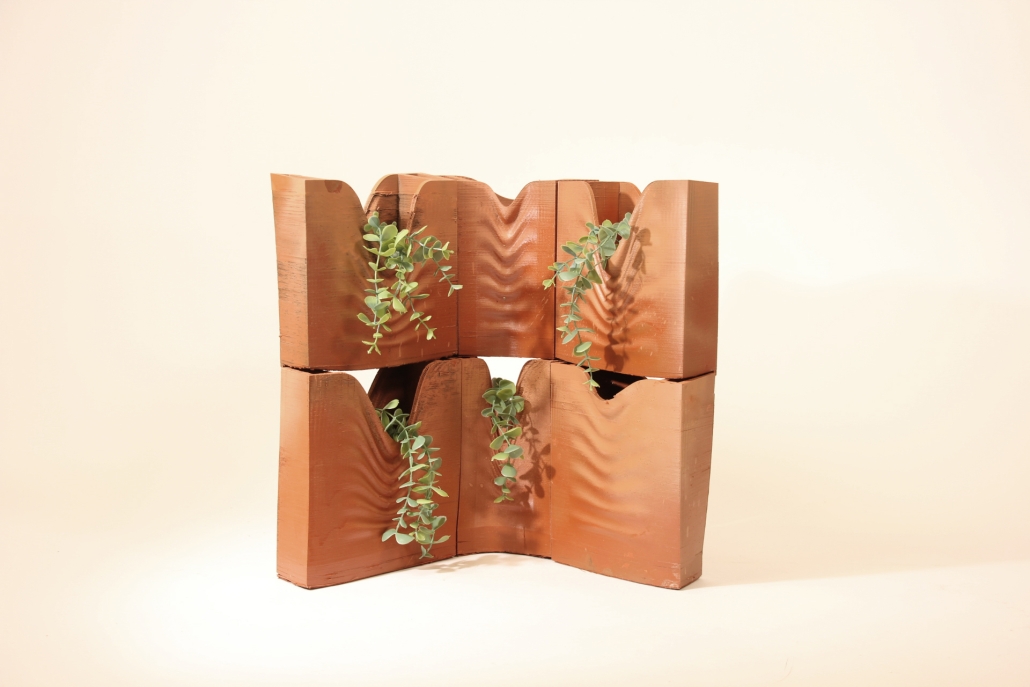
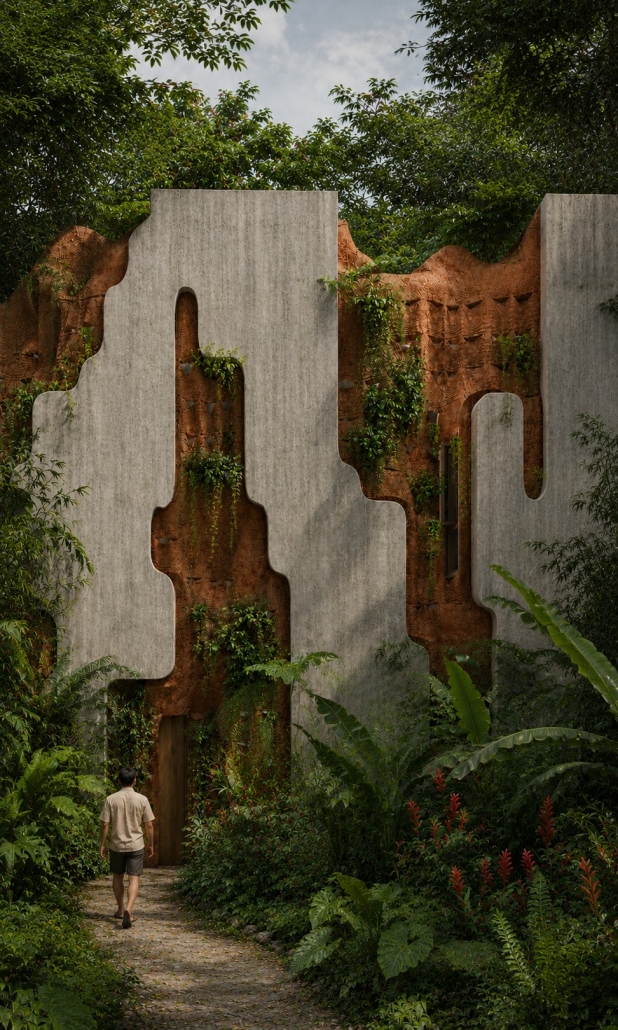
Following a set of material explorations of aggregation and erosion, the exterior of the blocks is also manipulated, revealing a softer skin of 3D-printed terra cotta modules set back into the concrete volumes. Composed of bespoke ventilated blocks, this softer layer diffuses the tropical sun and allows for natural ventilation, improving thermal comfort and reducing the thermal load of the mechanical systems. This bioclimatic filter of light and air also hosts vegetation, allowing the building to evolve into an extension of the biome.
You can learn more about this initiative here and here.
Instagram: @taile.just.arch, @lauragarofalo
Stay tuned for Part V!