
LTU’s College of Architecture and Design wins 2026 ICFF WANTED ‘Best of Schools’ Award
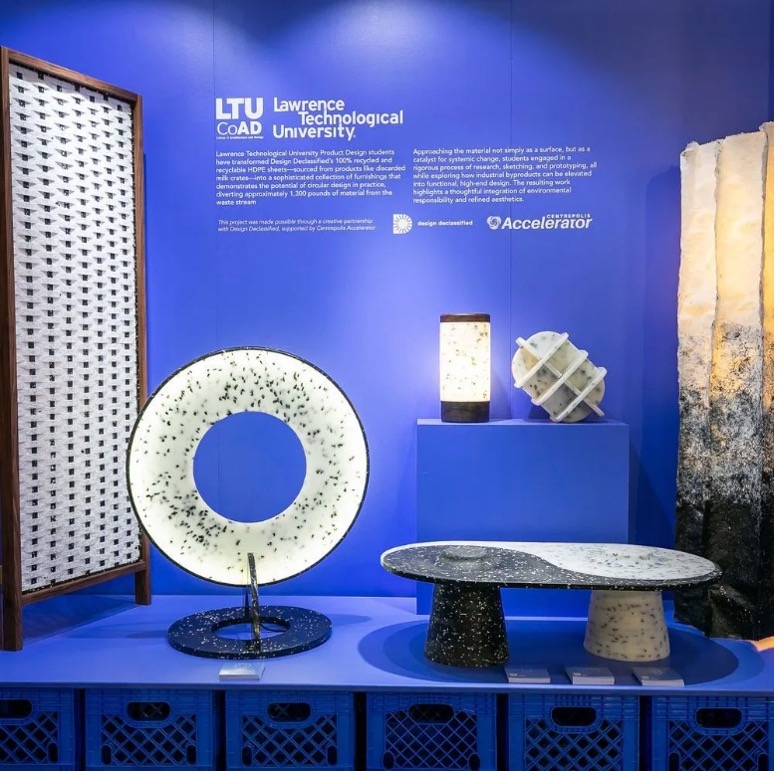
SOUTHFIELD, MI – Lawrence Technological University’s College of Architecture and Design (CoAD) has been awarded the prestigious ICFF WANTED “Best of Schools” Award at the 2026 International Contemporary Furniture Fair, surpassing 23 leading international design programs participating in the highly competitive Schools Showcase.
CoAD comprises both undergraduate and graduate programs in Architecture and Design. Design students in the Design Declassified-sponsored studio last semester worked with Erika Cross, CoAD adjunct professor of design and owner of Ann Arbor-based Erika Cross Studio, a multidisciplinary design practice, to create everyday products with a unique twist.
Unique Creativity with Sustainable Building Materials
Jared Siefert, founder and CEO of Designed Declassified, said, “It was an honor to provide materials and witness the students at LTU push new boundaries. As an industrial designer, I’m grateful for the chance to support the next generation of artists and designers. I was genuinely impressed by the creativity, dedication, and craft each student brought to their work, and I hope they carry this learning experience into their professional careers.”
CoAD Interim Dean Lilian Crum said industry-sponsored studios like this one with Design Declassified, a sustainable building materials company, are invaluable to CoAD students.
“They provide real-world constraints, professional expectations, and collaborative opportunities that prepare students for the complexities of contemporary design practice,” she said. “This partnership challenged our students to design products while addressing adaptability, resilience, and environmental impact. Working with 100-percent-recycled, recyclable HDPE sheets, students researched, sketched, prototyped, and tested innovative solutions that transform Design Declassified materials into meaningful, sustainable design outcomes. We’re grateful to Design Declassified for sponsoring this important studio.”
ICFF is an annual contemporary design fair that showcases trending furniture and industrial design. Founded in 1989, the ICFF has hosted hundreds of international exhibitors, both established brands and emerging designers.
Embracing The Challenge
Cross said, “The students didn’t just meet the challenge of this new material; they fully embraced its creative possibilities. By leaning into the course’s experimental and exploratory nature, they produced sophisticated work that reflects both their unique perspectives and the material’s incredible versatility.
“We’re proud that six of CoAD’s ‘emerging designers’ had the chance to represent the exciting work of all our design students. Congratulations to Ashgen Boyer, Dante Cerroni, Lourdes Davish, Sofia Eddy. Delanie Shorten, and Ryan Sukhraj.”
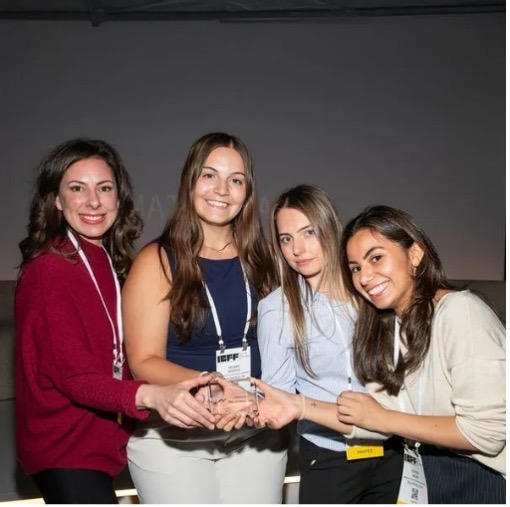
From left: Faculty member Erika Cross with students Delanie Shorten, Sophia Eddy, Lourdes Davish.
The winning collection emerged through a creative partnership with Design Declassified, supported by Centrepolis Accelerator. The project was led by designer and faculty member Erika Cross, who guided students through the development of a sophisticated collection of contemporary furnishings created from 100% recycled and recyclable HDPE sheets sourced from discarded products such as milk crates.
Transforming Industrial Waste into Usable, Sustainable Products
Through extensive research, iterative sketching, prototyping, and fabrication, the designers developed products that elevate industrial waste into refined, functional objects that balance environmental responsibility with high-end aesthetics.
The award-winning collection reflects LTU’s commitment to industry collaboration, sustainable innovation, and experiential learning that prepares students to address real-world challenges through design.
CoAD Interim Dean Lilian Crum said, “This award is a testament to what’s possible when students are challenged with real-world constraints, meaningful industry partnerships, and the opportunity to design with purpose. Erika Cross and these six designers demonstrated that sustainability and sophistication are powerful in combination. Winning ICFF WANTED’s Best of Schools distinction among 24 internationally recognized programs is an extraordinary achievement and a reflection of the ambitious, forward-thinking design education that defines LTU CoAD.”
Students’ Perspective
Student Delanie Shorten said, “My proudest moment was talking with visitors and designers about my project and getting to share my inspiration. It was rewarding to see people interested in my work, ask questions, and engage with the process behind it.
“The most exciting part was being surrounded by great design, meeting industry professionals, and seeing work from around the world. Winning the Best of Schools award made the experience even more memorable and was a proud and speechless moment for all of us, especially while representing LTU on such a large stage.”
Sharing that sentiment was fellow design student Lourdes Davish. She said, “Coming from a small school with a growing program in product design, it meant a great deal that we were able to showcase a different kind of design outside of purely automotive and technology. Going to ICFF in New York, personally, meant the world to me to physically talk with many designers that I had only seen online through social media, and that they were blown away by my work as well.”
Students whose design work was featured in the 2026 ICFF WANTED “Best of Schools” Competition:
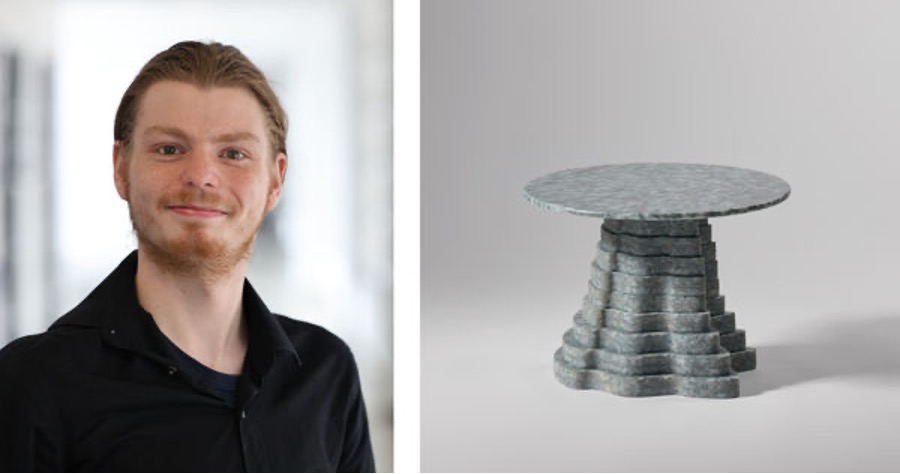
Ashgen Boyer from Detroit, MI: PollyTree, Coffee Table
This table represents the melding of the natural with the inorganic. The discovery of new materials reminds us that innovation is ever-expanding, vast; even entangled with itself, growing with humanity. This growth is built on learned failures and accidental successes. In producing this table, I embrace humanity’s innovation whilst staying rooted in the failures that help us all grow.
This piece is also a testament to Erika Cross, my teacher, who constantly works with me to foster my growth as a student in this innovative modern age. I hope this piece speaks to you. To have no fear in failing, but anticipation for the growth that comes with it. Thank you!
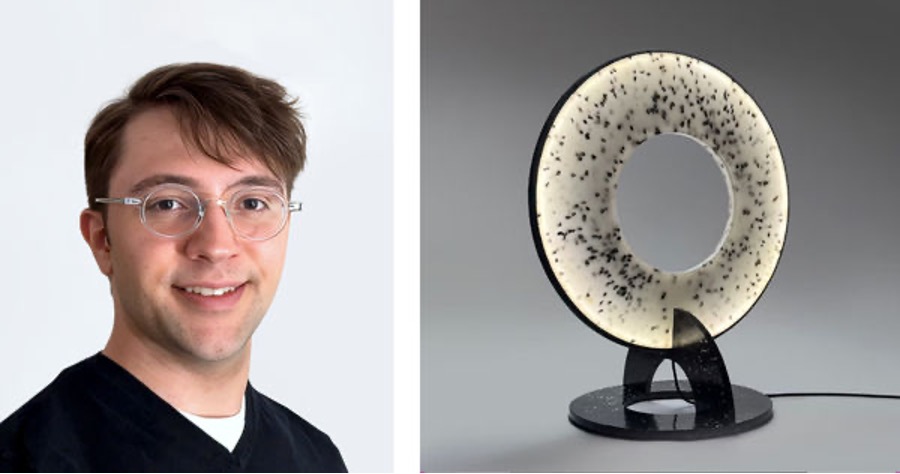
Dante Cerroni from Commerce Township, MI: Loop Lamp, Table Lamp
I was interested in how the material allowed for light transmission with minimal scattering when a light was shining at it. One of the materials adds a warming hue to the design. This gave me the idea of using LEDs to increase the surface area and create a gradient toward the center of the lamp.
My objective was to use the materials’ inherent properties to make something useful. I wanted to take material destined for the landfill and give it an entirely new life.
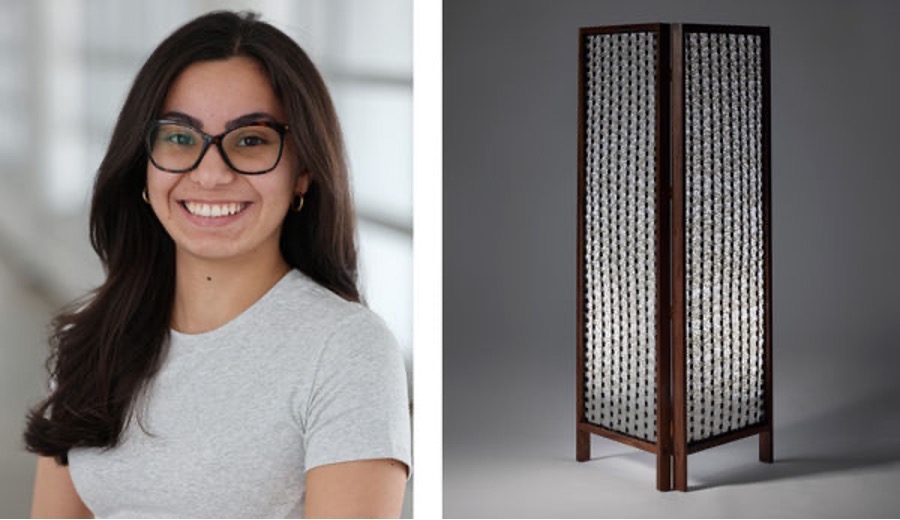
Lourdes Davish from Commerce Township, MI: Shoji, Screen
Repurposing the light-transmitting qualities of HDPE, this piece draws inspiration from Japanese shoji — translucent rice-paper screens. Testing the limits of the material’s rigidity, it is cut into thin flexible strips and woven into large panels. These woven panels are incorporated into self-supporting screens that gently conceal the mysteries that lie behind them. This project blends my passions for fine craftsmanship and imagination, transforming a humble material into an object that invites curiosity, softness, and light.
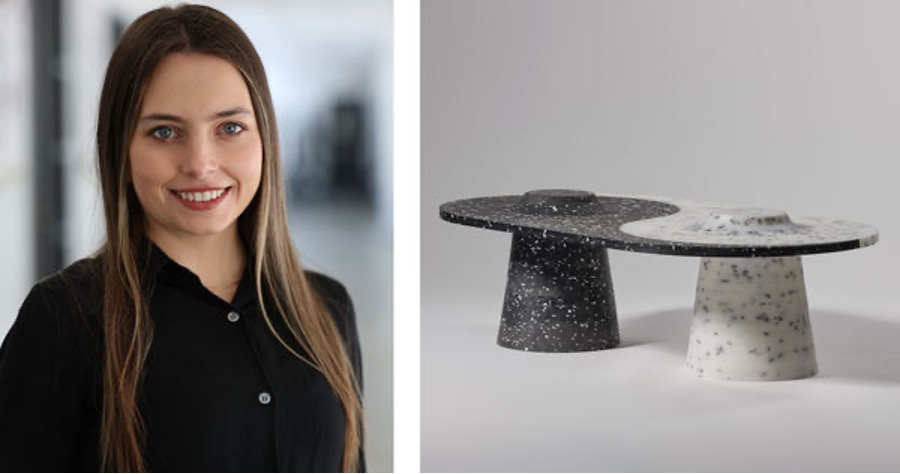
Sofia Eddy from Bloomfield Hills, MI: Connection, Coffee Table
This ornate coffee table highlights the natural contrast within recycled HDPE, pairing bold color variations with rich textural patterns. Its sculptural form transforms everyday plastic into an elegant, functional centerpiece.
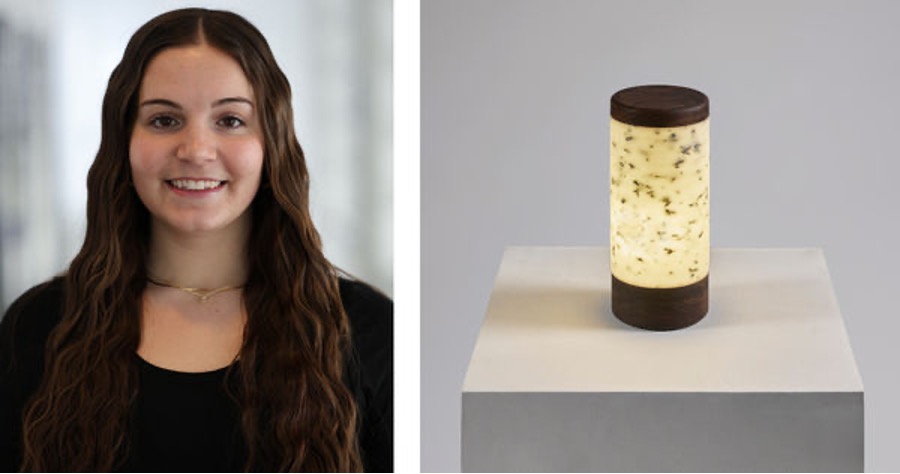
Delanie Shorten from Crystal Lake, IL: Marbl, Table Lamp
Marbl began as an exploration of HDPE and its unique characteristics: translucency, with the ability to be milled and fabricated like wood. Turned on the lathe, Marbl’s simple form lets the material speak for itself, softly diffusing light to create a warm, calming, and inviting atmosphere that transforms both the material and the space it inhabits.
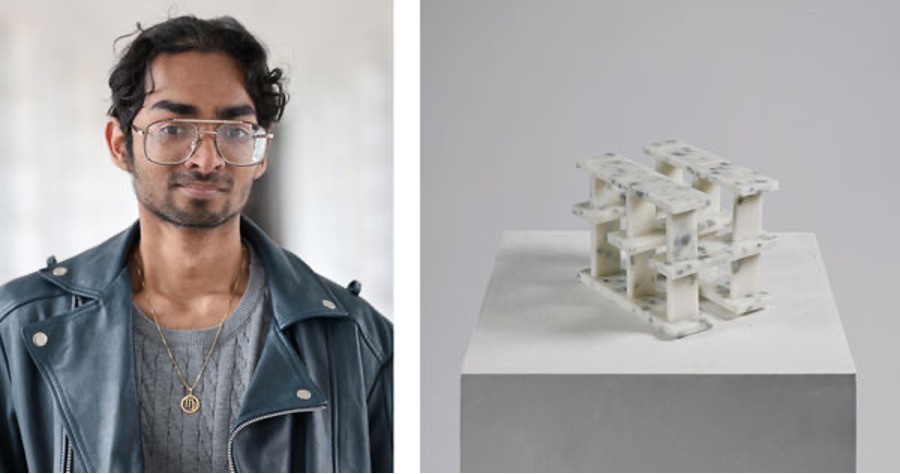
Ryan Sukhraj From Hernando Beach, FL: Cloud Puzzles
Cloud Puzzles are interactive sculptures created from recycled HDPE materials, designed to transform passive observers into active participants through the joy of solving, touching, and connecting, showcasing how the material can naturally fit together.
About Lawrence Technological University
Lawrence Technological University, www.ltu.edu, is one of only 13 private, technological, comprehensive doctoral universities in the United States. Located in Southfield, Mich., LTU was founded in 1932, and offers more than 100 programs through its Colleges of Architecture and Design, Arts and Sciences, Business and Information Technology, Engineering, and Health Sciences. PayScale lists Lawrence Tech among the nation’s top 11 percent of universities for alumni salaries. Forbes and The Wall Street Journal rank LTU among the nation’s top 10 percent. U.S. News and World Report lists it in the top tier of best in the Midwest colleges. Students benefit from small class sizes and a real-world, hands-on, “theory and practice” education with an emphasis on leadership. Activities on Lawrence Tech’s 107-acre campus include more than 60 student organizations and NAIA varsity sports.
Editor’s Note: Photographs of the winning students, their winning design, and explanation of the work appear in the Addendum. For interviews with Interim Dean Lilian Crum and Adjunct Professor Erika Cross, contact Renée Ahee at 586-484-2390 or rahee@yellowflagproductions.com.